Things To See in China
See a listing of attractions throughout China including temples, parks, museums and natural features and how to get to them.
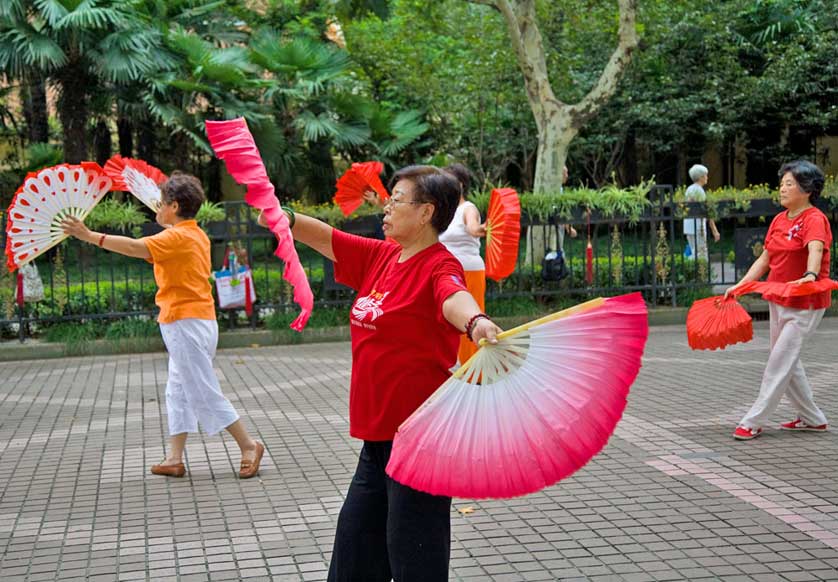
Black Dragon Pool Park
Black Dragon Pool Park (黑龙潭公園) - a man-made lake with beautiful views in Lijiang.
Situated on the northern edge of Lijiang's Old Town, Black Dragon Pool Park (Heilongtan Gongyuan) is a large expanse of water created in 1737 during the Qing dynasty. Lijiang Old Town is a UNESCO World Heritage Site.
The Bund
The Bund (上海灘) is Shanghai's historic waterfront. The Peace Hotel and the former HSBC Building are among the best-known pre-war structures still standing on this historic promenade.
Chengdu Panda Base
Chengdu Panda Base (成都大熊猫繁育研究基地) - a great place to view the Giant Panda and Red Panda.

Forbidden City
The Forbidden City (紫禁城) in Beijing is a not-to-be missed sight with over 800 buildings and 9000 rooms. It is the largest collection of buildings from China's past.
Great Wall of China
The Great Wall of China (长城) stretches East to West from Shanhaiguan on the Yellow Sea to the Gobi Desert's Jiayuguan, a distance of over 6000 km. The wall was begun in the Qin Dynasty (221-207BC) when China was first united.

Hong Kong Skyline
Victoria Harbour and the skyscrapers of Hong Kong (香港), especially when illuminated at night, is one of the most famous and exhilarating views in the world. The city is one of the most vertical in the world with over 9,000 high-rise buildings. 480 of them are taller than 150 meters.
Green Lake Park
Green Lake Park (翠湖公园) - is a pleasant green space in the north west of Kunming.
Green Lake Park is centered around four large lotus-filled lakes and has a number of picturesque pavilions and bridges among the plum gardens and magnolias in season. Ornamental bridges link the four lakes.
Like all Chinese parks, people gather to practice their hobbies whether it is playing music, practicing tai chi or speaking English.
The lake attracts migrating red-beaked gulls in winter, which visitors can admire from one of a number of lakeside cafes.
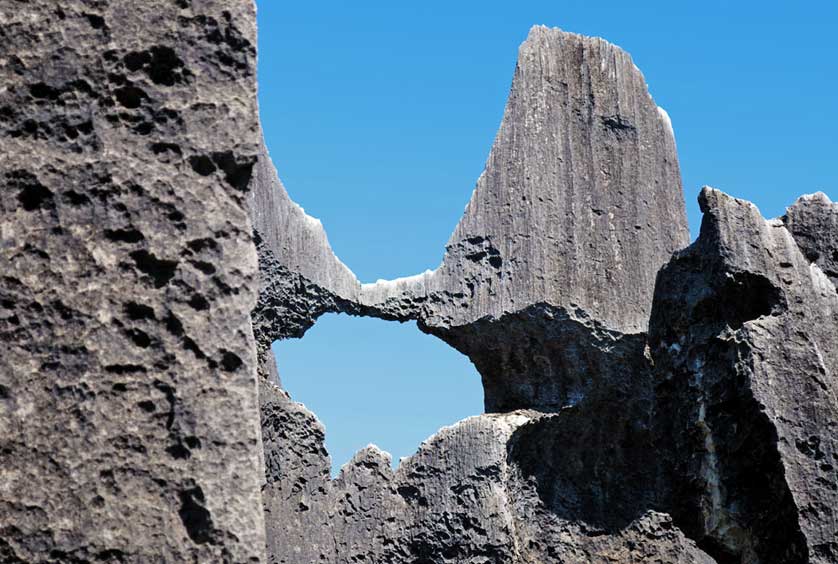
Kunming Stone Forest
Kunming Stone Forest (shilin; 石林) is a spectacular area of limestone peaks, caves and crags covering over 400 square kilometers.
The impressive limestone karst, at an altitude of over 1700 meters, was formed by retreating seas around 270 million years ago. Nowadays visitors can enjoy wandering around the eerie and strange rock and cave formations - many of which have resonant names such as Hanging Rock (an aptly named oblong boulder delicately balanced between two pillars) and Strange Wind Cave. There is even an underground river.
Leifeng Pagoda
Leifeng Pagoda (雷峰塔) - is a five-story pagoda situated on the West Lake in Hangzhou.
The original Leifeng Pagoda was built in 975 but collapsed in 1924. The building had been severely damaged by Japanese pirates (wako), who burnt the wooden parts of the building in the early 16th century, leaving only the brick skeleton. The present Leifeng Pagoda dates from 2002 when it was rebuilt as a copy of the first tower - except for the modern elevators and air conditioning systems!

Leshan Giant Buddha
The Leshan Giant Buddha (樂山大佛) in Sichuan Province, is a UNESCO World Heritage Site, a part of the Mount Emei scenic area.
The statue is carved from a red sandstone river cliff at the confluence of the Min and Dadu rivers in southern Sichuan. It stands at a height of 71 meters and is the tallest and largest stone statue of Buddha in the world. Indeed, historians consider it the the tallest pre-modern statue in the world.
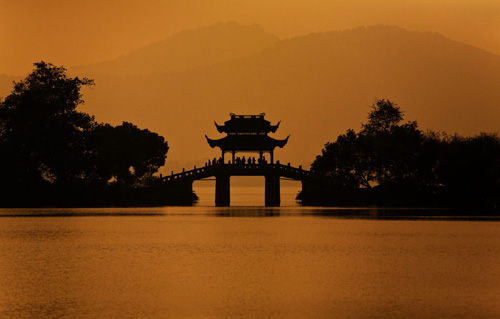

Li River
Li River (漓江) - flows through Guilin, Yangshuo and Pingle and is one of China's most scenic rivers. The Li River is at its best during the humid summer months when the water level is at its highest. Visitors can book a six-hour river cruise to sail the 85 km between Guilin and Yangshuo. Verdant rice fields, grazing water buffalo and traditional comorant fishing all set among the limestone karst peaks are the highlights of the cruise. Sights along the way include the world's oldest canal - the Lingqu Canal - dug in 214BC and some amazing rock formations.
Ming Tombs
The Ming Tombs (明朝十三陵) is one of the largest and best-preserved imperial tomb complexes in the world. Thirteen emperors and 23 empress of the Ming Dynasty (1368-1644) were buried here.

Mogao Caves
Buddhist stone carvings and wall paintings in the caves and sanctuaries of Mogao 25 km from Dunhuang in Gansu Province cover over 1,000 years of Buddhist art. The first cave sanctuaries date from 366 CE and number now 492 in all. The site was an important staging post on the Silk Road on the edge of the Taklamakan Desert.
Qiongzhu Si
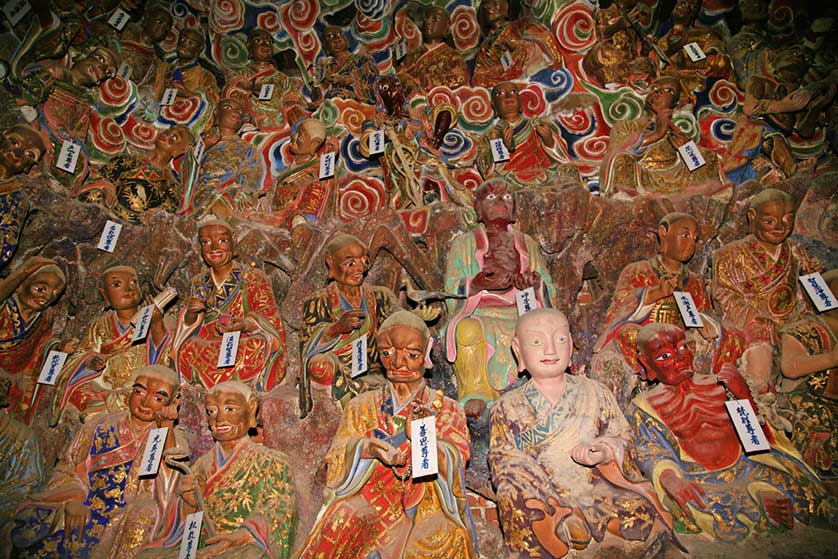
Qiongzhu Si (筇竹寺) - a famous temple outside Kunming known for its bizarre clay statues. Qiongzhu Si aka "The Bamboo Temple" dates from the Yuan dynasty (1271-1368) and was the first Zen temple established in Yunnan Province.

Ruinas de Sao Paulo Macau
The Ruinas de Sao Paulo (大三巴牌坊) in Macau is the city's most iconic historical building and major landmark. The façade is a "sermon in stone" that depicts some of the main events of the scriptures. Interestingly, the cathedral was partly constructed between 1582 to 1602 by Japanese Christian converts who fled to Macau to escape religious persecution in Japan in the 16th century. After the Jesuits were expelled from Macau in the 18th century, the building became a barracks until it was destroyed in a fire in 1835.
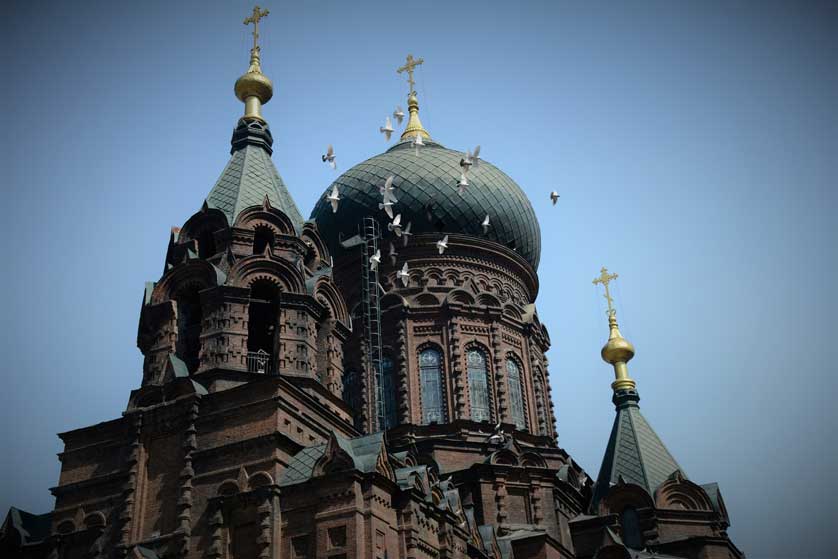
St Sophia Cathedral
St Sophia Cathedral (圣索非亚大教堂) - in Harbin is the largest Russian Orthodox church in the Far East. The huge structure dates from 1907.
Summer Palace
The Summer Palace (颐和园) in Beijing, a UNESCO World Heritage Site, was originally built in its present shape by Emperor Qianlong for his mother around 1750. This sprawling palace with its lakes and gardens has served as the summer home for royalty for centuries.

Temple of Heaven
Beijing's Temple of Heaven (天坛) is a massive park/temple complex that contains what is perhaps Beijing's most beautiful building. Qinian Dian (Hall of Prayer for Good Harvests), as it is known in Chinese, was completed in 1420 and is one of the best-known symbols of Chinese imperial architecture. The current structure was built in 1890, after the original was burnt to the ground after being hit by lightning.
Terracotta Army & Qin Shi Huangdi's Tomb
The Terracotta Army (兵馬俑) in Xian built to protect Emperor Qin Shi Huangdi in the afterlife is one of the wonders of the world. The craftsmanship of each clay warrior is as impressive as the scale of the project. Great care was taken to make each model unique, and each of the 8,000 soldiers had their own facial features, hair-style, and when dressed in the same uniform, the folds and fit are also unique. Located a mile west of the Terracotta Warrior Museum, Qin Shihuang's mausoleum is larger than Egypt's Great Pyramid, and has still not been fully excavated.
West Lake
West Lake (西湖) - is an historic lake located in the center of Hangzhou. The West Lake area was added to the UNESCO World Heritage List for China in 2009. Originally a marshy lagoon adjoining the Qiantang River, West Lake is about 3 km in length from top to bottom and from side to side. Strolling the lakeside offers classical vistas of pagodas, bridges, fishing boats and stunning scenery. West Lake is heavy with literary and historic associations. Marco Polo spoke of his "pleasure" at seeing the lake for the first time; the poet Su Dongpo, who built the Su Causeway (Su Di), personified the lake as a young woman.
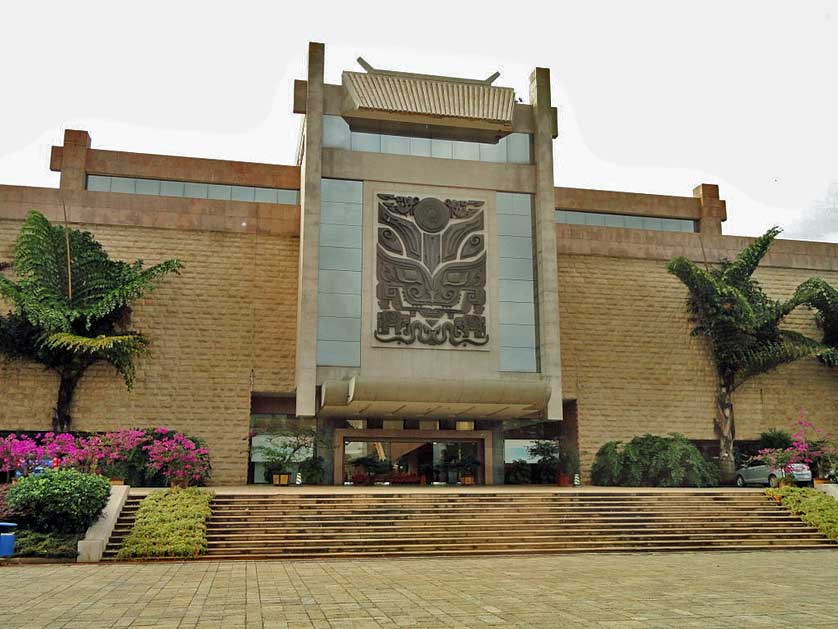
Yunnan Nationalities Village
Yunnan Nationalities Village (南民族村) - provides a colorful crash course on Yunnan's diverse minority groups (26 in all) in a large park.
Ethnic groups represented include the Bai, Buyi, Dai, Lahu, Miao, Naxi, Pumi, Shuyi, Tibetan and Yi.
Yunnan Nationalities Village contains numerous smaller villages in individual ethnic style, plus regular singing and dancing events at various "theaters". There is a great range of ethnic handicrafts, jewelry and clothing for sale as well as an Elephant Show.
Xian City Walls
Xian's impressive city walls (城墻), which are around 12 meters high and 14 km in length, were first begun in 1370 during the reign of the first Ming Emperor - Hongwu (Zhu Yuanzhang). Originally constructed from rammed earth, quicklime and glutinous rice resin, the walls were lined with brick in 1568.
Yu Garden
Yu Garden (上海豫園) is Shanghai's best known public garden. It was completed in 1577 by Pan Yunduan, a government official during the Ming Dynasty (1368-1644).

Zhaolin Park
Zhaolin Park (兆麟公园) - is the major venue for the annual Harbin Ice Festival, held in January and February.
The wonderful ice statues in the park are brightly lit at night and attract visitors from all over the world. Zhaolin Park is north of the St Sophia Cathedral and just south of the Songhua River.
Zhaoling Tomb
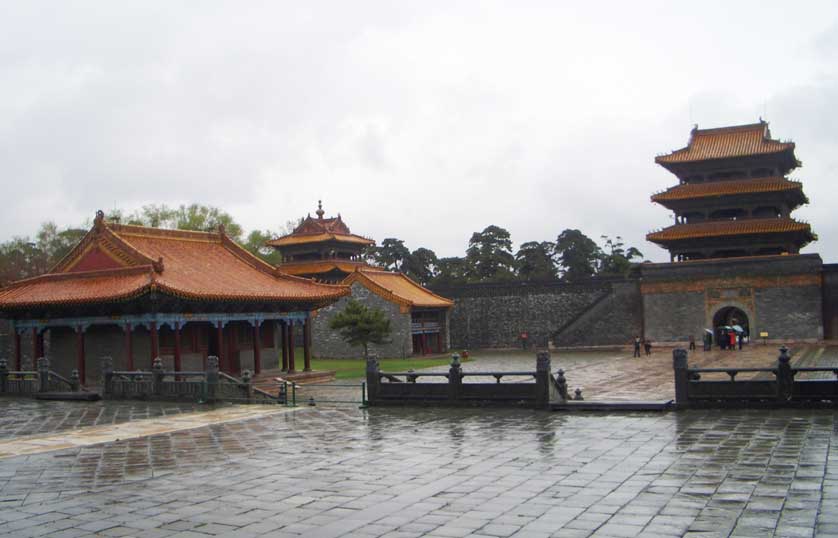
Zhaoling Tomb (昭陵) in Shenyang is the burial place of Emperor Hong Taiji (1592-1643) and his wife, Empress Xiaoduanwen. Hong Taiji is considered the founder of the Qing Dynasty, which ruled China from 1644 to 1911, even though he died before his armies conquered Beijing in 1644. Hong Taiji was the eighth son of Manchu Khan Nurhaci (1559 - 1626) who, attacking out of the sub-Siberian flatlands of northern Manchuria, captured Shenyang in 1625, taking it from Ming Dynasty China (a dynasty that lasted from 1368 to 1644).

Stay China
Book Hotels in Beijing - Booking.com
Find Hotels in Beijing - Agoda
Search Hotels in China - Booking.com
Recommended Hotels in Shanghai China - Agoda
Budget Hotels in Beijing - Booking.com
Best Hotels in Sanlitun - Booking.com
Book Luxury Hotels in Beijing
Beijing Palace Museum Ticket (The Forbidden City)
Mutianyu Great Wall Ticket & Cable Car