Tomb Time: Exploring Beijing's imperial cemetery 明朝十三陵
Daniel Allen

Thirty miles northwest of Beijing the mighty Yanshan mountain range divides suddenly like a giant bow wave, opening into an extensive basin of tranquil, picturesque countryside.
When the great Ming Dynasty Emperor Yongle (1403-24) stopped off here early in the 15th century, he knew that he'd finally found the ideal place for himself and his successors to see out the ages.
Ming Tombs History
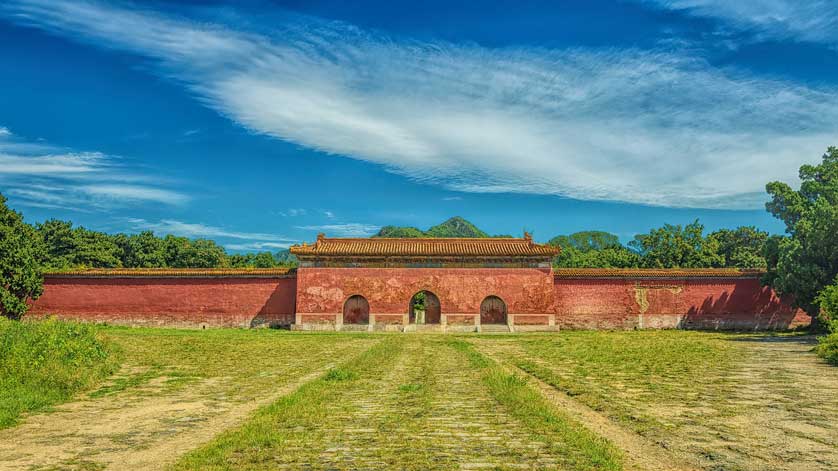
Over the next two centuries a total of thirteen imperial mausoleums were completed in the valley, each a bite-sized palace set against the remote mountain walls, incongruously elaborate as they sat on the dry ploughed earth.
The tombs were lovingly protected throughout the Ming Dynasty (until 1644), and a respectful maintenance continued during part of the Qing Dynasty.
Although some Qing emperors protected the tombs to endear themselves to their Han subjects, others allowed the tombs to go untended due to a lack of money, disinterest, or to reinforce Manchu dominance.
When John Thompson, one of the first Western photographers to take pictures in China, famously visited the tombs in 1872, he found a collection of dilapidated, unkempt burial palaces badly in need of restoration.
Ming Tombs Today
Fortunately for tourists today, the tomb complex has now undergone considerable renovation, and while only three of the tombs are now open to the public, a visit to the site provides a fascinating window onto dynastic styles and rituals, as well as making a relaxing day away from the hustle and bustle of urban Beijing.
Arriving at the complex, visitors first pass by an elegant, five-arched white marble archway. Built in 1540, this impressive structure, with its delicate bas-relief carvings of lions, dragons and lotuses, is in almost perfect condition. About one kilometer to the northeast of this archway stands the Great Red Gate (Dahongmen), the outermost gate of the entire tomb site.
The Dahongmen marks the beginning of the 7-kilometer Sacred Way (Shendao), which eventually leads to the entrance of the Changling, the tomb of Emperor Yongle himself. A short walk onwards brings visitors a tall, square pavilion, supported by four white stone ornamental columns (huabiao), and standing in the center of the Sacred Way.
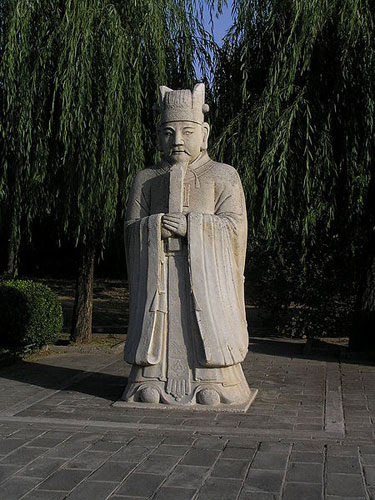

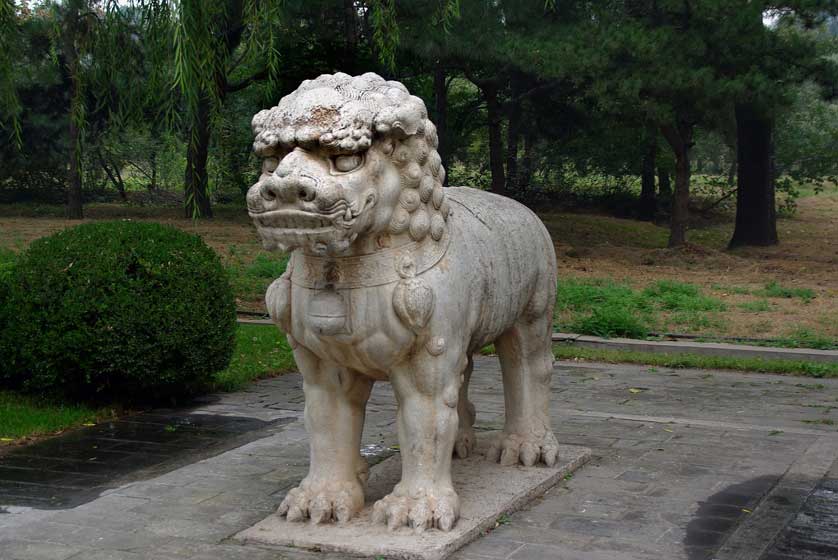
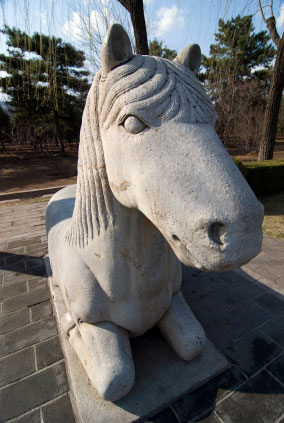
Beyond the pavilion a strange collection of animal and human statues flank the path, making this a good place for a souvenir photo or two. Each pair of animals - both real and mythical - were supposed to bring the deceased emperor good luck in his next life. The motionless menagerie includes lions, elephants and camels, as well as unicorns and qilin, a mythical oriental hybrid resembling a deer crossed with a lion.
Changling - Emperor Yongle's Tomb
Emperor Yongle's tomb, Changling, was the first to be built, and remains the most impressive. In layout and architecture it resembles a miniature version of the Forbidden City, which was constructed at the same time, with buildings aligned along favorable axes and decorated in deep imperial red.
Changling has been fully restored, and the central Hall of Eminent Favor, which once contained the emperor's most precious belongings, has been converted into an interesting museum. Look out for the pillars of this hall which are made from single trunks of a rare tree from Yunnan called the nanmu.
Southwest of Changling is Dingling, the tenth imperial mausoleum and second tomb open to the public. Emperor Wanli was buried here in 1620, together with two of his wives. The labor of more than 30,000 workers and 8 million taels of silver (equal to two years' tax revenue) were expended on construction, which continued for six years.
To enliven the gloomy atmosphere of the main tomb visitors may like to picture Emperor Wanli, renowned for his debauched excesses, partying here at the age of 28, celebrating completion of the structure three decades before it held his lifeless body.
The other tomb open to public viewing, some way from Dingling and Changling, is Zhaoling, the mausoleum of Emperor Zhu Zaigou. It is the most authentic of the three tombs, and for those with a vivid imagination an explorative wander around the ruins should give a fair impression of Ming cemetery life. Although the other tombs, scattered across the valley, are still in ruins, they still make fascinating viewing and can provide a good escape from the more crowded open mausoleums.

Further Info - Getting to the Ming Tombs
Transport
Car - from Madian Qiao on the North Third Ring Road take the Badaling Expressway to the Xiguan Exit, and then follow signs to the Ming Tombs (approx 1 hour)
Bus - take the tourist bus from Qianmen bus station or catch bus 845 from Xizhimen bus station to Dongguan (approx RMB 10) and then bus 314 to the tombs (approx 2 hours)
Tickets: Sacred Way - RMB 30
Changling - RMB 45
Dingling - RMB 65 (includes museum entrance)
Zhaoling - RMB 30
Tip: take your own food and drink to avoid exorbitant prices at the nasty fast food establishments.
Book Hotel Accommodation in Beijing near the Ming Tombs
Book Hotels in Beijing - Booking.com
Find Hotels in Beijing - Agoda
Search Hotels in China - Booking.com
Recommended Hotels in Shanghai China - Agoda
Budget Hotels in Beijing - Booking.com
Best Hotels in Sanlitun - Booking.com
Book Luxury Hotels in Beijing
Beijing Palace Museum Ticket (The Forbidden City)
Mutianyu Great Wall Ticket & Cable Car