Dunhuang Travel Guide 敦煌市
Dunhuang

Dunhuang is a small city in the province of Gansu, in western China, surrounded by the Gobi Desert. This city on the old Silk Road is famous for its nearby Mogao Caves, Crescent Lake oasis, "Singing Sand Dunes" and, further afield, the Dunhuang Yardang National Geopark.
History
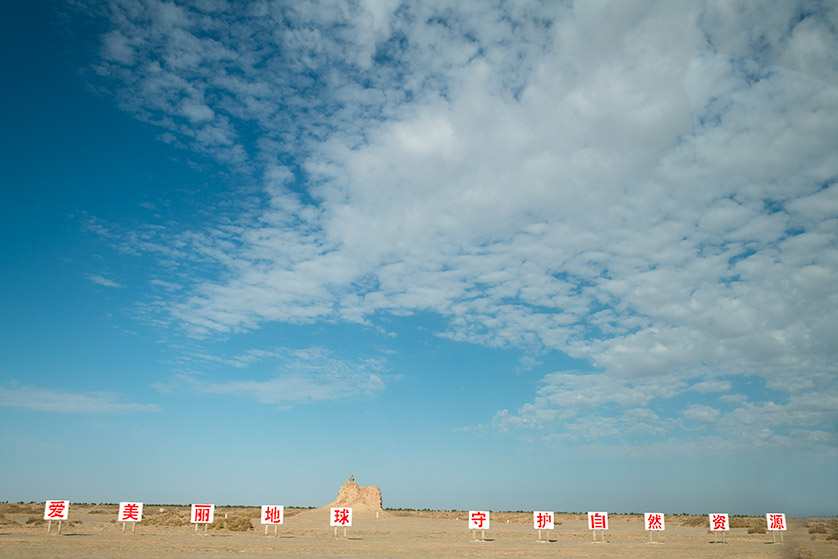
Dunhuang was a thriving city up until about the 14th century where goods from east and west would be traded and sent on via the Silk Road and various other routes. The opening of an ocean route saw Dunhuang's importance and prosperity decline. Only with the early 20th century re-discovery of the Mogao Caves and the promotion of them as a tourist attraction in recent decades did Dunhuang reappear to the world.
Dunhuang and its several attractions now draw great numbers of tourists daily, as evidenced by the massive hotels that fill the city.
Dunhuang as a City
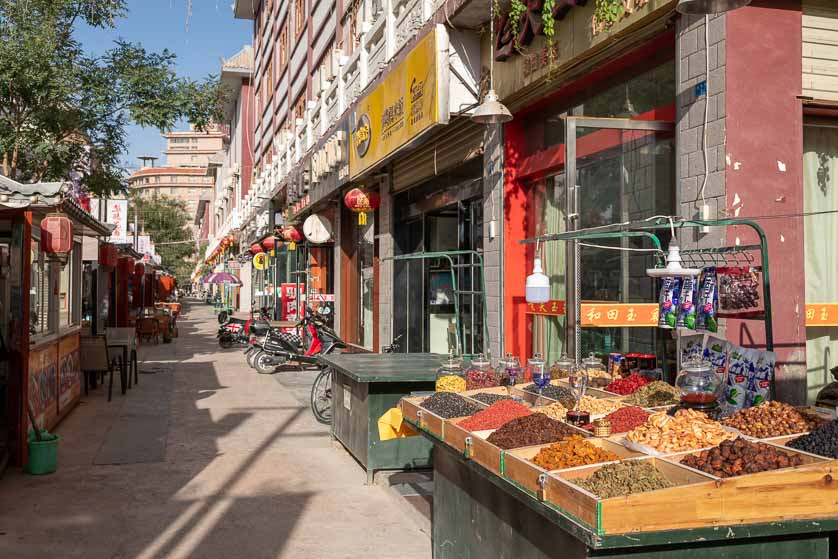
As big a tourist haven as Dunhuang is, it is by no means overrun by tourists, because most of the famous sights are outside the city. This small city (by Chinese standards) of about 200,000 people offers a relaxed strolling experience around its tidy streets.
Besides the Night Market and the Dunhuang Museum, there is little of intrinsic touristic charm here - it is more a place to spend the night after a day sightseeing in nearby areas. But, there are plentiful shopping and dining opportunities in Dunhuang city, and its small size makes getting around on foot easy.
Dunhuang Night Market

Dunhuang has a large night market that, as the name implies, comes alive in the evening. The large plaza in front of the main night market building is a pleasant spot for outside drinking, dining, and people watching.
Dunhuang Museum
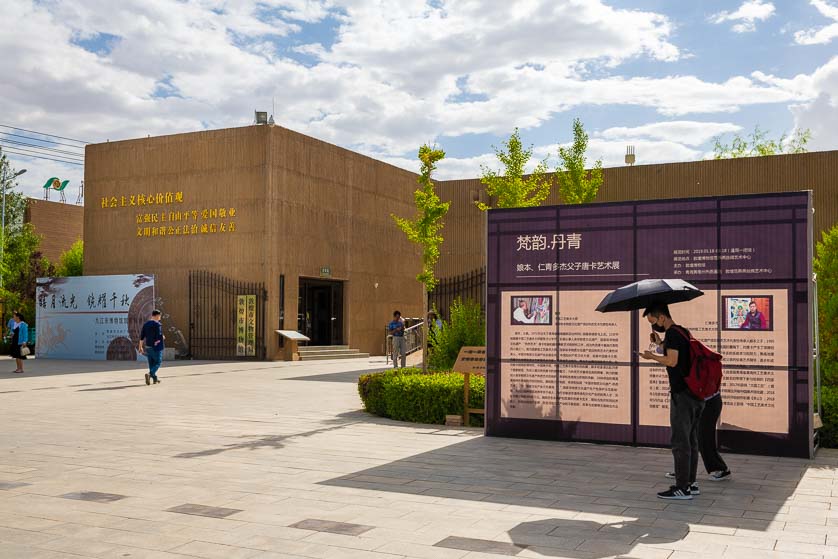
Dunhuang Museum is a quite large, modern museum showcasing artifacts from the history of this old Silk Road city. It contains some original works from the Mogao Caves, and also many replicas. This makes for a good opportunity to get a close look at, and even photos of, objects that you may have only gotten a glimpse of at the caves themselves. Check out the mummies, mummified by natural desiccation.

Dunhuang Museum
No.1390 North MingShaShan Road, Dunhuang, China
Green Lotus Vegetarian Restaurant
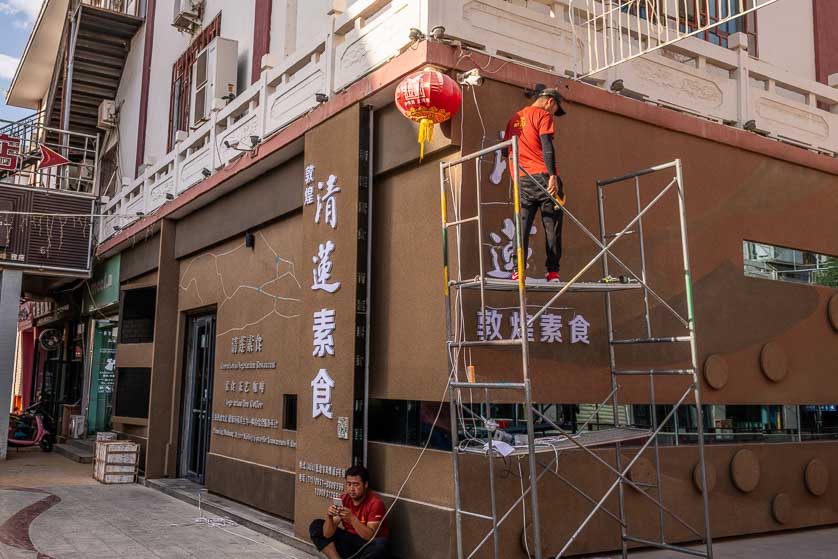
There are plenty of good dining opportunties throughout Dunhuang, but there is one that should not be missed: the Green Lotus (Qinglian in Chinese). This vegetarian restaurant is pricier than average (but still not expensive when compared with most tourists' home countries), but serves exquisite food in elegant surroundings. The food is all sourced from local producers whom the restaurant has chosen for the clean water they source from the local mountains to water their crops. There are dozens of pottery items by local craftspeople throughout the restaurant that are for sale. English menu available.
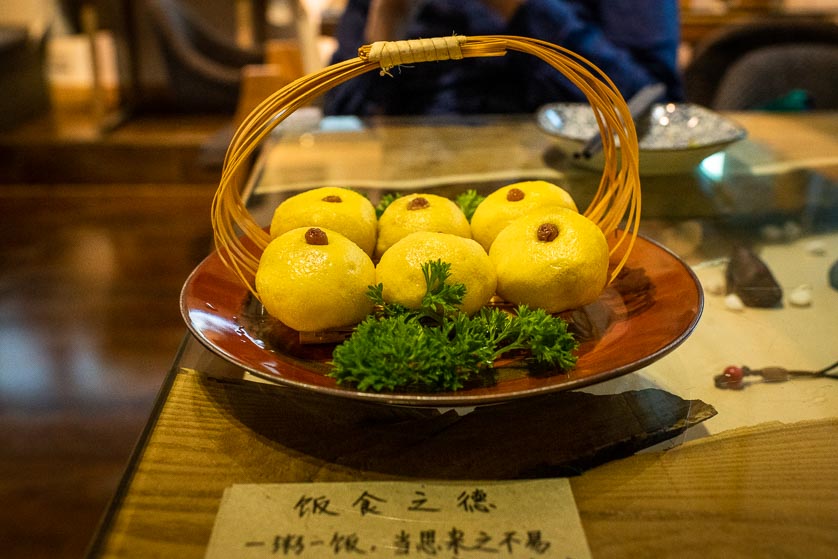
No.45 Building 6, Fengqing City, Shazhou Town, Dunhuang China
+86 937 880 9996
Mogao Caves
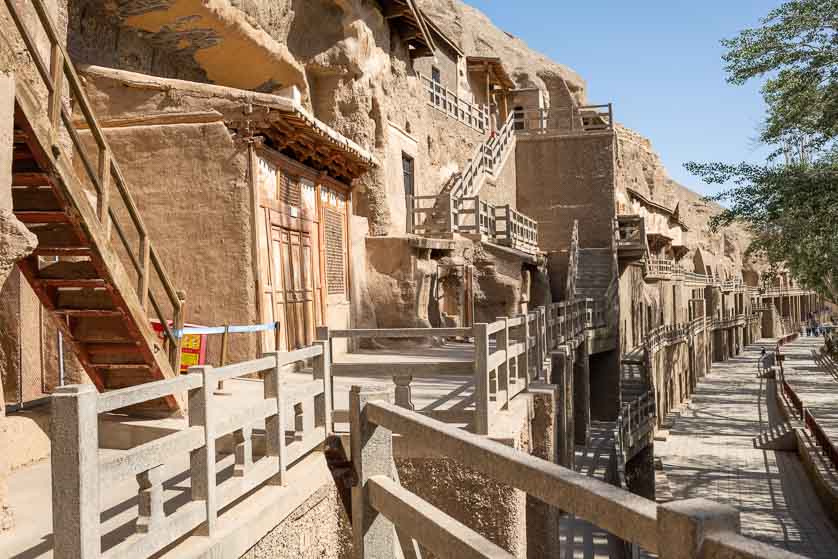
The Mogao Caves are grottos created by Buddhist devotees over the ages, beginning in the seventh century. They are located about 25 km south-east of the city of Dunhuang. The caves are generally small, and are hollowed out of a long stretch of cliff. Today they have been given a protective concrete facade, complete with steps up to and doors on the caves, making most of the cliff look like a two-story humanmade structure. This replaces the open caves accessed by ladders of old. Only a few of the hundreds of caves are accessible to tourists, but they are well preserved for their age.
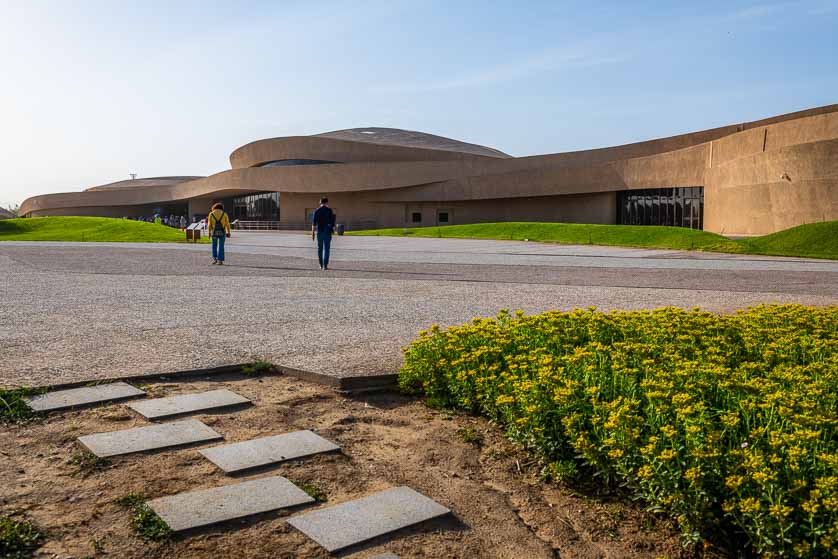
Visitors to the Mogao Caves first go to the visitor center, about a 15-minute drive out of the city, and a short ride from the caves themselves. The modern, architecturally pleasing visitor center is where you purchase tickets to the caves, and also has two big-screen cinema spaces each with hundreds of seats. The first shows a short film of the history of the Silk Road and the Mogao Caves. The second is a 3D presentation of the features and highlights of the caves. Both are excellent quality, and come with a wireless headset for English commentary if needed.
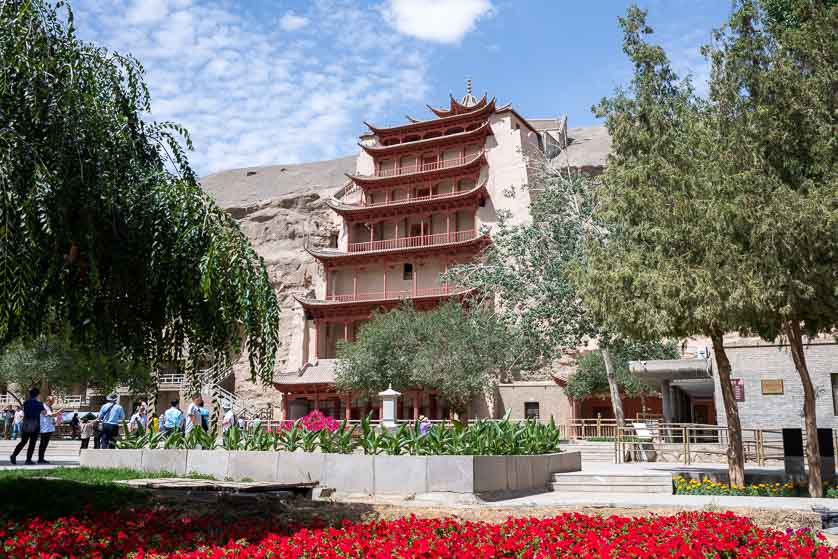
The Mogao Caves themselves are easily accessible, and big enough for a single tourist party of about ten people. Taking photographs inside the caves is strictly prohibited. There are Buddhist statues around the walls, and intricate decorations painted on the walls. The highlight is the cave with the massive, 26-meter Buddha.
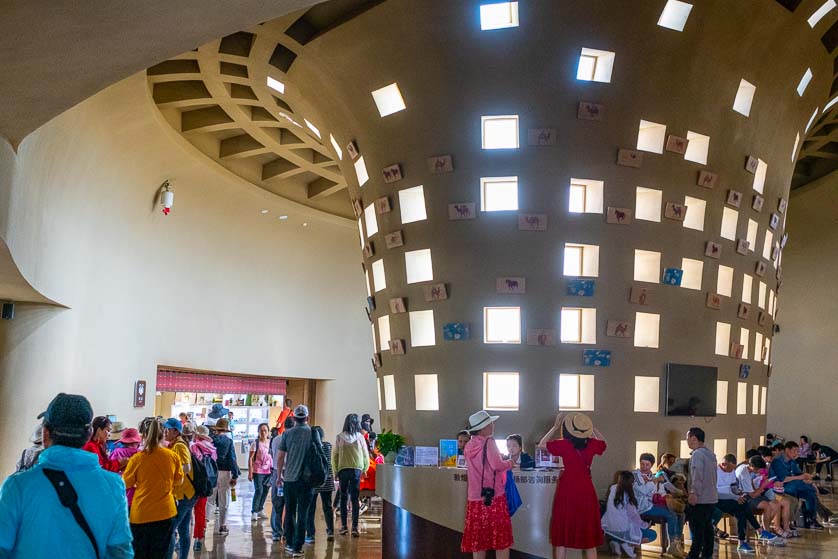
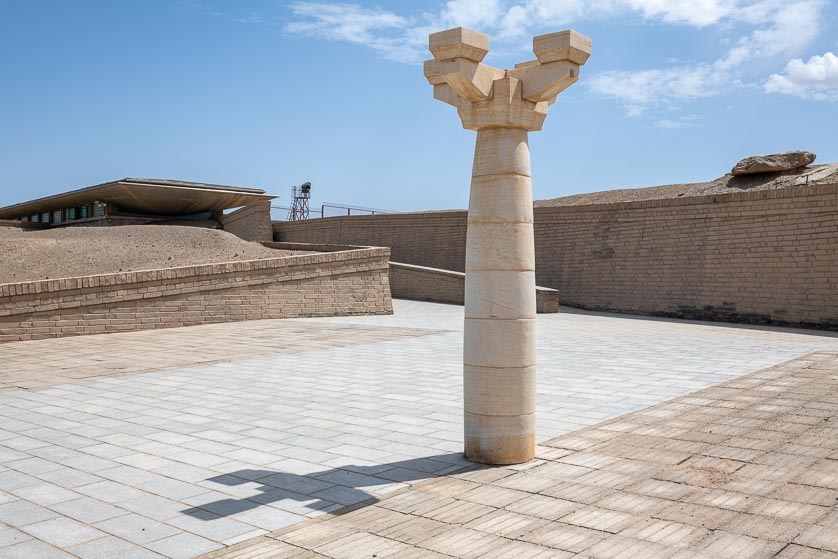

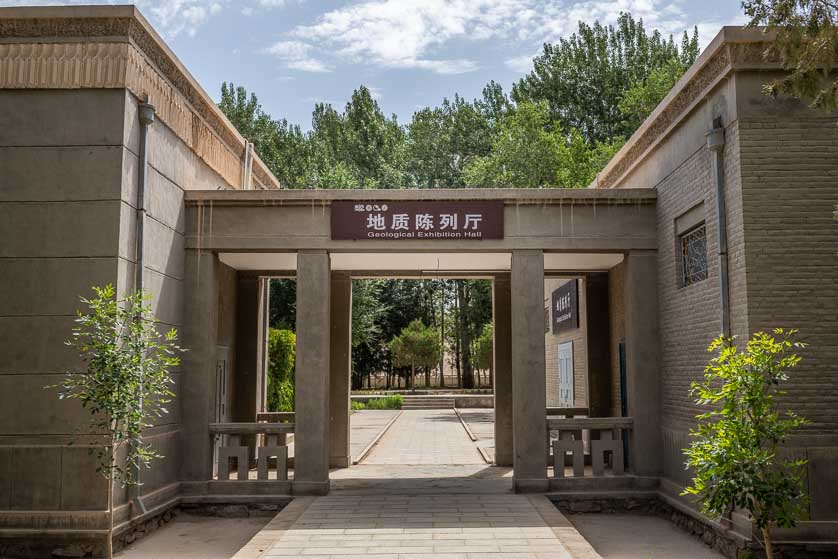
There is a museum nearby the caves: the Dunhuang Research Academy, which is a large, modern establishment with numerous exhibits about the caves, and with an annex called the Geological Exhibition Hall.
Echoing Dunes
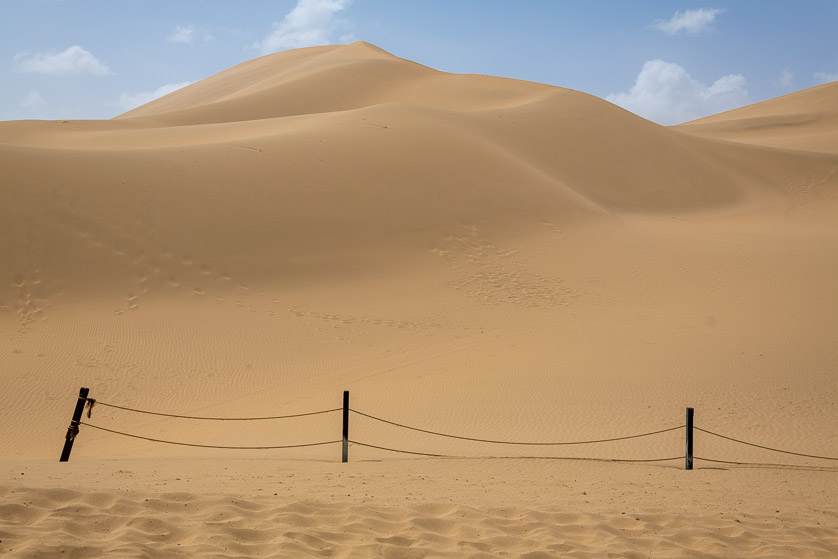
The Echoing Dunes are the major natural tourist feature of Dunhuang, located on the city's southern outskirts. This massive mountain range of sand is remarkably static, and has a simple grandiose beauty with its smooth, sinuous slopes and ridges. The main activities here are dune climibing, camel riding and duneside sliding.
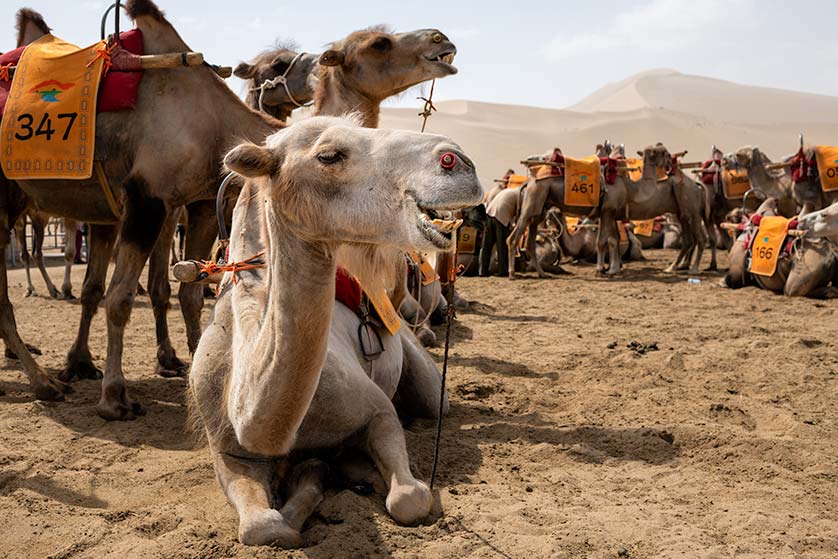
Camel riding is an exotic way to experience the dunes. These gentle but powerful animals patiently and surefootedly trudge a path around the dunes, each bearing a tourist on their back. The only minuses are that it is very difficult to photograph anything from a camel's back, your butt gets sore after a while, and, if you're prone to seasickness, you may well start feeling nauseous from the rolling motion of the camel's gait.
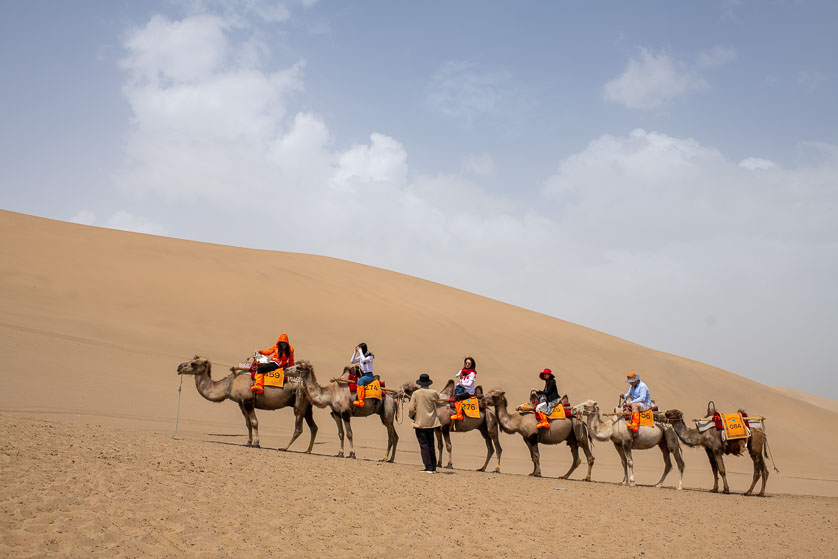
Dune climbing is strenuous, especially in the desert heat, but rewards the climber with fantastic views from the top.
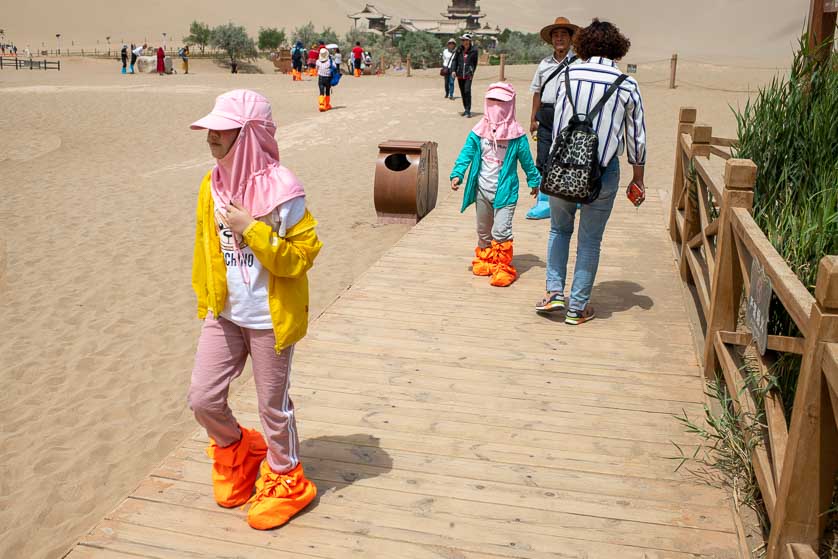
Virulently orange soft boots that fit over your footwear are available for hire, preventing your shoes from filling with sand and, in summer, protecting them from the heat underfoot.
Crescent Spring
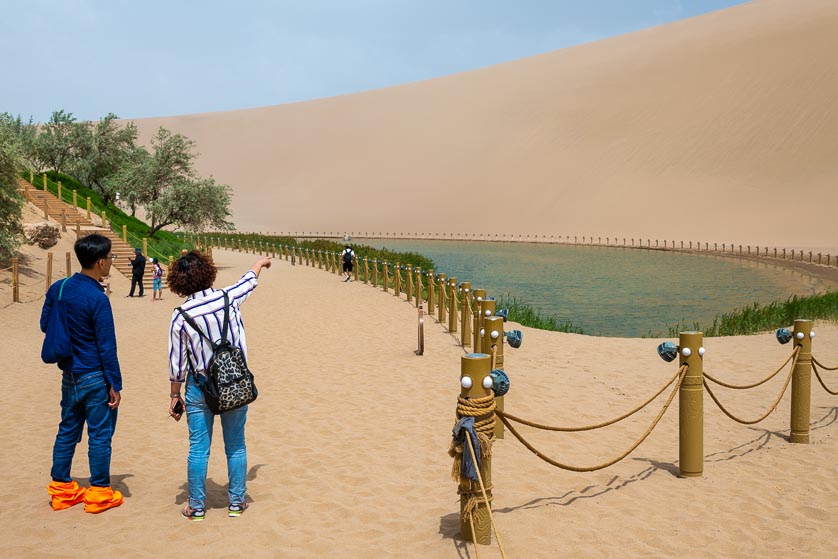
The Crescent Spring is an oasis very near (walking distance from) the Echoing Dunes. The spring has featured in the history of the area ever since the days of the Silk Road. True to its name, the body of water is crescent-shape. Right next to it is a reconstructed temple (the original having been destroyed in the Cultural Revolution) with a pagoda and several buildings making up the whole.
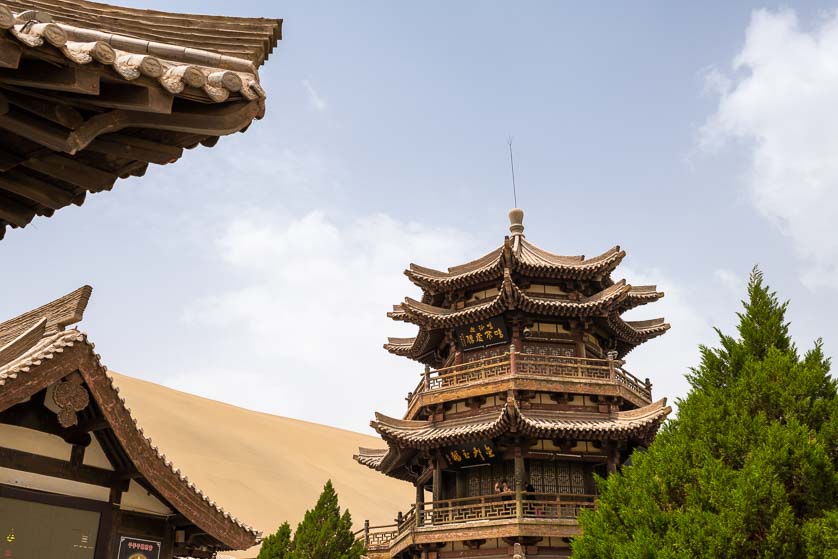
The Crescent Spring site cannot be called one of exquisite beauty, and finding an angle from which to adequately photograph this attraction is difficult. Climbing the adjacent Echoing Sand Dune and getting pictures from the top is recommended, but only if you have a couple of hours to spare.
Yumen Pass
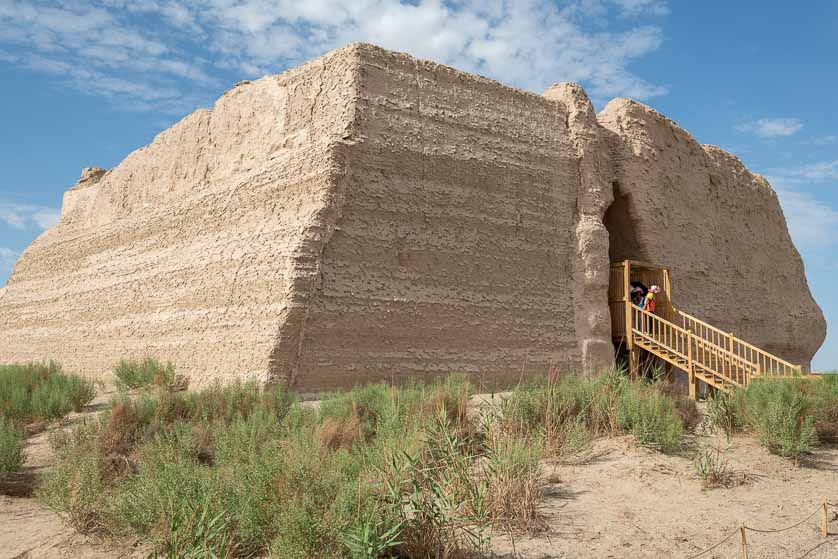
The Yumen Pass, about 80 km northwest of Dunhuang, was an important point on the Silk Road, and the massive ancient stone Jade Gate, built in 121 BCE, still marks the point. Majestic in its isolation, it retains its body and strength, in spite of obvious weathering.
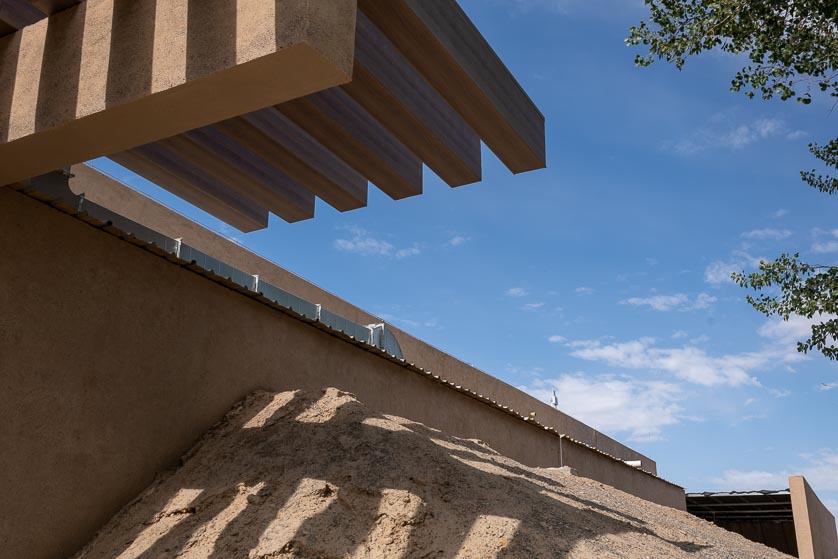
The Jade Gate can be entered, and the nearby, attractively designed, Tourist Service Center of Yumen Pass has some exhibits and a shop selling a wide range of souvenirs.

Yumen Pass is generally considered a stop on the way to Yardang National Geopark.
Yardang National Geopark
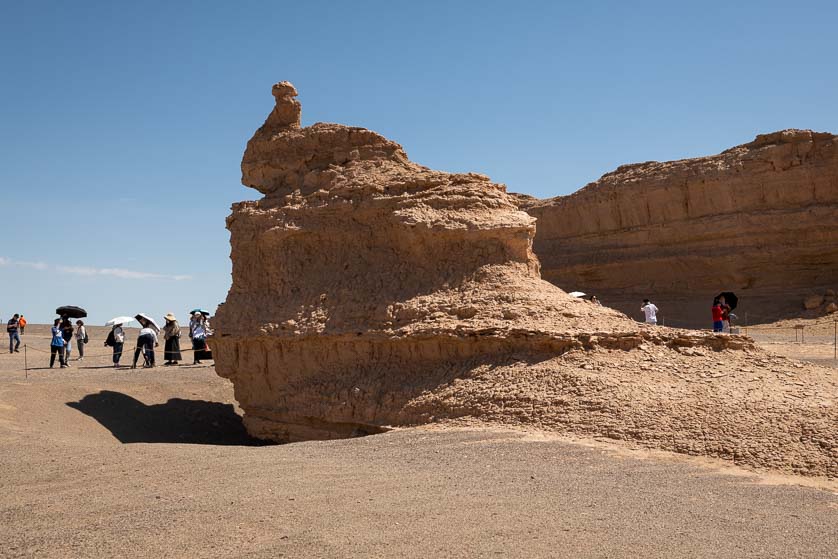
Yardang National Geopark is a natural wonder about 105 km north-west of Dunhuang City. The attraction here is the natural "sculptures" that millenia of wind and rain have carved out of the rock. The formations that remain are quite dramatic, and in some cases remarkably sculpted.
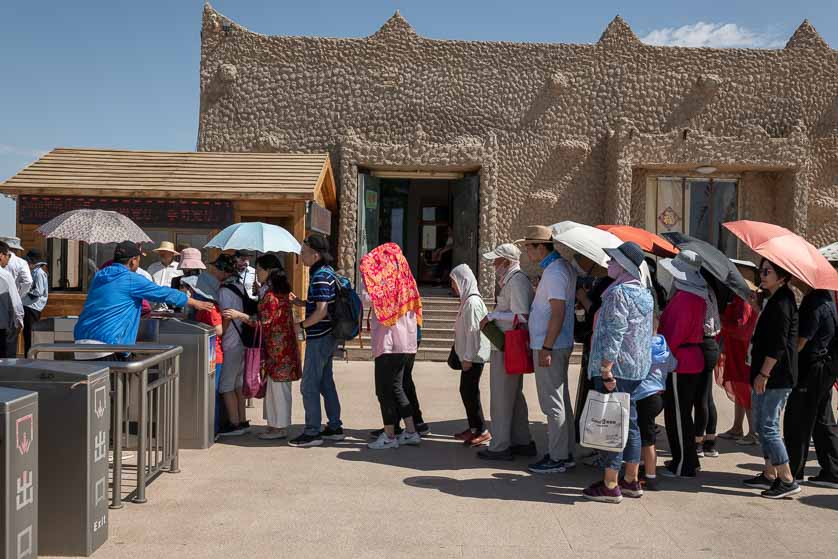
There is a large depot that serves as the entrance to the park. Here you must pay upon entering, and change from whatever vehicle you arrived in to one of the tour buses provided.

The bus ride makes several stops. You can wander around each attraction for about 15 minutes.
The road out to Yardang National Geopark from Dunhuang is quite new, so is in excellent condition. It is through barren desert, so make sure you have enough food and water. If you are driving, keep to the speed limit. There are speed cameras that calculate your average speed between cameras.
Access
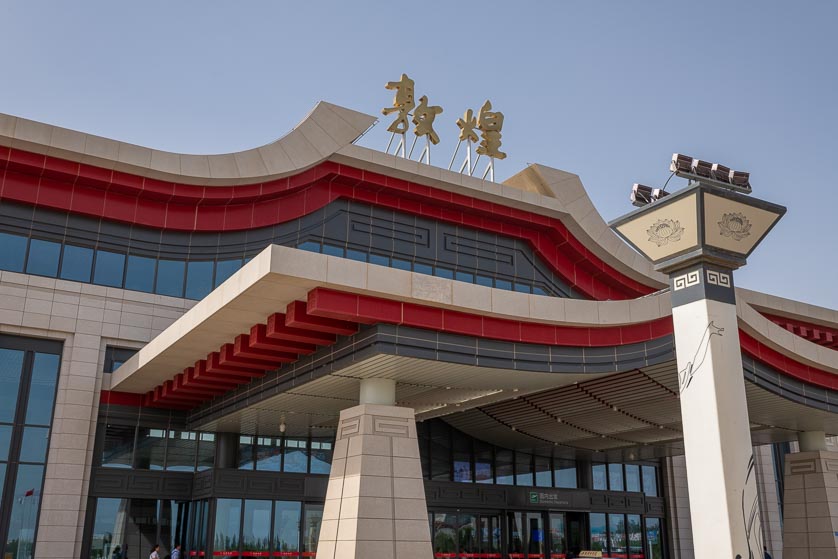
Dunhuang Airport is the usual port of entry for visitors to Dunhuang. There are direct flights from Beijing and Shanghai. The flight time from those cities to Dunhuang is about three hours.
