Beijing Parks: Green Spaces in Beijing 北京公园
Beijing can sometimes seem a sprawling sea of gray concrete but in fact there is a surprising amount of greenery in the city to afford rest and relaxation to Beijingers and visitors to China's capital.
China's past emperors built a number of green pleasure gardens which can still be enjoyed today. Beijing's parks are a great place to relax, take the kids to play or people watch the locals flying kites or practicing their morning tai-chi.

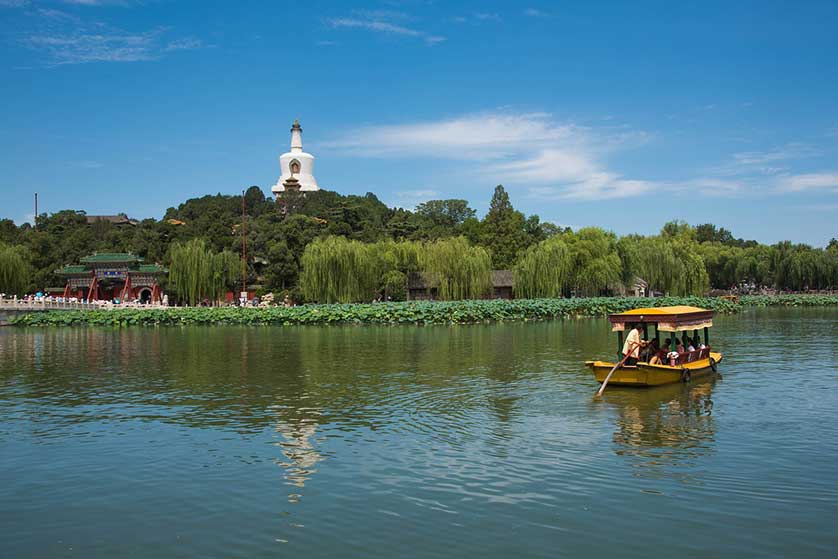
Beihai Park
Dating from the 10th century, Beihai Park is a classical Chinese garden and pleasure park of Emperors. Located near the Forbidden City, Beihai Park's highlights include the Nine Dragon Screen, the Five Dragon Pavilion, and the padoga, temples and pavilions of Jade Island.
Beijingers come here to row or paddle on the lake, relax and stroll and maybe enjoy a snack or meal in one of the park's cafes or restaurants.

Beijing Botanical Gardens
Beijing Botanical Gardens, in the north western suburbs of Beijing, at the foot of the West Hill (Xi Shan) are a relaxing, inexpensive place to spend a day away from the hustle and bustle of big city life. The Beijing Botanical Gardens are particularly spectacular in spring, with their blossom-laden fruit trees, and in autumn, when the vivid reds, greens, browns and golds of the vegetation heralds the approach of winter. The gardens also contain a vast conservatory, historic temples and excellent picnic spots.
The Sleeping Buddha Temple (卧佛寺) is located about 15 minutes from the front gate of Beijing Botanical Gardens, and is a must-see for visitors to the gardens. The whole temple complex contains four halls and courtyards with a colored glass screen, a pool and stone bridge in front, with Shouan Mountain forming a picturesque backdrop.
Dongdan Park 东单公园
While not a big park this park in the Dongdan district features lush plants along both sides of the path for those who like to wander. Many wooden chairs provide a comfortable place to relax if you want to take a breather for a while.
Simple sports equipment for old people wanting to stretch or maintain their mobility is provided. Sometimes you will see people dressed in hospital clothes from one of Beijing's famous hospitals opposite the park out to stretch their limbs and take in the air. Each morning many people practice tai chi in Dongdan Park.
Address: #4 Dahua Road, Dongcheng District 东城区大华路 4 号
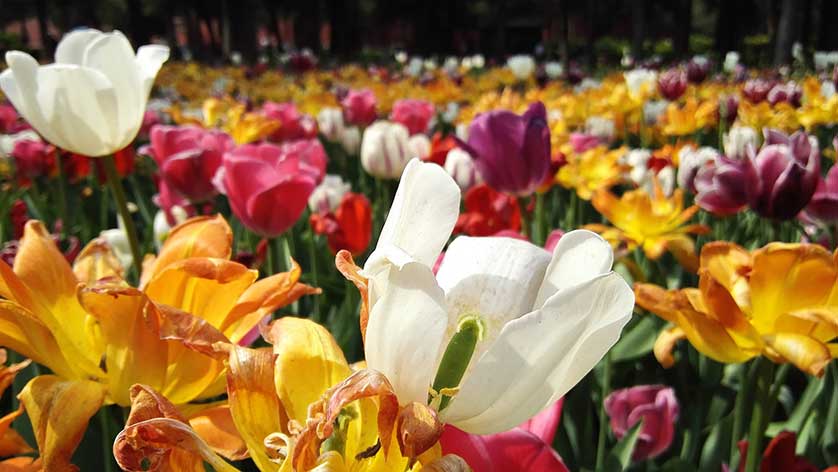
Jingshan Park
The beautiful grounds and flowers of Jingshan Park are located across the road from the north entrance to the Forbidden City. Jingshan Park owes its existence to the moat built around the Forbidden City in 1420. Not only did the park provide somewhere to store the soil dug out of the moat, but it was planned in line with fengshui practice to protect the palace from the northern winds.
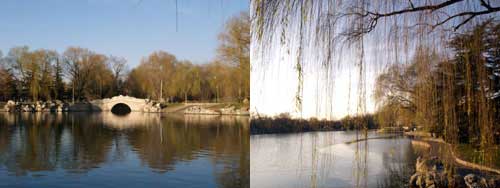
Longtan Park
Longtan Park, or Dragon Pool Park rarely features on lists of the "must-see" elements of Beijing, but a meander round the well-tended shores of the lake is a relaxing antidote to the hustle and jostle of some of the more crowded attractions Beijing has to offer.
The park also has a number of attractions for children including rollerskating, swings and slides.
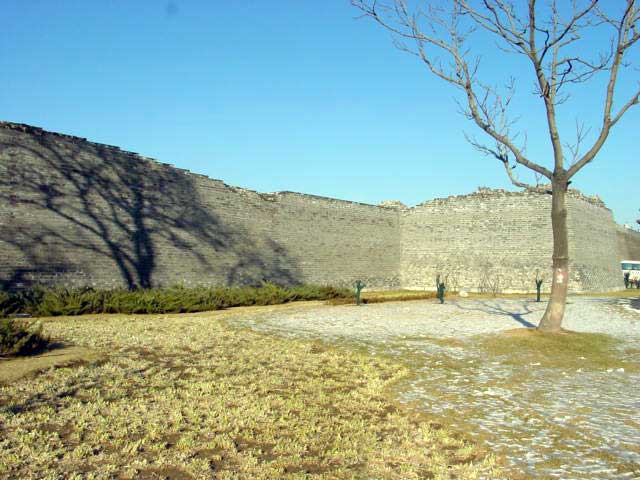
Ming City Wall Ruins Park
Running along the northern side of Chongwenmen Dongdajie from Chongwen Men to the South East Corner Watchtower is the reconstructed Ming City Wall Ruins Park, one of the Chinese capital's most pleasant parks to walk and relax.
The area has been tastefully laid out with lawns and flowers and many trees have been planted including apricot, peach and ginkgo.
The 1 km-long wall south of Beijing Railway Station was rebuilt with both original and new stones fitted using a traditional lime-and-plaster cement.
Opened in 2002, the landscaped park is free to enter and a pleasant place to stroll after visiting the Watchtower. The wall is illuminated after dark.
Along with Huangchenggen Relics Park, (Imperial City Wall Relics Park) in downtown Beijing, the Ming City Wall Ruins Park are the only two surviving sections of Beijing's original four Ming Dynasty walls: the Forbidden City wall, the Imperial City wall, the inner city wall and the outer city wall.

Old Summer Palace
The Old Summer Palace (圓明園) is close to the Summer Palace and was reputed to be the most beautiful garden in Beijing. Known as the "Gardens of Perfect Brightness" (Yuanmingyuan) this complex of palaces and gardens was built during the 18th and early 19th centuries. It was constructed as the main imperial residence of the 5th emperor of the Qing dynasty, the Qianlong Emperor and his successors.
The gardens and palaces were sadly looted and burned in 1860 by British and French troops as retribution for the murder and torture of a delegation sent to discuss surrender terms with the Imperial government of the time during the Second Opium War. After the destruction the court returned to the Forbidden City.
Many priceless objects ended up being taken to Europe and ended up in museums and private collections. The scars of this incident are yet to fully heal on the Chinese side. Several of the destroyed pavilions have been rebuilt as they once were.

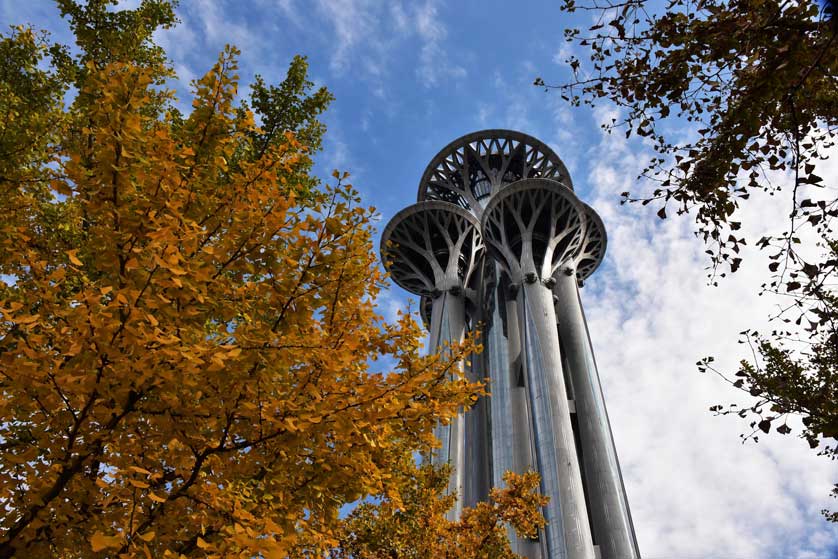
Olympic Forest Park
The Olympic Forest Park was created for the 2008 Beijing Olympic Games. There are two distinct parts to the green space separated by the North Fifth Ring Road - the oval-shaped southern part around Aohai Lake and its artificial wetlands and the northern part with a hill with excellent views of the National Stadium to the south.
Various Olympic events took place in the southern park including hockey, shooting and tennis though only the National Tennis Center still stands. The other arenas were dismantled following the completion of the Olympics.
The 258-meter tall Beijing Olympic Tower also stands in the park. It opened in 2014.
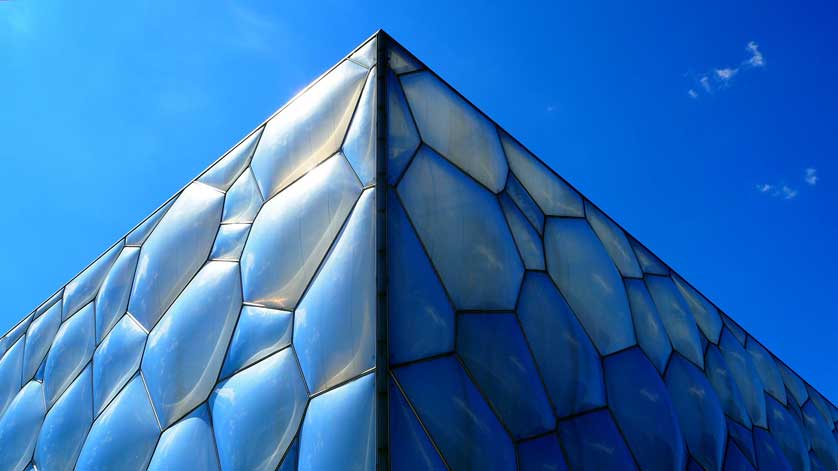
Olympic Green
The Olympic Green (北京奧林匹克公園) is a made-made park created for the 2008 Olympic Games. It will also act as the Olympic Park for the 2022 Winter Olympics.
The Beijing National Stadium and Beijing National Aquatics Center (Water Cube) were the standout buildings in the park. Other structures in the park include the Beijing National Indoor Stadium, the Olympic Green Convention Center and the National Speed Skating Oval built for the 2022 Games.
The Olympic Green Tennis Center hosted the Olympic tennis competitions and now serves as an arena on the international tennis circuit.
Both the Olympic Green Hockey Field and Olympic Green Archery Field were dismantled after the 2008 event. The 132-meter-tall Ling Long Tower is the highest structure with the park, which is a popular tourist attraction and a good place to relax as well.

Ritan Park
Built in the early sixteenth century, Ritan Park was originally a temple dedicated to the sun god where Chinese emperors of the Qing (1644-1911) and Ming (1368-1644) dynasties offered ritual offerings to the god of the sun. Now a green refuge for adults and children alike in Beijing's Central Business District.


Summer Palace
The Summer Palace (Yiheyuan) grounds are a vast park 12 km north west of Beijing city center. Long a royal park the Summer Palace was enlarged and in the 18th century by Emperor Qianlong, the park features the large Kunming Lake and was used as a summer retreat from Beijing's stifling heat by the Imperial court. Now the Summer Palace attracts visitors in their droves for its lovely gardens, temples, art, sculpture and pavilions.

Taoranting Park 陶然亭公園
Taoranting Park, in the south western area of Beijing, to the west of the Temple of Heaven, is an historic area of lakes and pavilions. Frequented by revolutionaries and poets in the past, Taoranting Park is now a popular urban space visited by couples enjoying boating on the lake, skaters in winter and tai chi enthusiasts year round. The park is also well-liked by families with kids due to the numerous fun activities available for young children.
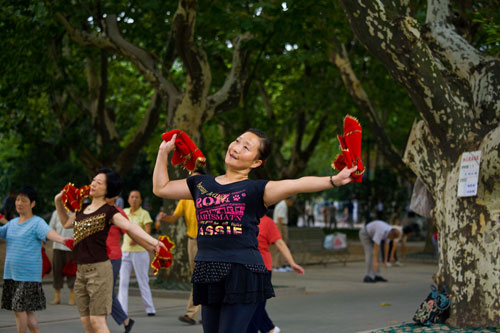
Temple of Heaven Park 天坛
The Temple of Heaven is surrounded by a huge 267-hectare open and often green space. It is very large and you will need several hours to walk it.
The park attracts thousands of hobbyists every day but especially on weekends and public holidays who flock to practice their various skills. There is great people watching as Beijingers enjoy Beijing opera, calligraphy, folk dancing (tiao wu), kite flying, ribbon dancing, tai chi, or just good old karaoke singing.
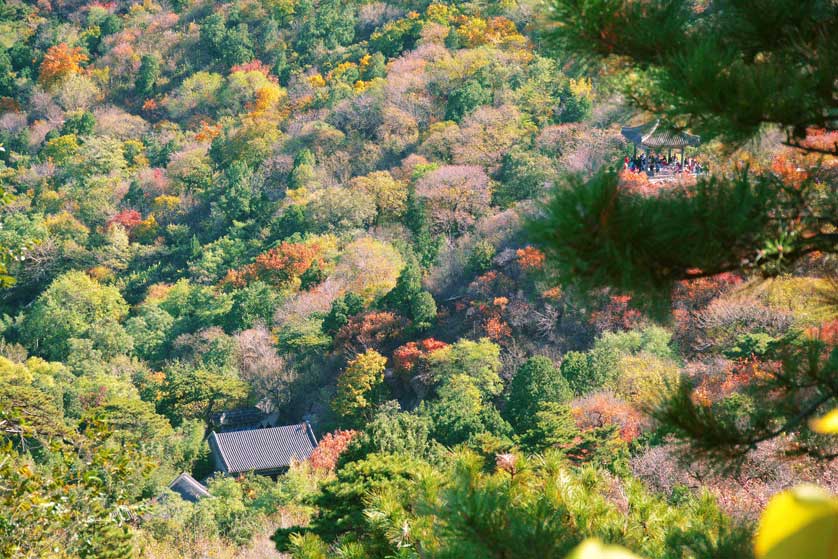
Fragrant Hills (Xiangshan Park)
The former imperial garden of Xiangshan known as Fragrant Hills is at the foot of the Western Hills in the Haidian District of northwestern Beijing. The area is known for its fall foliage when it seems half of the city arrives to view the striking red maples amid a sea of pine and cypress trees. Visitors can either climb to the summit of Xianglu Feng (Incense Burner Peak) at 557 meters or take the cable car.
The slopes of the wooded hills contain many pavilions, The Temple of Azure Clouds (Biyun Si) and the impressive Fragrant Hills Pagoda (香山琉璃塔).
The nearby Old Summer Palace was burned and looted in 1860 by British troops during the Second Opium War but its ruins are still an interesting sight.
Yuyuantan Park 玉渊潭公园
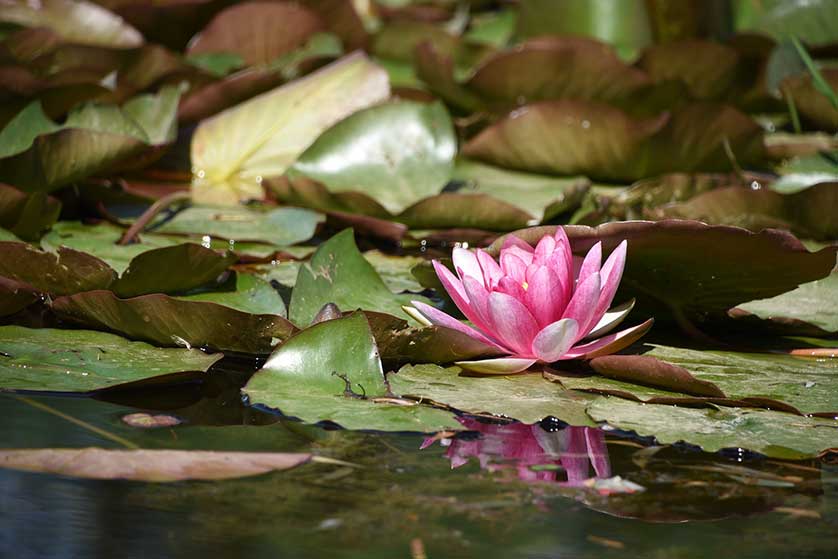
Yuyuantan Park is a huge open space west of Tiananmen Square at the southern end of the Sanlihe Road. Visitors can catch a canal boat here from near the park's south gate to the Summer Palace. The park is centered around the Yuyuantan Lake and there is much to enjoy here, especially for children, with an aquatic park, bicycle hire and a variety of child-friendly amusements. Spring is one of the best times to visit or in summer to cool off from the August heat. The park has some beautiful cherry and magnolia blossoms and Yuyuantan Park hosts an annual cherry blossom festival in April to show off the over 2,000 trees of different types on its 136 ha grounds, many of the trees are gifts from Japan when the two countries re-opened diplomatic relations in the 1970s.
Zhongshan Park
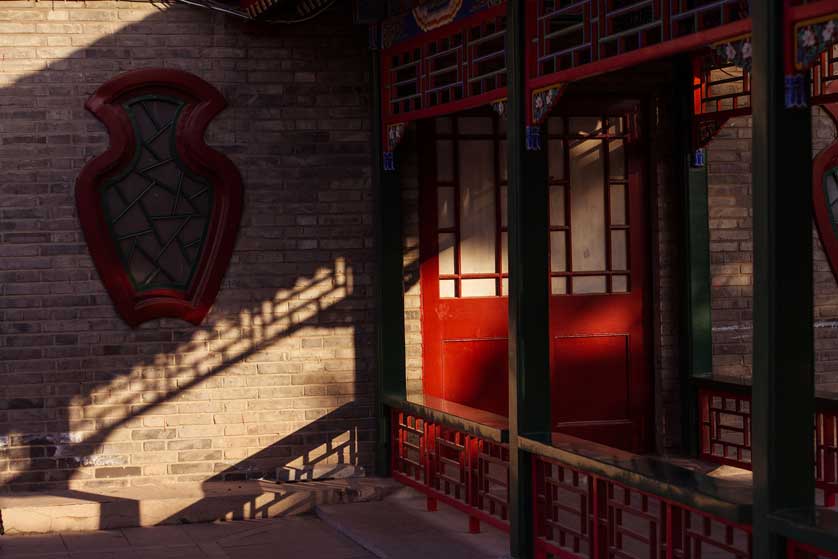
Spring is particularly stunning in Zhongshan Park. There are huge swathes of tulips planted throughout the park lining paths, or adding splashes of colour under avenues of trees. Zhongshan Park really has to be seen if visiting Beijing during the spring. In addition to the tulips Zhongshan Park offers impressive displays of wisteria, bamboo and peonies. Cherry and apple blossom can also be enjoyed in the early days of spring.
Zizhuyuan Park
Zizhuyuan Park (紫竹院公园) is one of the capital's most beautiful parks. It is situated in the Haidian District of northwestern Beijing and comprises three picturesque lakes with small islands within them.
The lakes are connected by bridges. The water is full of lotus flowers in summer and surrounded by tall willow trees. Here and there pavilions offer shade and a place to relax.
There are several groves of splendid bamboo hence its name of "Purple Bamboo Park" - indeed around 50 species of bamboo can be found here. Some of the buildings, bridges and other structures are constructed from the bamboo.
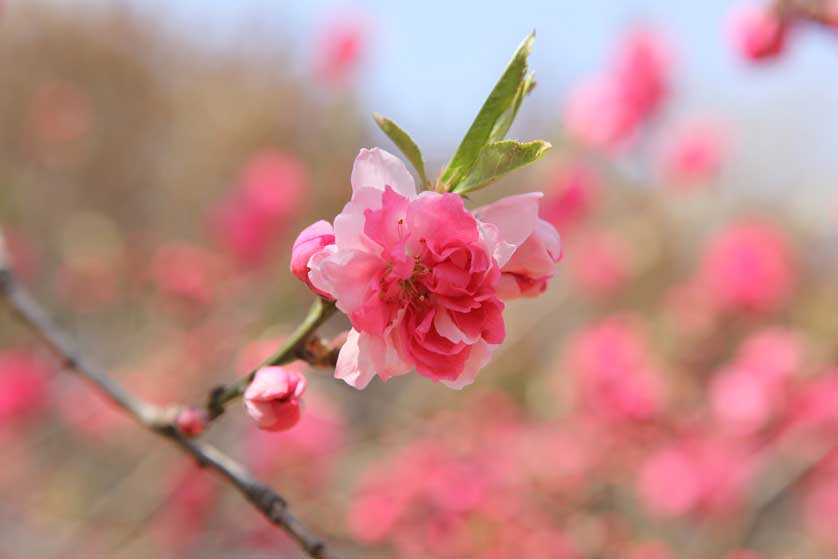
Also of note are the lovely plum blossoms which flower in spring.
The dredging of the lakes and building of the artificial hills dates from the 12th century with further renovations during the Ming dynasty and again in 1959.
It is possible to be rowed on a traditional, covered boat on the lakes.
Map of Beijing Parks
Related Garden Links
Book Hotel Accommodation in Beijing, China
Book Hotels in Beijing - Booking.com
Find Hotels in Beijing - Agoda
Search Hotels in China - Booking.com
Recommended Hotels in Shanghai China - Agoda
Budget Hotels in Beijing - Booking.com
Best Hotels in Sanlitun - Booking.com
Book Luxury Hotels in Beijing
Beijing Palace Museum Ticket (The Forbidden City)
Mutianyu Great Wall Ticket & Cable Car