Terracotta Army & Tomb of Qin Shi Huang 兵馬俑
- UNESCO World Heritage Site
- Terracotta Army guards the mausoleum of Qin Shi Huang
- 28 km east of Xian
- Discovered in 1974
- One of the most popular tourist sites in China
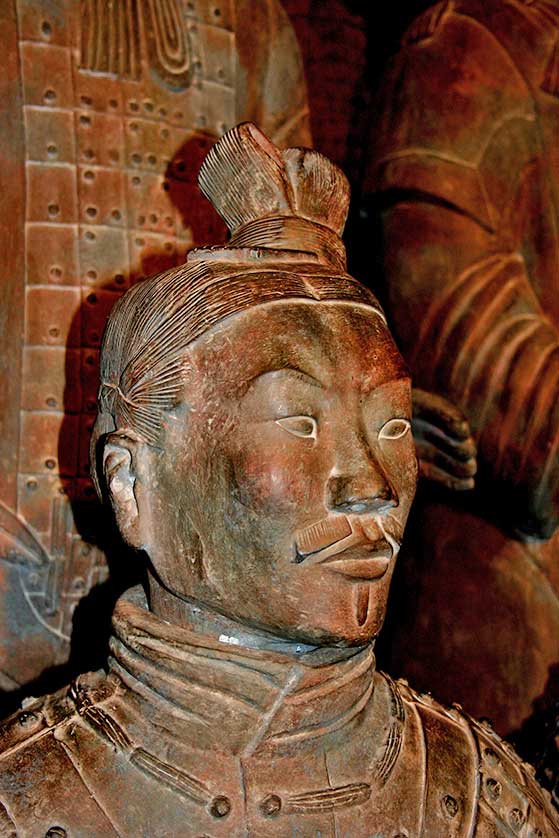
Only discovered in 1974 when peasant workers were digging a well, the Terracotta Army, 28 km west of Xian, is one of the wonders of the ancient world.
History
In 221 B.C., Ying Zheng (259-210 B.C.), King of Qin, became the First Emperor of Qin, (Qin Shihuangdi), when he managed to consolidate the neighboring states under his rule. He had begun work on his tomb shortly after becoming king of Qin at the age of 13, and the work took a staggering 39 years to complete by an estimated 700,000 strong workforce.
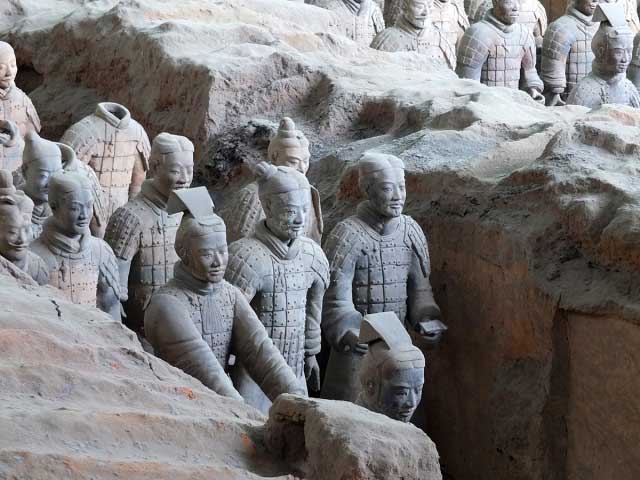
The Terracotta Warriors on display in their museum today, represent only a small portion of the 8000-strong underground army buried in front of the Emperor Qinshihuang's tomb to defend him in the afterlife.
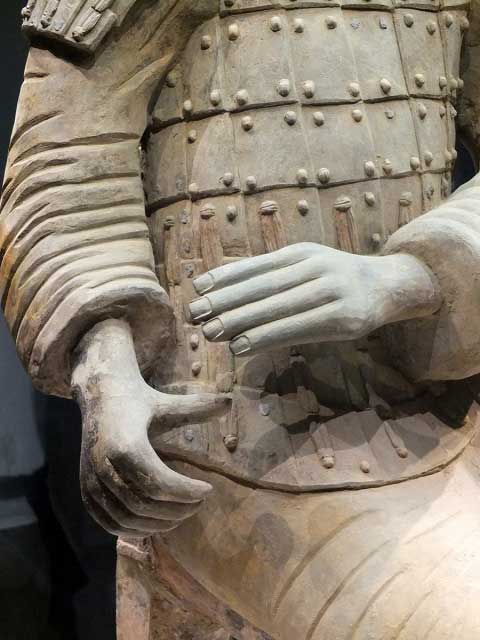
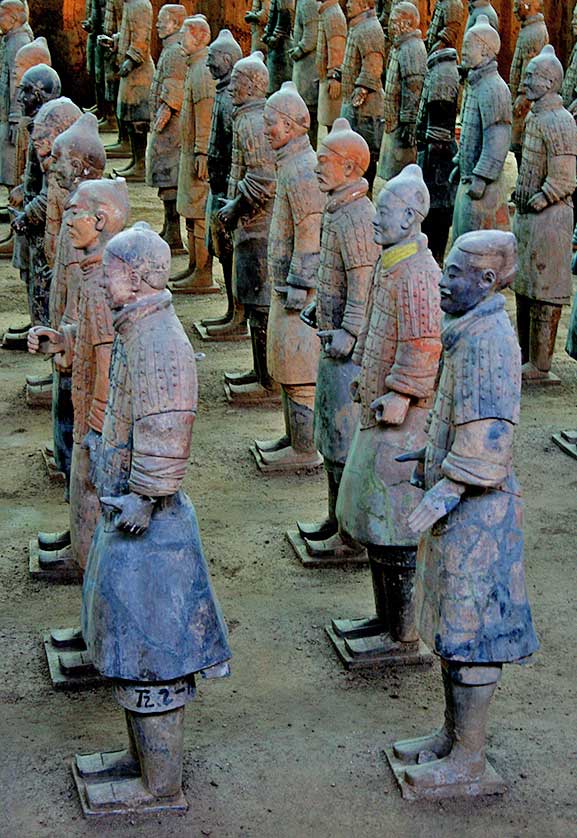
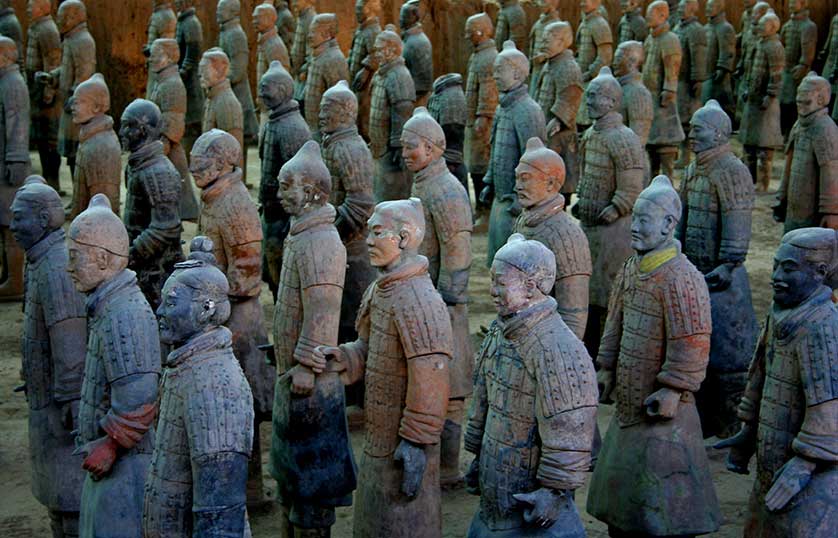
The craftsmanship of each clay warrior is as impressive as the scale of the project. Great care was taken to make each model unique, and each of the 8,000 soldiers had their own facial features, hair-style, and when dressed in the same uniform, the folds and fit are also unique. Located a mile west of the Terracotta Warrior Museum, Qin Shihuang's mausoleum is larger than Egypt's Great Pyramid, and has still not been fully excavated.
Concubines
The vast tomb complex also contained the tombs of 48 concubines who were buried alive on the emperor's death along with the workers so the location of the necropolis would not be known. The floor reputedly had rivers of flowing mercury and the roof was studded with pearls to represent stars in the night sky.
Display
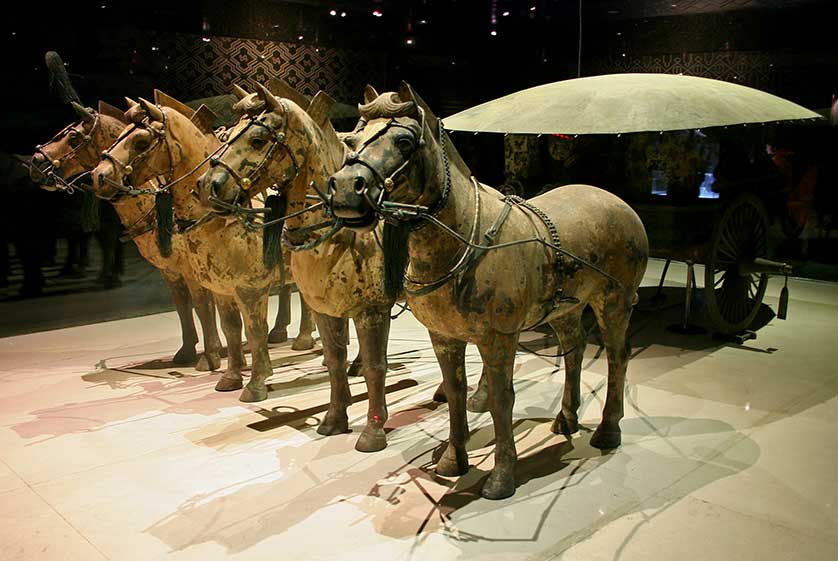
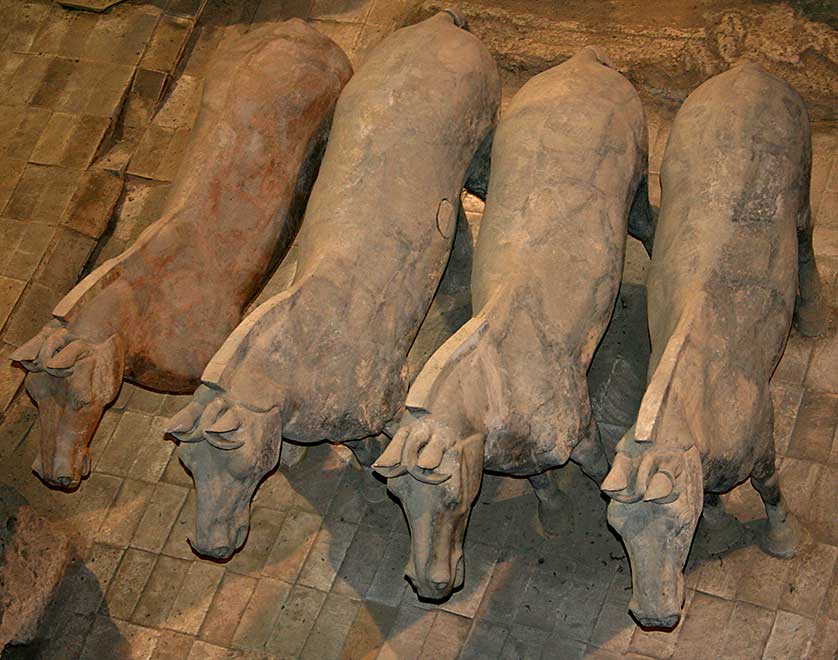
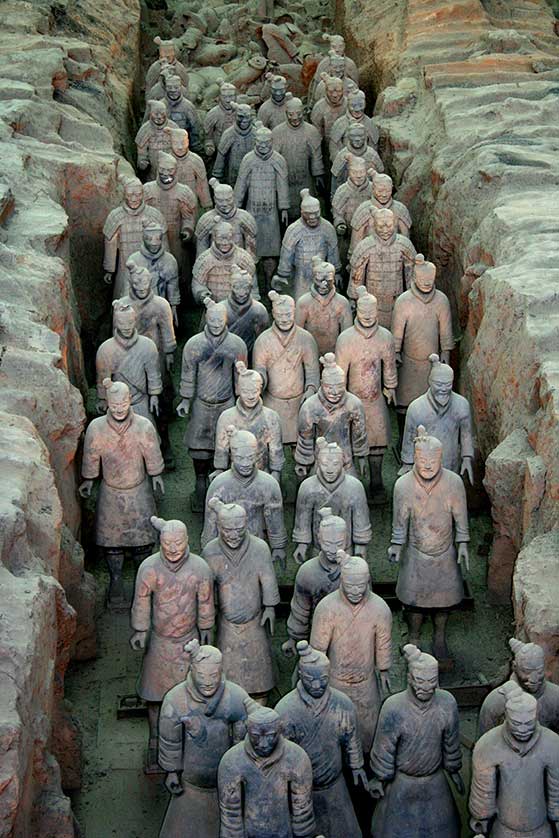
The warriors are covered by huge airport-style hangers in three pits. Pit 1 is the largest and contains the foot soldiers - over 6,000 of them arranged in battle formation. Pit 2 contains the cavalry and more infantry, Pit 3 has the general command full of high-ranking officers. Adjacent to Pit 2 is a small museum, which displays two remarkable bronze chariots found near Qin Shi Huang's tomb in 1982 and reassembled here from over 3,600 pieces.
The figures were originally brightly painted and carried weapons - the paint has now faded and the wooden weapons have rotted.

Terracotta Army Museum Access
The Terracotta Army Museum is 28 km east of Xian.
Tel: 029 8129 9001
Hours: 8.30 am-6 pm March 16 to November 15; November 16 to March 8.30 am-5.30 pm. last entry is 30 minutes before closing time.
Take bus #306 from Xian Railway Station via Huaqing Hot Springs or a slightly quicker minibus. The journey takes about one hour. Many visitors join a tour organized by their hotel or a taxi from the center of Xian.
There are also shuttle buses from Xian North Railway Station on Xian Metro Line 2 to the museum.
Xian Attractions
Other attractions in Xian include Xian Bell Tower, Xian Drum Tower, the Big Wild Goose Pagoda, the Small Wild Goose Pagoda, the Great Mosque, the Muslim Quarter, Louguantai, Shaanxi History Museum and Xian City Walls.
Book Hotel Accommodation in Xian China
Book Hotels in Xian - Booking.com
Find Hotels in Xian - Agoda
Grand Park Xi'an
Shangri-La Hotel Xi'an
Crowne Plaza Xi'an