Hong Kong Temples 香港寺庙
Find information on the many and varied temples in Hong Kong.
Many of Hong Kong's temples are in some way connected with deities of the sea reflecting the city's connections with the ocean, first as a fishing port way back in its early history to its position as a global trading center now.
For example, there are over sixty temples altogether dedicated to Tin Hau, the Chinese goddess of the sea, in the territory.
Find a listing of temples, churches, mosques and other places of worship in Hong Kong.

Temple of Ten Thousand Buddhas (萬佛寺)
The Temple of Ten Thousand Buddhas in Sha Tin in the New Territories was founded in 1949.
The temple contains over 12,000 images of Buddha on the 8 hectares site. Large golden Buddhas in various poses line the 400 steps to the temple at the top of the hill.
Tiny golden, ceramic Buddhas line the shelves inside the halls of the temple. More statues are found in the grounds of the temple and in the nine-storey red pagoda.
The Buddhas are mostly made in Yunnan, Guandong, and Shanghai and are donated to the temple by worshippers.
Man Mo Temple (文武廟)

Man Mo Temple in the Sheung Wan district, to the west of Central, is one of Hong Kong's oldest temples, dating from 1847.
Man Mo is dedicated to the Taoist deities Man Tai and Mo Tai. Man is the god of literature and Mo the god of war. Both deities were thought to have been real people: the 3rd century bureaucrat Cheung Ah Tse and the 2nd century warrior Kwan Wan Chung.
Statues of the two gods stand in the temple, the god of literature holds a calligraphy brush and the god of war a sword. The military deity, also known as Kwan Yu, is also the patron of restaurants, pawnbrokers and the secret Triads. Inside the main hall are two sedan chairs used to carry the gods during festivals.
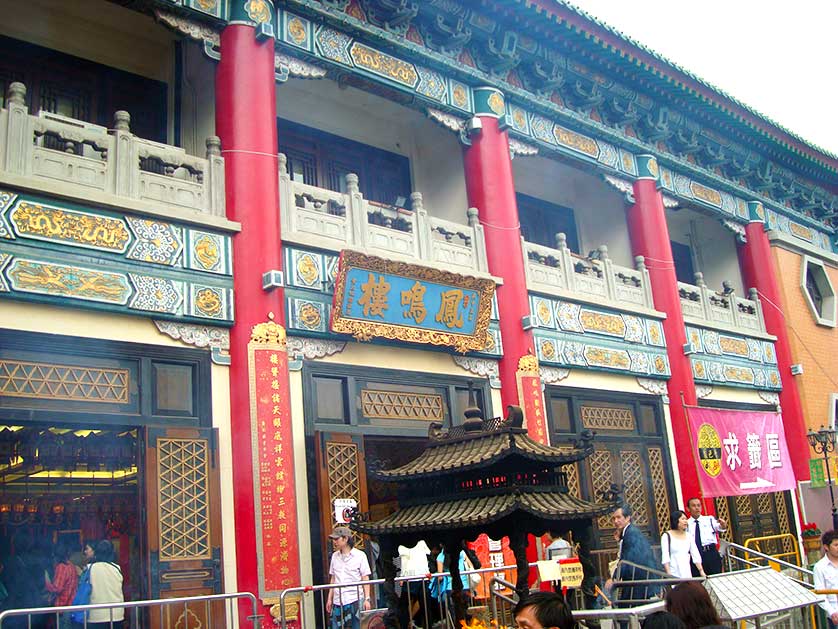
Wong Tai Sin Temple (黃大仙祠)
Wong Tai Sin Temple (黃大仙祠) in Kowloon is incredibly popular with Hongkongers, who come in their thousands every day, to pray for good fortune and divine their future by shaking out bamboo prediction sticks, known as chim.
Established in the early 20th century by two Taoist monks from Guangzhou, the colorful, atmospheric temple is dedicated to Wong Tai Sin, a 4th century shepherd boy said to have had healing powers and later raised to the status of a divinity.
The large temple grounds include incense-filled shrines, the Good Wish Gardens complete with colorful pavilions, ornamental ponds and bridges and dozens of fortune-tellers - some of whom advertise their services in English.
Sik Sik Yuen Wong Tai Sin Temple has shrines dedicated to Buddhist, Taoist and Confucian deities and is a fascinating window into popular Hong Kong religion.
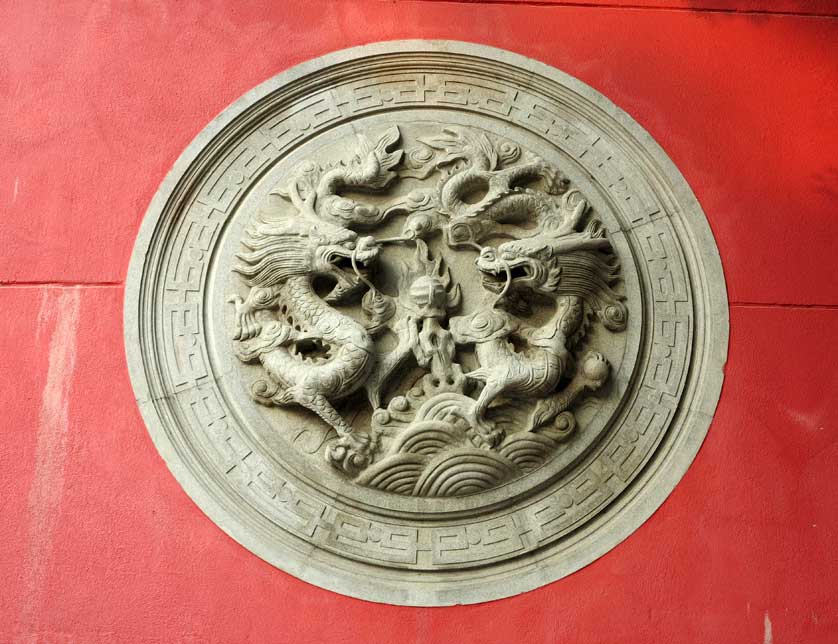
Other sights in the temple are a Nine-Dragon Wall based on the one in Beijing's Forbidden City and three memorial archways. A small fee is charged for the Good Wish Gardens and the temple is open from 7 am-5.30 pm daily.
The Sik Sik Yuen Wong Tai Sin Temple gets especially busy at Chinese New Year, Friday nights and over weekends.
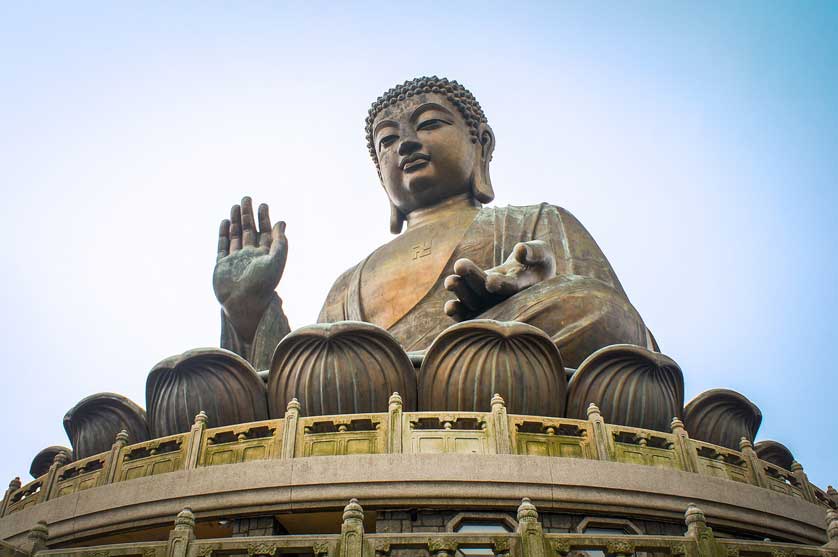
Po Lin Temple (寶蓮禪寺)
Po Lin Temple (寶蓮禪寺) on Lantau Island dates from 1906 when it was founded by three monks, Da Yue, Dun Xiu and Yue Ming, from Jiangsu. Originally known as the "Big Hut," the temple grew from humble beginnings and became known as Po Lin (lit. 'Precious Lotus Zen Temple') in the 1920s.
The Big Buddha statue at the monastery was completed in 1993. The bronze statue is 26 metres high including the lotus petal throne and weighs 202 tons - it is one of the largest, outdoor, seated images of the Buddha in the world.
The statue faces towards Beijing and takes its name Tian Tan from the Temple of Heaven in the Chinese capital, after which its base is modeled.
Visitors climb 268 steps to reach the Buddha, which is a representation of Amitabha - the Buddha of the "Pure Land" with the right hand raised in a gesture of peace, bestowing calm. Beneath the statue are three subterranean floors, the lowest one containing a relic supposedly from the funeral pyre of the historical Buddha - Siddhartha Gautama.
The MTR-owned Ngong Ping 360 is a spectacular new cable car that links Tung Chung with the Po Lin Monastery at Ngong Ping. The 5.7 km, 25 minute ride offers some spectacular views on a clear day including the sea, the Big Buddha statue and Hong Kong International Airport.
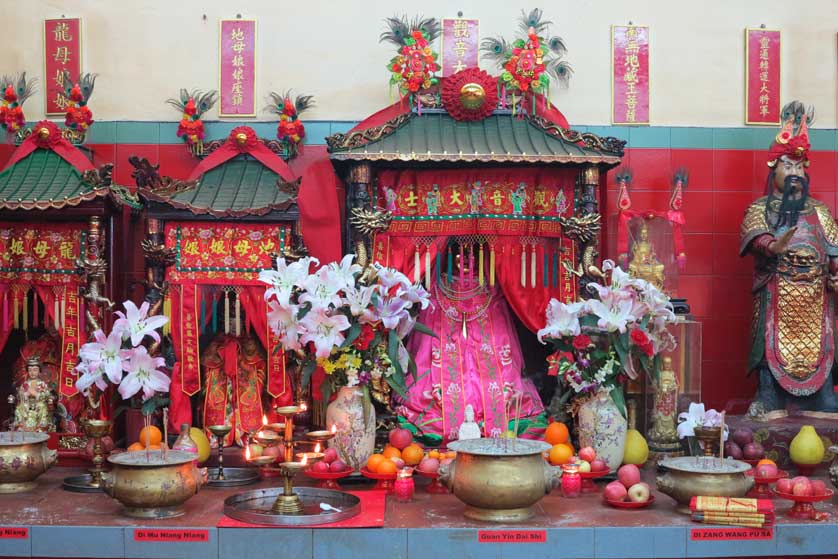
Tin Hau Temple, Stanley (赤柱天后廟)
Tin Hau Temple in Stanley is the oldest of all the sixty-odd Tin Hau temples in Hong Kong and was reputedly built by a famous pirate.
The temple has its origins in the 18th century and used to have a framed and blackened tiger skin hung on its walls - the last one shot in Hong Kong in 1942.
Inside the temple, dedicated to the Chinese goddess of the sea, is a colorful collection of figures and plentiful offerings of fruit.
Other temples in Stanley are the tiny Pak Tai Temple in Ma Hang Park, Tai Wong Temple, Kwun Yum and the very small Shui Sin.
Other well-known Tin Hau temples in Hong Kong are in Causeway Bay, Yau Ma Tei and in Joss House Bay, the latter considered the most sacred.
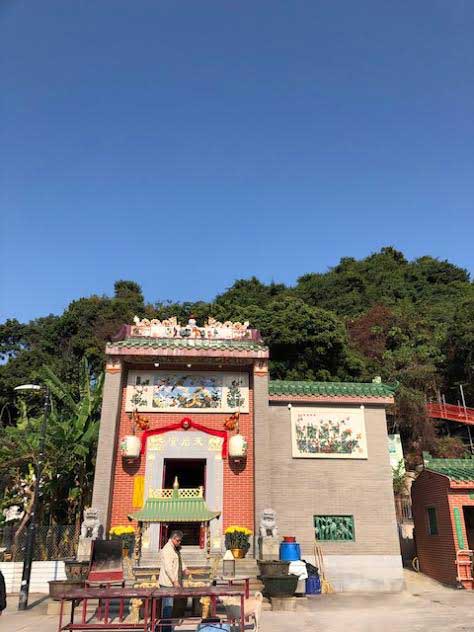
Tin Hau Temple, Sok Kwu Wan (索罟灣天后廟)
The Tin Hau Temple in Sok Kwu Wan on Lamma Island is one of the many Tin Hau temples in Hong Kong.
"Sok Kwu" means to 'bring in the net' and "Wan" is 'bay' so it is apt that temple is dedicated to the Goddess of the sea. Another Tin Hau temple at Yung Shue Wan on Lamma has a pair of distinctly western-style lions at the entrance rather than the usual Chinese-style shishi.
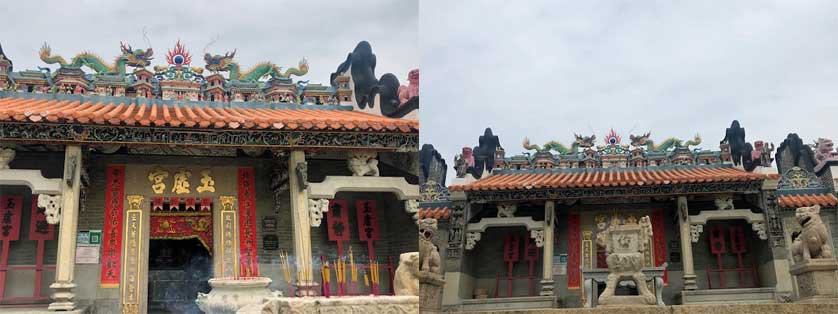
Pak Tai Temple, Cheung Chau (長洲北黑帝)
The colorful Pak Thai Temple on Cheung Chau dates from 1783 and is the center of the annual Bun Festival on the island.
The festival pays homage to Pak Tai and takes place in late April or early May depending on the lunar calendar.
The temple was completely rebuilt in 1989 and is known for its ornate roof decorations and several treasures within. These include an 800-year-old iron sword from the Song Dynasty and a golden crown that adorns the main Pak Tai statue.
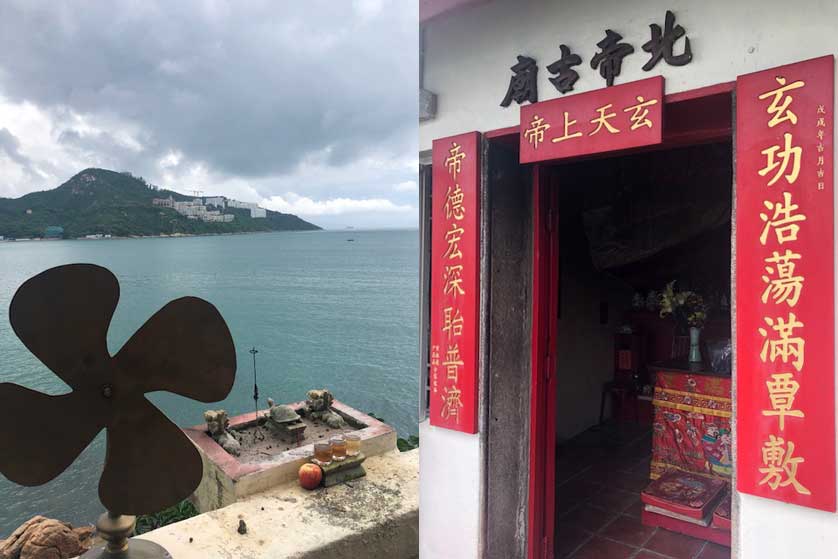
Pak Tai Temple, Stanley (赤柱北黑帝)
Located within Stanley Ha Park, Pak Tai is an historic temple dedicated to the Taoist god "Pak Tai", a protector of fishermen like Tin Hau and Hung Shing and also a representation of the supreme God of Heaven.
The back wall of the single hall temple is built from the rocks of the cliff. There is a small well too in the tiny grounds. Ma Hang Park itself makes for a pleasant stroll. Information boards here and there provide information on the birds, butterflies and other wildlife you may encounter here.
There are a number of Pak Tai temples in Hong Kong including temples in Wanchai, Aberdeen, Hung Hom, Mui Wo on Lantau and Clear Water Bay.

Pak Tai Temple, Wanchai (灣仔北帝廟)
The Pak Tai temple in Wanchai on Lung On Street dates originally from 1863. It is the largest Pak Tai temple in Hong Kong and consists of three halls. The main hall of the temple holds a large, 17th-century, 3-meter-tall copper image of Pak Tai flanked by figures of Lung Mo (the Dragon Mother), the God of Wealth (Caishen) and the Three Pure Ones (Sanqing).
The other two halls are dedicated to Lung Mo and Caishen. The temple was fully renovated as recently as 2005. The major festival is on the the third day of the third lunar month.

Po Fook Hill Cemetery (寶福山)
Po Fook Hill Cemetery or Po Fook Hill Columbarium is one of the largest public cemeteries in Hong Kong.
The vast columbarium is a storage area for cremated ashes.
There is a funicular to the top of the hill from where there are panoramic views of Sha Tin below. The cemetery is adjacent to the Temple of Ten Thousand Buddhas.
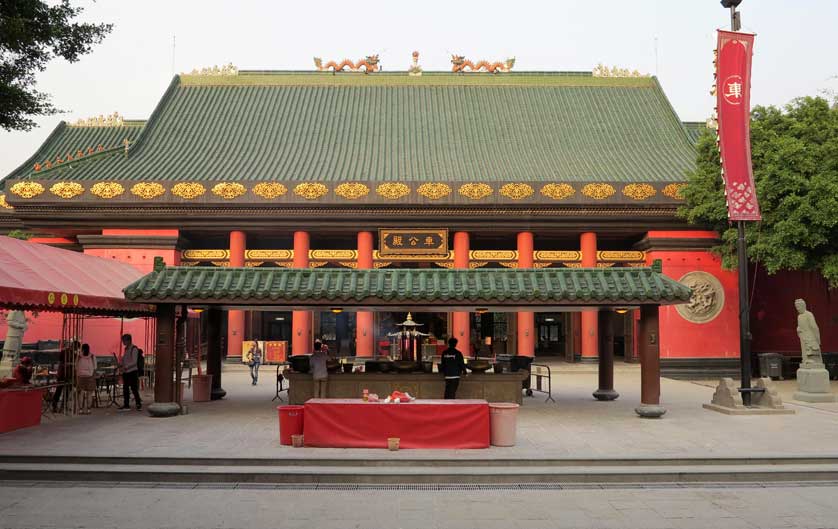
Sha Tin Che Kung Temple (車公廟)
Sha Tin Che Kung Temple in Sha Tin is a Taoist temple dedicated to Che Kung a 13th-century, Song Dynasty general. He is credited with having rid the area of plague after the temple was completed.
The large grounds have both Ming period and more modern buildings, renovated twice in 1890 and in 1993-1994.
The temple receives many visitors, including many local Hong Kong public servants and government officials, during the second and the third days of Chinese New Year.
From 1995 on Che Kung has been the official temple for the Hong Kong government to seek good fortune and predictions.
Visitors spin the wheel of fortune and beat the large drum within the temple. This helps ensure good luck for the coming year.
Che Kung Temple Station is the nearest station on the MTR, take Exit A.

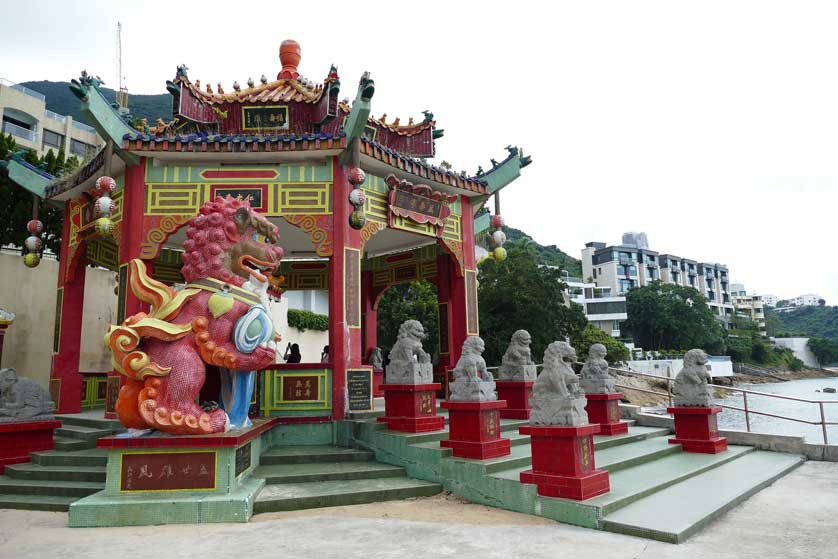
Kwun Yam Shrine, Repulse Bay (觀音)
The quirky Kwun Yam Shrine at the south eastern end of the beach in Repulse Bay is dedicated to Tin Hau and Guan Yin - Buddhist goddesses of mercy and protectors of seafarers. The temple is full of gaudy statues and mosaics put up in the 1970s. The Longevity Bridge, just outside the temple, is believed to add three years to the lives of those who walk it.
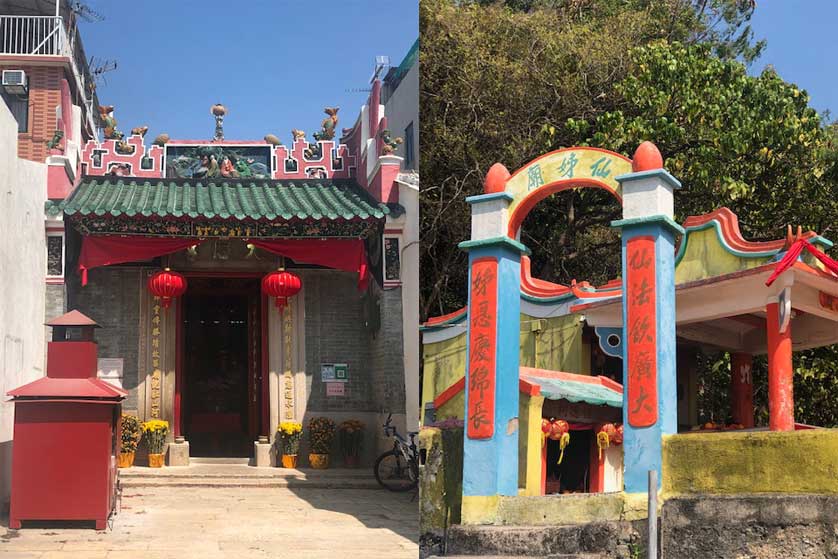
Lung Mo Temple, Peng Chau (龍母)
Lung Mo Temple which is also known as Dragon Mother Temple is the most visited temple on Peng Chau; a trip to the temple is supposed to bring great luck to all visitors. One of the biggest days on the island is the commemoration of the Dragon Mother's Birthday - which is the eighth day of the fifth month on the lunar calendar. Ling Mo is a goddess of parents and their children. The temple dates from the 1970s.
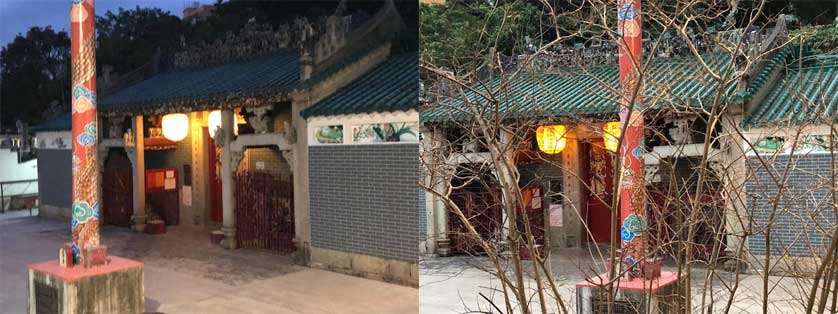
Hung Shing Temple, Ap Lei Chau (洪聖大王)
Located on the shoreland in Ap Lei Chau, the Hung Shing Temple is dedicated to the God of the South Sea, Hung Shing Tai Wong. The main temple festival takes place on the 13th day of the second lunar month. There are parades in period costume as well as musical performances.
There are many Hung Shing temples in Hong Kong including six on Lantau alone, Aberdeen, Stanley, Tsuen Wan and Wanchai.
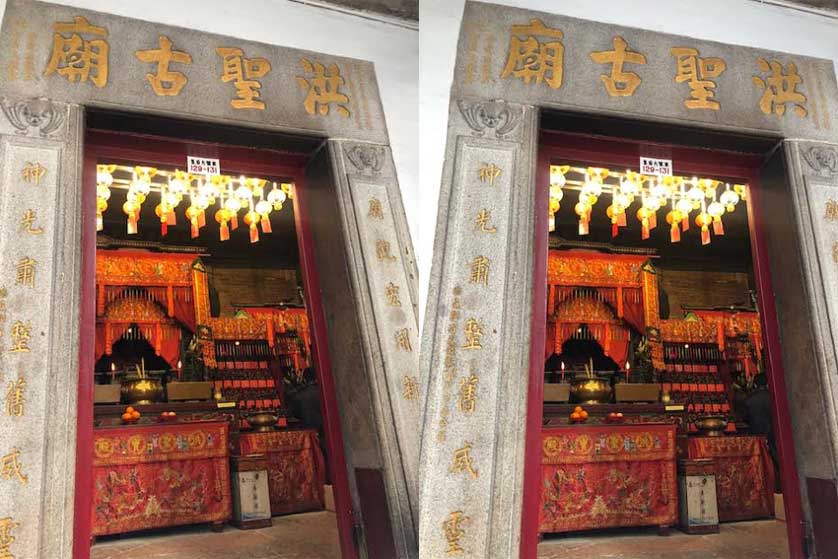
Hung Shing Temple, Wanchai (洪聖古廟)
The Hung Shing Temple in Wanchai is at 129-131 Queen's Road East. The temple dates from the mid-19th century and once stood on the shoreline, though land reclamations since mean that it is now some distance from the sea. The simple one hall temple is built from local granite. It is a short walk south east of Wanchai MTR station and close to the Hopewell Centre and Bauhinia Garden.
Next door is a Kwun Yum temple added in 1867.
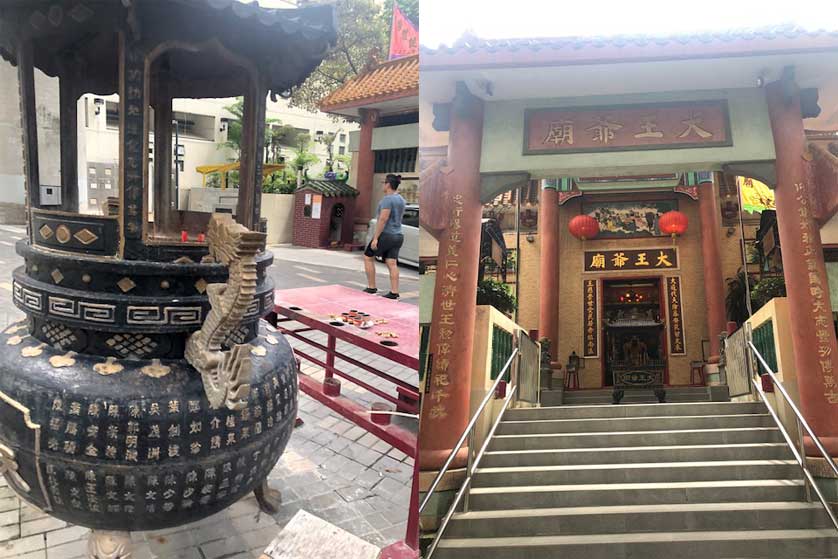
Tai Wong Ye Temple, Wong Chuk Hang (大王爺廟)
Tai Wong Ye Temple at Wong Chuk Hang dates from 1982. Of note are the porcelain pictures embedded in the walls. A 2 meter-high statue of Tai Wong Ye stands in the main hall. Tai Wong Ye (Tai Wong Yeh) temples can be found throughout Hong Kong.
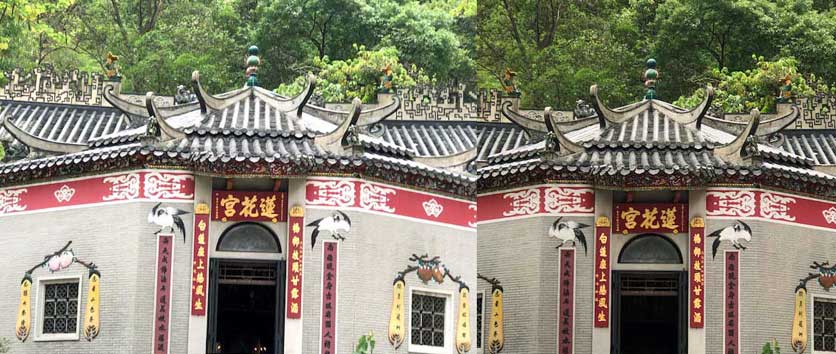
Lin Fa Temple (蓮花宮)
Lin Fa Temple in Causeway Bay dates from 1863. The temple is dedicated to Kwun Yam, the Chinese Goddess of Mercy. The temple hosts the Tai Hang Fire Dragon Dance during the important Mid-Autumn festival. An historic temple, Lin Fa is noteworthy for its ornate roof decorated with flying dragons, phoenixes and lotus flowers. Within are shrines dedicated to Wai Tor, Yum Choi Sun and Tai Sui.
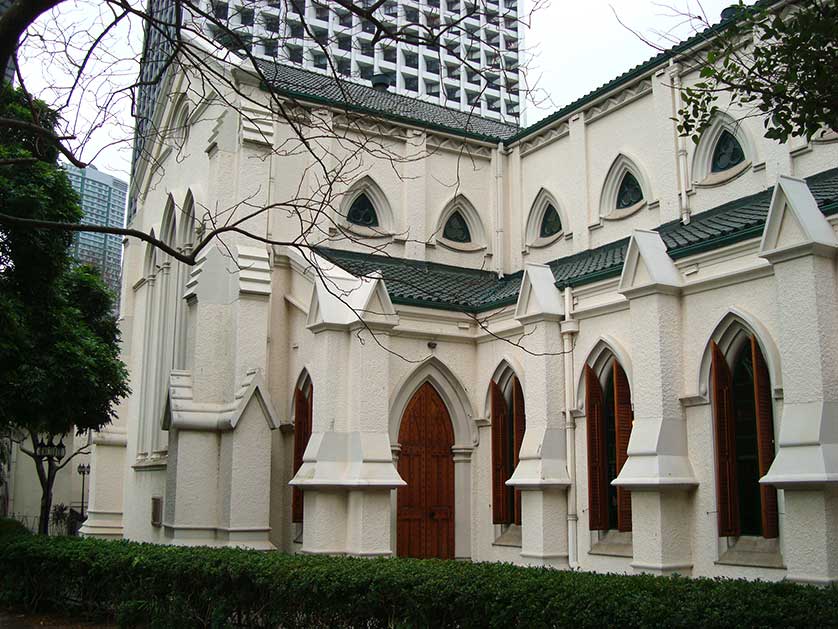
Churches in Hong Kong
St. John's Cathedral 聖約翰座堂
St John's Cathedral located in Central, not far from the Peak Tram terminal, is situated in a quiet area of Hong Kong easily reached from Battery Path or walking up the hill from Chater Garden and the waterfront.
An Anglican Church, built in the shape of a cross, St John's Cathedral was founded by the British in 1847 and is one of the oldest churches in Asia.
Situated in the heart of Hong Kong's CBD, St John's Cathedral is surrounded by towering skyscrapers including the Bank of China Tower, the HSBC Building, the Legislative Council Building and the Central Government Offices. The equally historic Court of Final Appeal is virtually next door.
Mosques
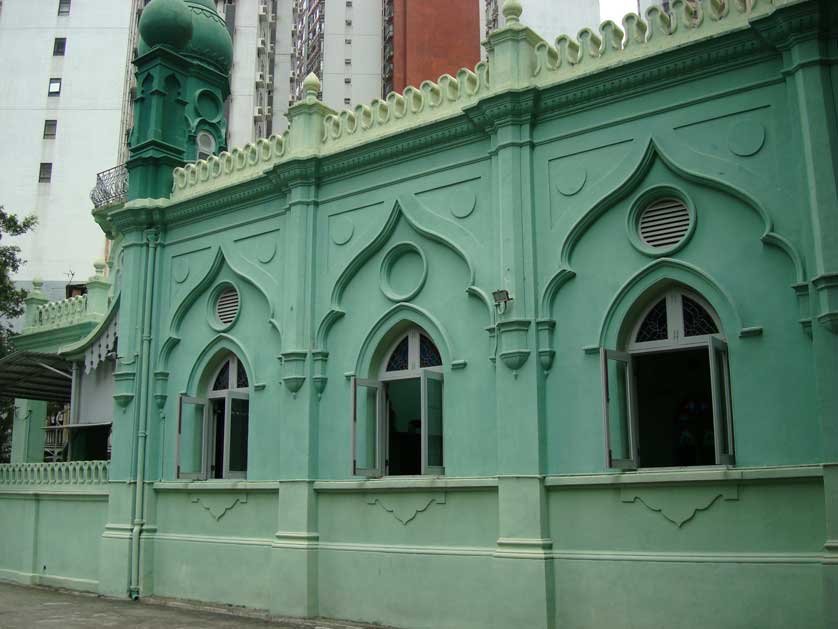
Jamiah Masjid Mosque (些利街清真寺)
Jamiah Masjid Mosque (些利街清真寺) aka Jamia Masjid Mosque or Lascar Mosque, is located at 30 Shelley Street in Mid-Levels. It is the oldest mosque in Hong Kong and dates from 1890. The Arabic-influenced arched windows are a distinguishing feature of this green, rectangular, Grade I listed building.
Hong Kong Related
Hotels in Hong Kong
Book Hotels in Hong Kong - Booking.com
Hotels in Hong Kong - Agoda
Find Hotels in Kowloon - Booking.com
Peninsula Hotel Hong Kong
Search Hotels in Macau - Booking.com
Venetian Macau Resort Hotel
Budget Hotels in Hong Kong - Booking.com