Nanjing Temples: Now and Zen
In Nanjing and beyond, a burgeoning array of sites and services offer connections to the calmer, healthier, more spiritual side of Chinese life.
Daniel Allen
Club Meditation
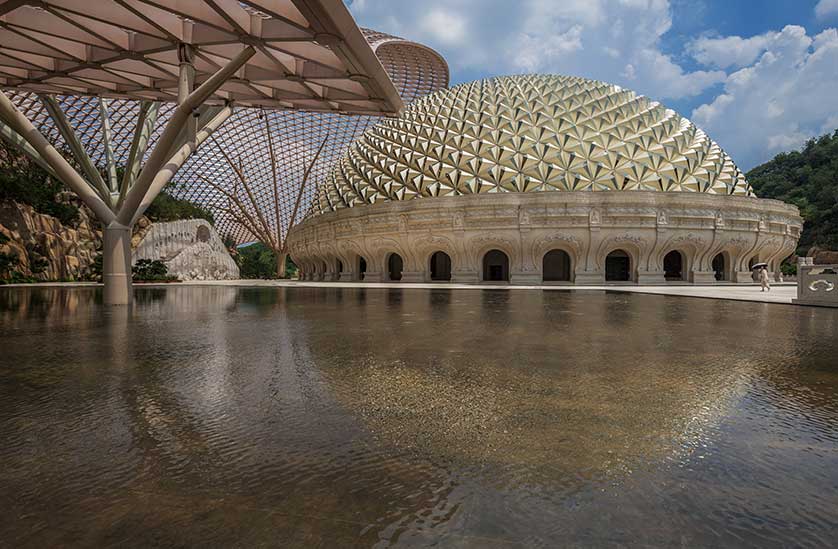
In the close heat of a July morning in Nanjing, Wang Lei lights a supersized, ochre-coloured incense stick and bends toward the shiny new dome of the Usnisa Palace's Thousand-Buddha Hall.
With jaw-dropping new architecture providing the backdrop to time-honoured Buddhist reverence, it's just one more Chinese juxtaposition in a land that blends ancient and modern like no other.
Wang Lei is not your typical Buddhist practitioner. Until recently, the twenty-eight year-old had barely set foot in a temple, and was far more interested in gaming and online shopping than religion. Yet today the restaurant manager admits his life before Buddhism was empty and superficial.
"Looking back, I wasn't happy at all," he explains candidly. "I hated my job. I found it demeaning and didn't think my salary was high enough. But buying stuff online didn't make me feel better either."
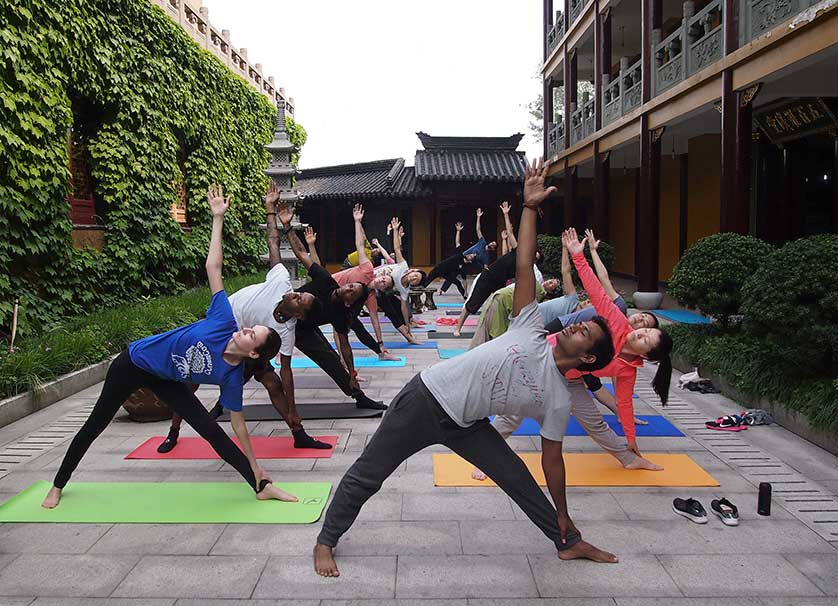
These days Wang visits the Usnisa Palace and other Buddhist temples in Nanjing as often as he can. Sometimes he joins classes in meditation and Buddhist teaching.
"I have learned so much," he says. "Now I live not only to better myself, but to help other people too. Through meditation I have found inner peace."
Towers and Temples
Wang's story is far from unusual. If the old saying "money doesn't buy happiness," seems trite, then these days more and more young Chinese are interested in finding something that can. And so, as the search for real meaning intensifies, so the number of sites and services catering to their desires is multiplying.
Jeff Yee is director of Yejo Circle, a Shanghai-based company set up in 2010 to offer millennial Chinese (and foreigners) more spiritual, meaningful travel experiences.
"I see a lot of young Chinese turning their back on consumerism these days," he says. "Whether it be nature, or spirituality, or health and wellbeing, they are choosing to focus on other things. I think that's healthy and a sign of a maturing society."
Usnisa Palace
Located on the outskirts of Nanjing, overlooked by Niushou ("cattle head") Mountain, the Usnisa Palace and surrounding Niushoushan Cultural Park typify the city's burgeoning new investment in sites dedicated to religion, health and spiritual well being.
Opened in 2015 at a eye-watering cost of 4 billion RMB (approximately 600 million USD), the sprawling, 197-acre site boasts numerous attractions, including multiple pagodas, a temple, a working monastery, and a stunningly designed modern palace, ringed by upscale eateries and boutiques.
The park, which was under construction for three years, lies on a centuries-old sacred site where the Niutou Sect of Chinese Zen Buddhism originated, while Niushou Mountain also happens to be the location where Zheng He, China's version of Christopher Columbus, is buried.
Yet the area was relatively unknown until recently, when a piece of bone from Buddha himself was discovered in a stone chest beneath one of Nanjing's Buddhist temples.
"The park commemorates the find," explains Wang Lei. "But even if you're not interested in Buddhism, this is a beautiful place to walk, especially in the spring, when everything is blossoming."

Porcelain Tower
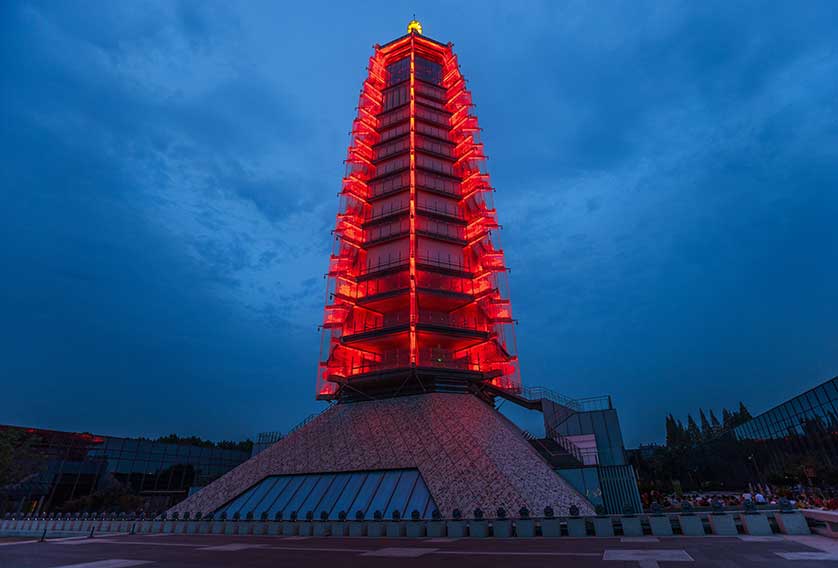
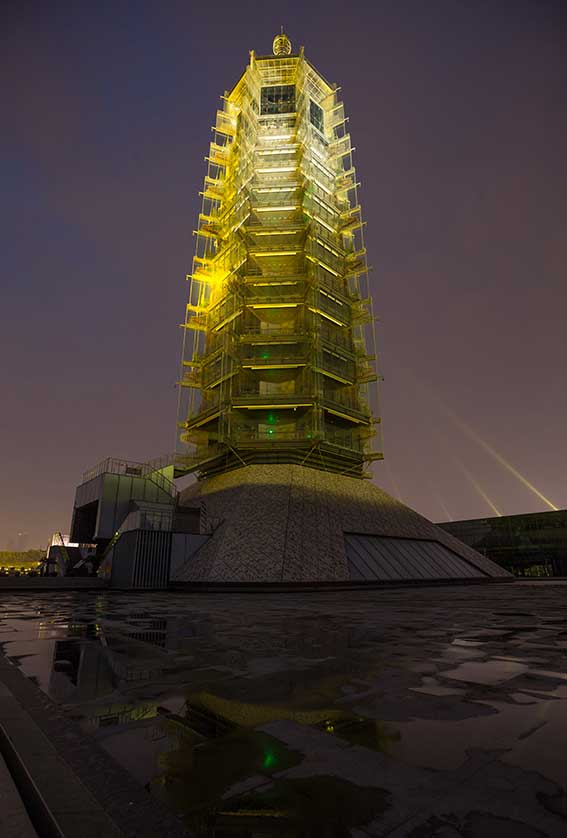
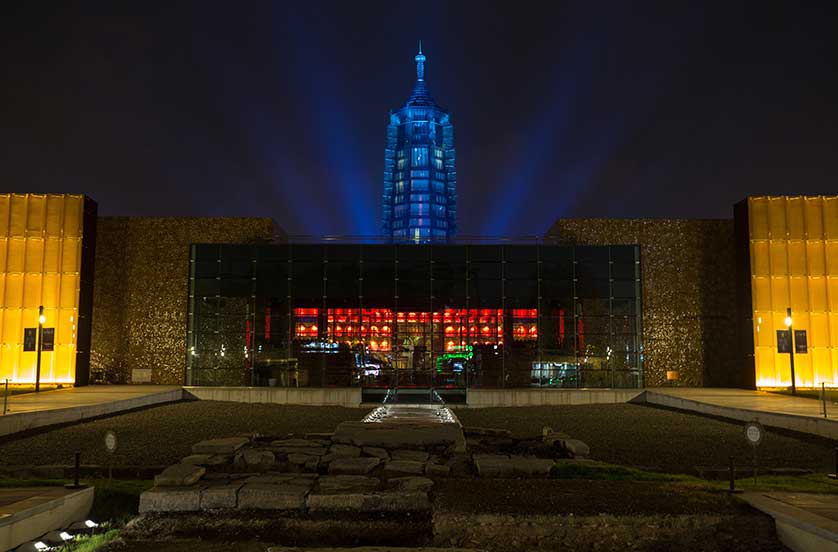
Complementing Niushoushan is another new, similarly arresting, multi-million-dollar Nanjing-based Buddhist attraction - the so-called Porcelain Tower. Situated in downtown Nanjing on the south bank of the Qinhuai River, enclosed by the Porcelain Tower Heritage Park, the 108-metre-high structure has quickly become one of the city's foremost architectural icons.
The decidedly high-tech Porcelain Tower, constructed from steel and glass, is not the first of its kind to grace Nanjing. Made with glittering porcelain bricks and widely considered the most exquisite pagoda in China, the original tower was sadly destroyed during the Taiping Rebellion in the 19th century.
Its modern replacement now forms the backdrop for some spectacular al fresco music and dance performances, and is surrounded by some equally modern museums and galleries.
Renowned as a city of culture, history and religion, today Nanjing offers residents and visitors a widening array of sites to enjoy more tranquil, thought-provoking pursuits. Yet for those prepared to venture farther afield, other sanctuaries of wellness and spirituality await.
Rarefied Retreats
As the late afternoon sun dips toward the horizon, the surface of Yangcheng Lake is transformed into a golden mirror, with long stretches of shimmering water reflecting the reed bed islets above with perfect clarity.
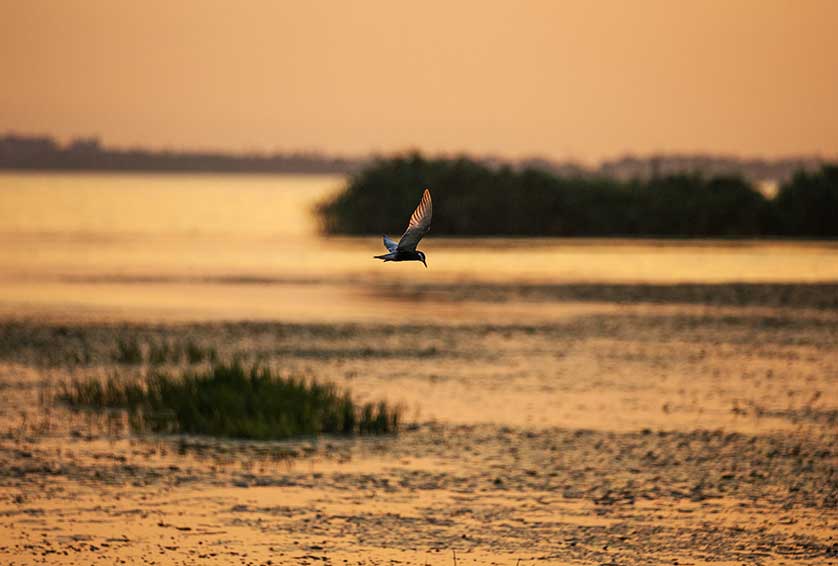
Suspended on gossamer wings, foraging terns wheel and jink in the balmy air, on the hunt for shoals of small fry in the shallows, while an army of frogs and cicadas begins to turn up the volume on its nightly chorus.
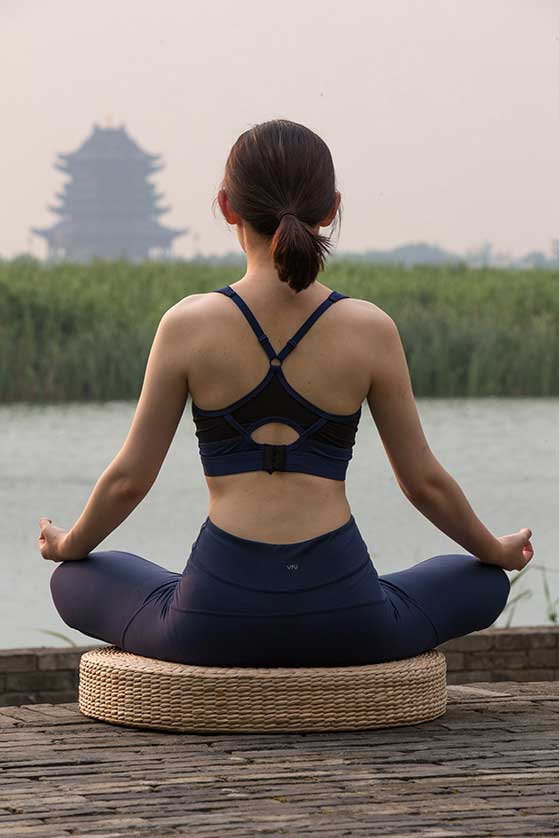
On a wooden platform beside the lake, yoga instructor Amanda Xu performs perfect crescent moons, her conjoined hands reaching up into the fiery sky. Here, about a 30-minute drive from the traffic jams and wall-to-wall neon of downtown Suzhou (and 90 minutes by high-speed train from Nanjing), life is slow, tranquil and decidedly more organic. The multi-storey silhouette of Chongyuan Temple, visible across the water, adds to the zen-like ambience.
Yangcheng Lake, a body of fresh water located between the far larger Lake Tai and the mighty Yangtze River, has long been famous for its hairy crabs, harvested between September and December and served up as a delicacy with ginger-and-vinegar sauce.
Yet today the lake is slowly becoming known for more than just its prized crustaceans, as a growing number of local Chinese come here to escape the rigours of urban life, nurture their health and wellness, and generally pamper themselves.
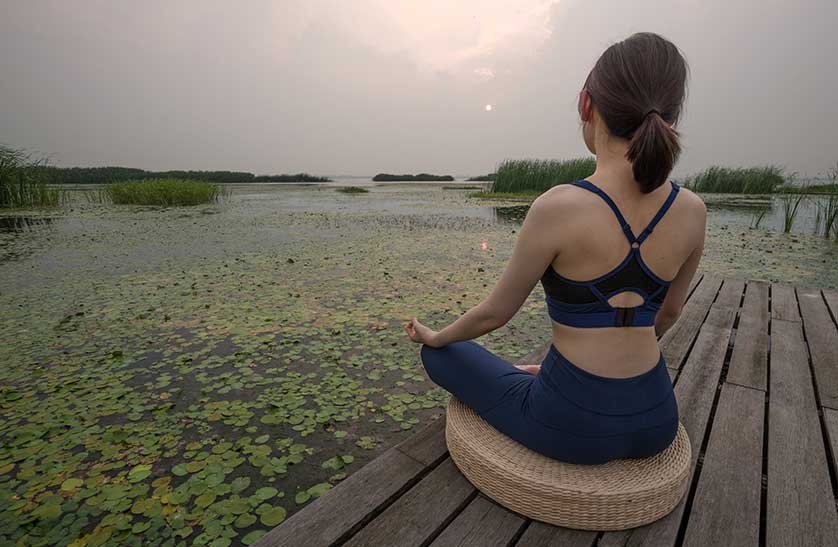
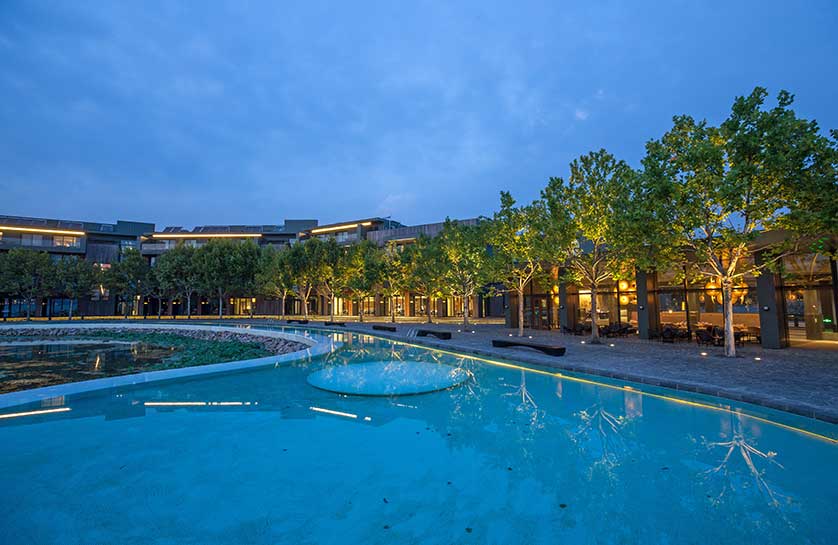
The location for such spiritual and physical rejuvenation is the recently opened Sangha Retreat, a "holistic wellness sanctuary" by Octave that extends across nearly 19 hectares of prime, beautifully landscaped lake side property.
Designed by Tsao & McKown Architects from New York, Sangha - the Sanskrit word for "community" - is envisioned as a health and wellness hub that includes both permanent homes and a seemingly never ending array of on-site treatments and facilities.
"Sangha's rationale is to treat wellness holistically," explains Katherine Wong, the Sangha Retreat general manager. "We start by raising awareness in all of our guests, and then go on to teach them different practices so that they can sustain their health and wellness long term."
Watery Wonderland
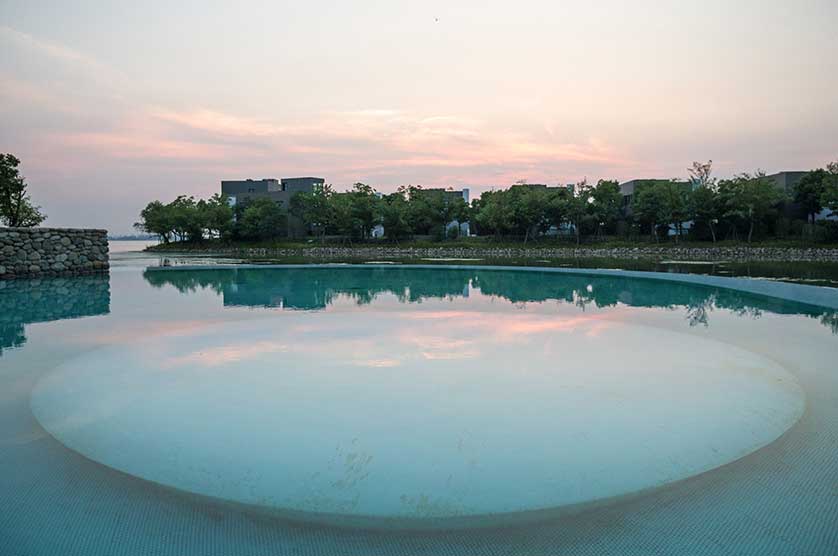
To call Sangha a retreat is something of an understatement - this is a watery wellness wonderland on a scale that has never been seen before in China.
In addition to the 109 houses, four apartment buildings, various restaurants and other guest accommodation, facilities and services include a deluxe spa, meditation and gong baths, massages, yoga, hydrotherapy, an array of beauty treatments and a stunning outdoor pool. The chic, minimalistic design, which places Mother Nature centre stage, riffs respectfully on Taoist principles.
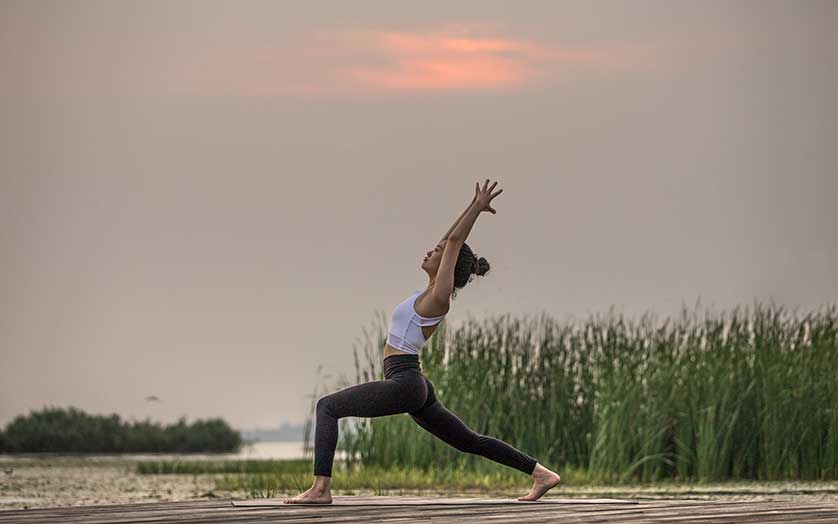
Wellness programmes at Sangha are individually curated, encompassing mind-body practices, various therapies and medical consultations. Taoist practitioners are on hand to instruct those guests desiring spiritual guidance.
"Our location in China, which is where the great living philosophy and practice of traditional Chinese medicine (TCM) originates, helps us offer the highest quality treatments," says Sangha's Wong. "We are able to access the finest TCM talent, materials and ingredients. TCM is still a living healing system, and we can integrate the latest research into Western healing therapies."
Sangha is not Octave's only Chinese offering. The company's Shanghai-based Living Room is one of China's first comprehensive urban wellness centres, offering classes in yoga, boxing and fitness, as well as a popular organic restaurant.
Katherine Wong sees Octave's expansion in China continuing for the foreseeable future.
"The demand for wellness retreats here is huge," she says. "China is rapidly becoming a first world country, with all the stresses and strains of the developed world. The next step is for China to grow beyond its appetite for material things, and discover our true need to live life harmoniously with each other and the environment."
- Usnisa Palace & Niushoushan Cultural Park, Nanjing: eng.niushoushan.net
- Sangha Retreat by Octave, Suzhou: sangha.livingoctave.com
- The Living Room, Shanghai: thelivingroom.livingoctave.com
- Yejo Circle: yejocircle.com
- Porcelain Tower (and Porcelain Tower Heritage Park): besdchina.com
Related
Book Hotel Accommodation in China
Book Hotels in Beijing - Booking.com
Find Hotels in Beijing - Agoda
Search Hotels in China - Booking.com
Recommended Hotels in Shanghai China - Agoda
Budget Hotels in Beijing - Booking.com
Best Hotels in Sanlitun - Booking.com
Book Luxury Hotels in Beijing
Beijing Palace Museum Ticket (The Forbidden City)
Mutianyu Great Wall Ticket & Cable Car