China Book Reviews: Chinese History & Society
Kublai Khan
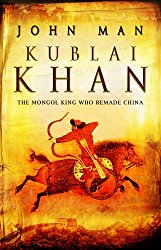
by John Man
ISBN: 0553817183
389 pp
Immortalised by the poet Coleridge, a confidant and friend of the adventurer Marco Polo, the 13th century Mongol Emperor Kublai Khan, grandson of Genghis Khan, created one of the largest empires in history stretching from China to Iraq, from Siberia to Afghanistan, covering 20% of the world's land area. It can be argued that it was Genghis Khan who created the territorial base for China's eventual rise to global economic super power in this century. The author John Man has traveled extensively in the area of Kublai Khan's conquests and his eye for detail brings to life this fascinating study of one of the world's most powerful ever men.
Buy this book from Amazon USA | UK | Japan
The Early Chinese Empires: Qin and Han

ISBN: 067402477X
336 pp
The first volume in a projected six-volume survey of imperial Chinese history. This book introduces the early Qin and Han dynasties. These first Chinese empires built up political institutions and ideologies that would become standard over the following centuries: the construction of a unified, pacified state focused on the Emperor as the symbol of ultimate power and authority and the development of a professional military to protect the empire's vast borders. The book also charts the gradual emergence of a landed gentry with a stake in the new regime and the development of a professional bureaucracy chosen on merit at the service of the new, centralizing state. A solid start to a long-awaited new series.
Buy this book from Amazon USA | UK | Japan
The Flying Scotsman: The Eric Liddell Story
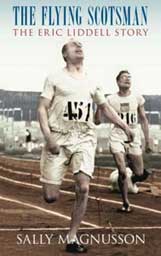
The History Press, 2012
192 pp, paperback
ISBN: 978-0-7524-4352-2
When it comes to sports trivia, there is usually one agreed upon answer that is correct. However, to the question, "Who was the first Chinese medal winner at the Olympics, there are actually three possible answers.
The official sites of the Chinese government often list Xu Haifeng, a rifle shooter who won gold in the 1984 Los Angeles games, as China's first medal winner. Some Chinese consider Yang Chuanguang, who won silver in the 1960 Rome games as a decathlete, as the first. However, he was from Taiwan.
The third answer is a man who was known, at least to some, by the name Li Airui.
Most people don't recognize that name, but many do know his real name, Eric Liddell, who was born and died in China, and thus considered China's first medal winner by some. Liddell was the subject of the 1981 Academy Award winning film, "Chariots of Fire."
As the world's fastest sprinter, Liddell, who was born to Christian missionaries in 1902 but who was educated exclusively in Scotland, was favored to win track and field's most celebrated event, the 100-meter dash, at the 1924 Paris Olympics. Although winning the 100 would not set him up financially for life, as it would today, a win would have assured a very bright future.
There was one problem, however. The preliminary heats for the 100 were to be held on a Sunday, and Liddell considered Sundays to be The Lord's Day. Much to the dismay and criticism of some of his countrymen, he decided not to run, thereby forfeiting likely glory. The British press called him a traitor. He also passed on two relay races, which had heats on a Sunday. Instead, he ran in the 200, where he finished third, and the 400, an event in which he had very little experience. Running in the outside (worst) lane, he broke the world's 400 record in a stunning gold-medal performance.
Much of this in known because of "Chariots of Fire." It is the lesser-known parts of Liddell's life which make up the gist of this book. Barely a quarter of the way through the book, Liddell has won his medal and the book moves on to its main focus, what he did after his 1925 return to China.
He worked there as a teacher and missionary, until he and hundreds of others, were put in an internment camp by the Japanese during World War ll. Unable to get treatment for a brain tumor, he died there in 1945, just a few months before the war's conclusion. All told, he spent 26 of his 43 years living in China.
The book is filled with interesting historical details of the times from before his Olympic glory days in the 1920s through his dying days. The reader will come away with a better understanding of history, and not just sports history.
For all that he did for the Chinese people, he is fondly remembered there. In 1991, a stone memorial to Liddell was built in Weifang, at the site of the internment camp.
Of course, the Chinese would not let any mention of his Christian beliefs be on the monument, but on the back is written a well-known Bible verse, "They shall mount up with wings as eagles, they shall run and not be weary."
The book offers interesting speculation as to whether Liddell could be a star in modern times. His life was never focused exclusively on his track career. He was a student and was very active in various Christian endeavors. He wasn't fully focused on becoming the world's fastest human.
At three or four points in the book the author describes details that the movie knowingly and purposely got wrong in their attempt to "improve" the story. The movie was British, showing that it is not only the American media which play fast and loose with facts if they think a few more bucks can be made.
Not only did Liddell lose his life because of his decision to return to China, he lost much more, too. For one thing, he never did get to see his third daughter, Maureen, because his pregnant wife and first two daughters left China in early 1941 when things started to get too dangerous.
Many pages are dedicated to the hope that Liddell gave those interred. His life went from working with the Chinese to encouraging the imprisoned foreigners. Many firsthand tributes are recorded in the book.
The only negative of the book is the exceptionally small type size used in this edition. If you have good eyes and read in a well-lit place, you might be OK.
All in all, this is a very worthwhile book.
Marshall Hughes
Buy this book from Amazon USA | UK | Japan