Fire and Rice: Chowing down in Chengdu
Daniel Allen
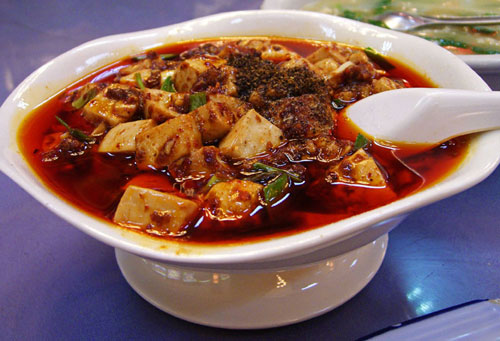
If China is the place for food, runs an old Chinese saying, then Sichuan is the place for flavor. While Sichuan restaurants can be found right across China, and all over the globe, residents of this mountainous province in south-west China claim, with some justification, that nothing beats a spot of home cooking. After sampling the dining delights of Chengdu, capital of Sichuan, most visitors are inclined to agree.
To understand the astonishing diversity of food from Sichuan, you first have to understand a little of its geography. Dominated by mountain range and forest, and with a temperate subtropical climate, the province is endowed with a bountiful ecology.
As a result, Sichuan cuisine uses a cornucopia of local flora and fauna that just isn't seen in other regions.
One of China's eight main cooking schools (known as the "Eight Great Traditions" in Chinese), Sichuan cuisine has a history which dates back thousands of years to the ancient Shu Kingdom (221-263). In the Ming (1368-1644) and Qing (1644-1911) dynasties, many chefs came to Chengdu to run food businesses, helping Sichuan cuisine gradually evolve into the well-known and popular "tradition" it has become today.
Chengdu Cooking
Over the years cooking in Chengdu has been shaped by an array of domestic and foreign influences. For centuries the practice of Buddhism dictated a meat-free diet, which is still reflected in the profusion of vegetable dishes that Sichuan cuisine offers. However, beef dishes are common too, with oxen still widely used in agriculture across the region. Closer to Indochina than Beijing, Sichuan food also absorbed various aspects of Indian and Thai cuisine as it established its own unique identity.
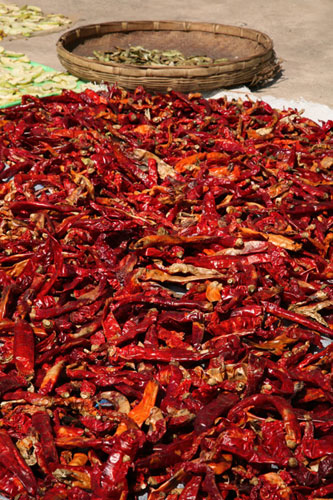
One of the biggest outside influences on Sichuan cuisine was, surprisingly, American in origin. The chili pepper was introduced to China from the Americas after the European powers began to colonize the New World, and was soon being used by Sichuan locals to flavor a wide variety of dishes. In a spice-for-all-seasons philosophy, they believed (and still believe) that fiery food cools the body in the humid Sichuan summer, yet warms the blood in the dank depths of winter.
Sichuan cuisine certainly never lacks punch, but also boasts a richness and subtlety that is often found missing in other schools of Chinese cooking. Smoky, spicy, salty and sour flavors are interwoven with a variety of textures in dishes designed to titillate rather than overwhelm the taste buds. Sometimes sauces are submerged in oil, a tradition which dates back to poorer times when Sichuan residents used oil in an attempt to make up for a lack of meat.
Chilies
Although desiccated red chilies and scorching fresh green ones enliven everything from dumpling sauce to duck marinade, the characteristic seasoning in Sichuan cuisine is the Sichuan pepper, which is, in fact, unrelated to either the black pepper or chili pepper. With its cooling hint of anise and anesthetizing effect on the mouth, it tempers the fire of the chili. Both the chili and pepper are added purely for flavoring, as quite a few foreigners have learned to the detriment of their tongues.
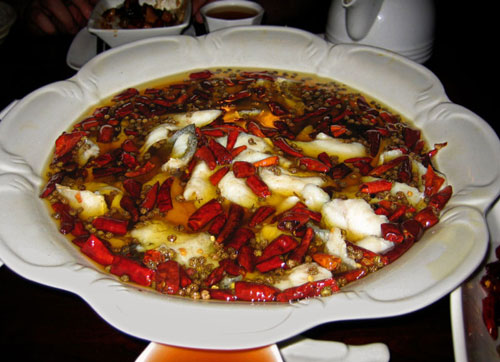
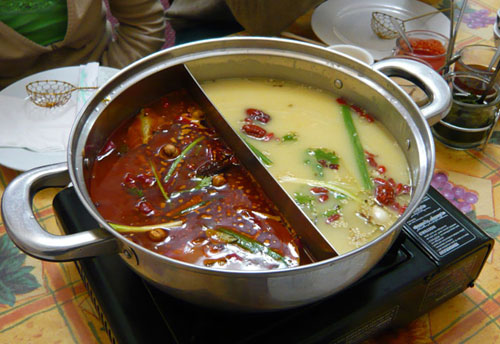
Hotpots are to Chengdu as Beijing duck is to the Chinese capital. When Chengdu locals eat out, especially in large groups, they generally fill up on this culinary classic. Typical hotpots (Chengdu has numerous varieties) comprise an oily broth, made from water, oil, dried chili, Sichuan pepper, fennel and lotus seeds, star anise, and other local herbs. Diners then add assorted vegetables and meats to the boiling pot, which when cooked are dipped into a bowl of sesame oil, chopped shallots, and chopped garlic before eating.
Some of the most popular Chengdu restaurants for hotpot are the Chuan Jiang Haozi chain, Lao Fangzi Restaurant, and Shizilou Hotpot Restaurant - there are also many good hotpot shops near Chunxi Lu market. Gongbao jiding, like hotpot, is also an iconic Sichuan dish. Although it may be known across the world as Kung Pao chicken, the Chengdu version is a far cry from its Western derivative.

Places to Eat in Chengdu
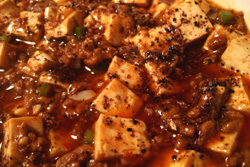
Another popular Chengdu eaterie is the venerable Grandma Chen's Bean Curd Restaurant, which has been serving up yet another local specialty - mapo doufu - for close to 150 years. The dermatological condition of this dish's inventor is immortalized in the word mapo, which means "old woman with a pock-marked face". The spicy snack is made by stir frying cubes of creamy tofu, pork mince, chilies and seasoning, all covered with a generous helping of Sichuan pepper.
Many of Chengdu's specialties, like mapo doufu, had humble origins, starting life as simple snacks (xiao ci). Scores of Chengdu street stalls still offer passers-by cheap treats like dandan mian (dandan noodles), which were first dispensed by men carrying buckets of noodles and seasoning suspended from bamboo shoulder-poles, or dan. Some Chengdu restaurants, such as Long Chao Shou chain, specialize in snacks, offering different sampler menus in a Sichuan version of tapas.
Those who've taken their fill of Chengdu's oil and spice might like to take a leaf out of the local book by visiting a tea house for the afternoon. Many Chengdu residents still carry a jar of tea around with them at all times (regular sipping is said to quench the stomach), and the city is one of the few remaining bastions of true teahouse culture left in China. Assuming you can douse any internal combustion, there'll be plenty of time to re-light those fires come dinner time.
China Stay
Book Hotels in Chengdu - Booking.com
Search Hotels in Chengdu - Agoda
Dorsett Grand Chengdu - Booking.com
Kempinski Hotel Chengdu
Rhombus Park Aura Chengdu Hotel
Book the Haiyatt Garden Hotel - Agoda