The Beijing Food File (part 1):
Sampling traditional cuisine in the Chinese capital
Daniel Allen
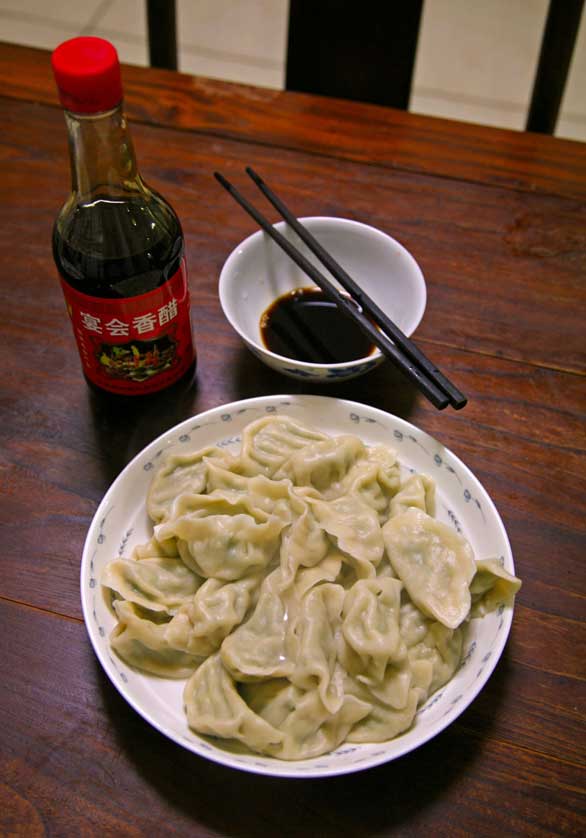
Food is a fundamental part of Chinese culture, and sampling local cuisine is always one of the highlights of a trip to the Middle Kingdom.
An old Chinese saying runs along the lines of "food is the first necessity of the people", and the Chinese have always regarded a delicious and nutritious diet as a priority of life. Indeed, the greeting used by many older Chinese when meeting friends is often not "how are you?", but, "have you eaten?" (chi fan le ma?).
Food in China is a communal affair. Chinese people often eat together as a family with the emphasis on shared dishes. Only the rice or buns are served individually; everything else is shared from a single bowl or plate, including the soup. Dinner guests usually greet each other while sitting down for a meal, and wait for everyone to be seated before a meal can start. In more traditional households the most senior or elderly person at the table will take the first bite, and then the rest of the diners can join in.
With most Chinese dishes food is prepared in bite-sized pieces, ready for direct picking up and eating. Traditionally, Chinese culture considered the use of knives and forks as barbaric because they were regarded as weapons. It was also considered ungracious to have guests work at cutting their own food. While some foreign visitors can have trouble using chopsticks, practice usually makes perfect so it's worth persevering. If the worst comes to the worst most Chinese restaurants will have forks or spoons available for the dexterously challenged.

Varieties of Chinese Food
China is a massive country with a vaunted heritage, and both geography and history have shaped the Chinese cuisine available today. Although divisions between Chinese culinary regions have blurred somewhat in modern times, Chinese food is generally classified into four basic schools, based in the north (Beijing and Shandong), south (Cantonese), east (Huaiyang), and west (Sichuan) of the country. Each cuisine boasts famous dishes as well as lesser-known urban and rural specialties.
In contrast to hot and wet southern China, where rice is the main dietary staple, the cuisine of the dry and cold north incorporates an endless variety of wheat products such as noodles, flat breads, dumplings and steamed buns. Considered by most Chinese to be the "poorest" of the four schools, both in terms of ingredients and food preparation, there are more than enough delicious dishes, especially in Beijing, to keep both northerners and visitors happy.
Locals also refer to Beijing cuisine as "capital city cuisine", for the simple reason that Beijing was the capital during the Liao, Jin, Yuan, Ming and Qing dynasties. Many dishes of the Beijing school originated in the Emperor's courts, which had at their disposal the very best of China's chefs and ingredients. Emperors expect haute cuisine, and thousands of dishes would be prepared for state dinners and private banquets. Bear's paws, camel's humps and bird's nests were just a few of the exotica gracing the Son of Heaven's table.

Beijing Cuisine
The cuisine of present day Beijing, referred to as lao Beijing cai, ("old Beijing food"), is far less extravagant than in imperial days. It makes liberal use of strongly flavored roots and vegetables such as peppers, garlic, ginger, leek and coriander. Because of cold winters, dishes tend to be substantial to keep the body warm, and mutton, pork and chicken are the meats of choice. Beijingers tend to prefer salty, rich flavors, and both salt and oil are used liberally in Beijing cuisine. Over the years, as southern food has inevitably been introduced to the north, flavors have been changed to suit the Beijing palate.
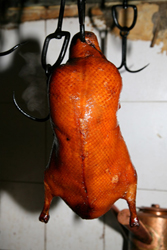
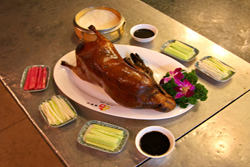
Along with a trip to the Great Wall, visitors to Beijing are invariably urged to try the capital's most famous dish, Beijing Duck (Beijing kaoya), which dates back 600 years to the Ming Dynasty. Traditionally prepared for a minimum of six people over three courses, the duck is air-dried, then coated with a mixture of syrup and soy sauce before oven roasting. After carving, pieces are wrapped in thin pancakes with onions or leeks, cucumber, turnip and plum sauce.
Gong bao ji ding is a spicy chicken dish with peanuts and other vegetables that is always popular with foreigners - it can also be made without chilies for those with delicate stomachs. Tudou si is a good dish for potato lovers, consisting of shredded potato stir fried with green peppers. Other great vegetable dishes include bo cai (spinach), song ren yu mi (corn with pine nuts) and suan rong xi lang hua (garlic broccoli). In many of the bigger restaurants menus will come with pictures, if not English translations, so don't worry if you can't remember what you like or how to pronounce it!
Sichuan Cuisine
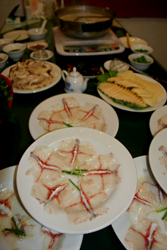
Sichuan style cuisine is a favorite of many foreigners, with loads of red chilies and Sichuan peppercorn, garlic, onions and other strong flavors. Sichuan hotpot (huoguo) makes a great communal meal, with slivers of meat, vegetables, tofu, and other unique foods dropped into a boiling pot (on the table). This can also be requested non-spicy. Beijing also has some great Xinjiang restaurants, which are Muslim style with a Chinese touch. The kebabs (chuar) and bread (nung) are usually fantastic, and it's a common sight to see Uyghur people (Xinjiang locals) with braziers by the side of the road cooking up kebabs during the summer.
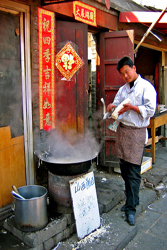
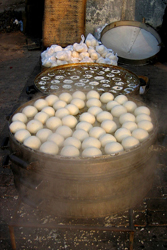
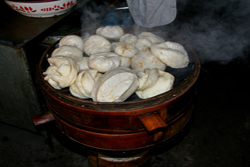
There are also many varieties of snacks (xiaochi - "little eats") in Beijing. In addition to the traditional ones, such as jiaozi (meat or vegetable-filled wheat flour dumplings), miantiao (noodles), douzhi (a fermented soy-bean milk), chaogan (quick-fried liver), baodu (quick-fried tripe), aiwowo (glutinous millet cake), tanghulu (candied haws on a stick), baozi (steamed dumplings) and shaobing (clay-oven bread), many other snacks have been introduced into the capital from different regions, making Beijing a gastronomic paradise for the snack lover.
Beijing Stay
Book Hotels in Beijing - Booking.com
Find Hotels in Beijing - Agoda
Search Hotels in China - Booking.com
Recommended Hotels in Shanghai China - Agoda
Budget Hotels in Beijing - Booking.com
Best Hotels in Sanlitun - Booking.com
Book Luxury Hotels in Beijing
Beijing Palace Museum Ticket (The Forbidden City)
Mutianyu Great Wall Ticket & Cable Car