Beijing Travel: Best of Beijing
Best of Beijing 北京
Daniel Allen
1) 798 Art District
Beijing's 798 Art District, often compared with New York's Greenwich Village or the south bank of the Seine in Paris, is located in Dashanzi in the capital's northeastern Chaoyang District.
This complex of converted military factory buildings is home to an ever-expanding Bohemian community and a must-see for contemporary art lovers. Opened in 2002, it has quickly become the third most popular destination in Beijing after the Forbidden City and the Great Wall.
Today 798 boasts more than 400 galleries, workshops and studios, and is also home to a thriving social scene, with cafes, nightclubs, bars, a boutique hotel and several excellent restaurants. The complex is packed with reminders of its industrial past - everywhere rusting pipes and steel gantries contrast starkly with colourful al fresco art work and outsized sculptures.
For architectural enthusiasts a visit to the 798 Space gallery - sitting in the heart of the complex - is mandatory. Even between exhibitions, doors are left open, allowing visitors to wander through and get a real feel for this Bauhaus-styled space, which comes complete with a curved roof and old industrial equipment.
Across from 798 Space sits the 798 Photo Gallery, another Bauhaus-style space and one of the first galleries in China dedicated solely to photography. Most of the photographers on display here are Chinese, with an ambitious schedule of exhibitions showcasing the rapid changes that have overtaken China in the past twenty years.
The relatively new Ullens Center for Contemporary Art (UCCA), funded by Belgian collectors Guy and Miriam Ullens, is 798's largest space - pick up reasonably priced art and souvenirs in the centre's store.
2) Summer Palace
Along with the Great Wall and Forbidden City, Beijing's Summer Palace is one of the city's must-see sights - most people choose to spend the entire day exploring its myriad buildings, lakes and green spaces. Situated in the northwest of the Chinese capital, about 15 kilometres from the centre, it is the largest and most well-preserved imperial park in China. A marvel of design, it has influenced man-made landscapes all across the country.
The Summer Palace was built in the mid-eighteenth century by Emperor Qianlong and has had a chequered history. Anglo-French troops vandalized it during the Second Opium War (1856-60), before it was restored by the Empress Dowager Cixi. Foreign troops, angered by the Boxer Rebellion, again inflicted damage in 1900, prompting further restoration work. By 1949 the palace had fallen into disrepair, eliciting a major overhaul.
Highlights of the Summer Palace today include the vast Kunming Lake, which takes up three-quarters of the park and can be explored by ferry or pedal boat in warmer months. In the middle of the lake sits Nanhu Island, reached by the elegant Seventeen-Arch Bridge, China's largest ornamental span.
The main palace structure is the Hall of Benevolence and Longevity, which sits by by the east gate. It boasts a hardwood throne and courtyard decorated with bronze animals. Longevity Hill, which rises to 200 metres above Kunming Lake, is adorned with numerous Buddhist temples, while the Long Corridor is an elegant stretch of woodwork decorated with paintings. A marble boat constructed by Empress Cixi lies at one end.
3) Ming Tombs
Around 50 kilometres northwest of Beijing the Yanshan Mountains divide and open onto an expanse of picturesque countryside. When the great Ming Dynasty Emperor Yongle stopped by here here in the fifteenth century, he knew that he'd found the perfect spot for himself and his successors to see out the ages. Over the next two centuries a succession of imperial mausolea were constructed in the valley, each a diminutive palace set against the backdrop of remote mountain walls.
Recently the Ming tomb complex has undergone considerable renovation. While only three of the tombs are currently open to the public, a visit to the site provides a fascinating window onto dynastic styles and rituals, as well as making a relaxing day trip from Beijing. The entrance to the site is marked by the Dahongmen (Great Red Gate), from which the the seven kilometer Shendao (Sacred Way) runs all the way to the entrance of Changling, the tomb of Emperor Yongle himself, flanked by an eclectic assortment of stone beasts.
4) Lakes & Rivers
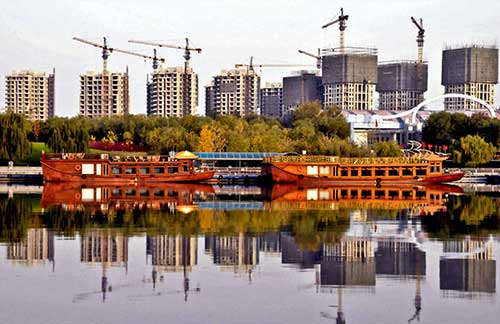
Beijing's Shichahai District lies just north of the Forbidden City and comprises the picturesque and interconnected Qianhai, Xihai and Houhai lakes and their environs. With its lines of willow trees, hutongs (narrow alleys) and siheyuan (courtyard houses), not to mention thriving cafe culture, the area has long been a favourite haunt of local residents and visitors. Boat of various descriptions - self-propelled or otherwise - are a good way to explore.
One Beijing waterway that is currently making waves is the Grand Canal, or more properly the Beijing-Hangzhou Grand Canal. Inscribed on UNESCO's World Heritage List, this man-made spectacle stretches nearly 1800 kilometres from Hangzhou to the Beijing suburb of Tongzhou, around 35 kilometres west of the city centre. Last year the Grand Canal Cultural Park was opened at the end of the canal in Tongzhou and boat tours now ply its waters.
Other notable Beijing waterways include the Kunyu and Changhe Rivers, both of which can also be explored by boat. Tours run from April to October and typically finish at the Summer Palace. A stone's throw from Shichahai is Beihai Park, a former imperial garden with a large lake. An island in the centre of the lake - known as Jade Flower Island - is dominated by the striking Bai Ta (White Pagoda).
5) Cultural Differences
Legendary Chinese sage Confucius laid down a system of ethics and morals which still influences the way Chinese people think and behave in many situations today. First time Beijing visitors may be a little overwhelmed by their initial interactions with local residents, but most Beijingers are incredibly friendly, helpful and tolerant, meaning the ice is soon broken, even if it is with the aid of a few hand signals.
Chinese culture is non-confrontational. Producing overt conflicts and situations that embarrass others is considered losing face, so keep calm, be patient and don't point with your finger. Shake hands rather than hug or kiss, unless you know the person well.
Dining out in China is always an experience in itself, but to avoid any social faux pas, it's best to remember a few tips. Try to sample all the dishes on offer - however, if you clean your plate it means you're still hungry. Don't leave chopsticks standing up in rice as this symbolizes death. Try not to pour your own drink, as this is the responsibility of your host, or at least the person next to you - you can reciprocate. The inviter always pays the bill!
6) New Hotels
With the days of dreary government-owned hotels long gone, Beijing now offers visitors a fantastic and ever-widening selection of places to stay. Given impetus by the Olympic Games of 2008, a surfeit of new privately owned guest houses and boutique hotels means there are fun and funky accommodation options at virtually every price range.
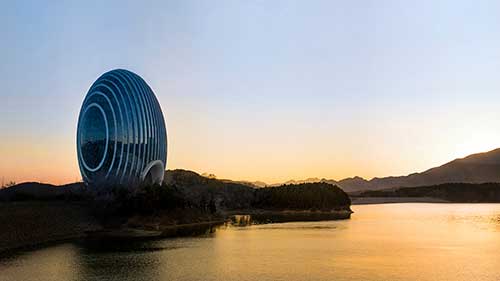
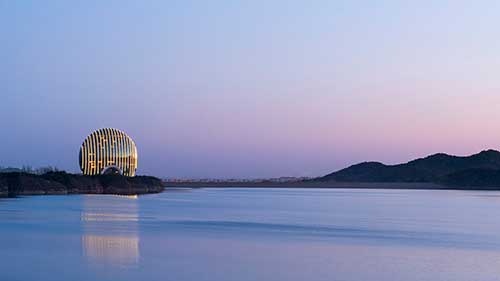
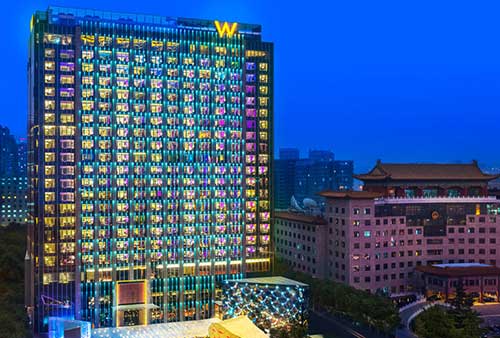
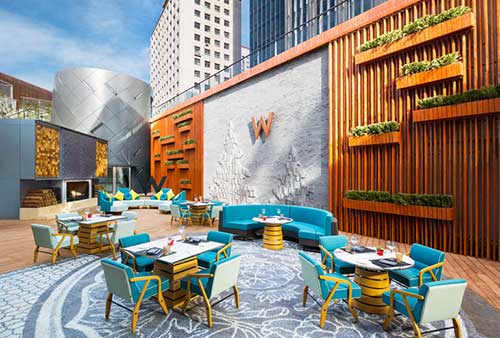
Perhaps the most exciting new hotel in Beijing is the Sunrise Kempinski, perched on the edge of Yanqi lake close to the Great Wall. Its stunning, orb-like structure is covered in more than 10,000 glass panels. The NUO Hotel Beijing is another eye-opener, slated to open in March 2015 close to the 798 Art District. This low-carbon, "intelligent hotel" boasts its own organic farm and tea plantation, with interior design inspired by the Ming Dynasty. A stone's throw from Tiananmen Square, the new high-tech W Hotel Chang'an wows guests with its in-room gadgetry, an LED-lit catwalk and golden globe DJ booth.
7) Traditional Courtyard Accommodation
In China's rapidly developing capital, there's nothing more evocative of "Old Beijing" than its hutongs - collections of labyrinthine, narrow alleys lined with traditional, one-storey courtyard homes (siheyuan). A growing number of hutong areas are now undergoing gentrification and many siheyuan have been transformed into hotels.
One of the largest of these is Han's Royal Garden Hotel, which unites five courtyards in the popular Nanluoguxiang hutong neighbourhood. The five-room Red Capital Residence, one of Beijing's first courtyard hotels, is a rather kitsch yet fascinating celebration of 1950's Communism, with staff decked out in Red Guard uniforms. The super luxurious Aman at the Summer Palace evokes the Forbidden City with its series of spacious courtyards and pavilions.
8) Bars
Two decades ago nightlife in Beijing barely went beyond teahouses playing cookie cutter pop music. Today the Chinese capital has one of the most vibrant and eclectic live music and nightlife scenes in the whole of Asia.
Quite possibly the swankiest venue for cocktails in the whole of Beijing, the ever stylish Centro has become something of an institution in the capital, while the the more recently opened Modernista has already earned a reputation as the place to see some of the capital's hippest live music acts. Winner of quirkiest bar goes to the Bomb Shelter Bar, a subterranean three-room watering hole inside the Red Capital Residence, an authentic courtyard in Beijing's Dongsi neighbourhood.
9) Shopping
General shopping
In terms of style, sophistication and opportunities to indulge in retail therapy, Beijing has come a million miles since the days of the ubiquitous Mao jacket and "liberation shoe" (although the latter, a green canvas shoe with rubber soles and toecaps, is making a massive comeback).
Many of Beijing's well-heeled denizens prefer to shop at the so-called "great malls of China" - supersized, heavily escalatored temples to retail worship. Oriental Plaza in Wangfujing is a particular favourite; its boutiques heaving every weekend. Even for visitors with no interest in the latest offerings from French Connection or Swarovski, it still makes a great place to people watch.
Tourists after traditional Chinese products, souvenirs and gifts should head to Beijing's multi-floor discount markets such as Yaxiu and Silk Street. Packed to the rafters with out-of-town sellers peddling fake designer clothes and watches, these bazaars are nevertheless a great place to pick up a bargain if you know how to haggle. A rule of thumb is to offer a tenth of the asking price and work upwards.
Hutongs
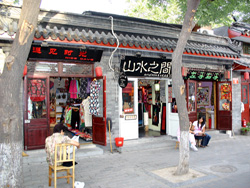
Beijing's best and newest boutique shopping can be had along the Nanluoguxiang hutong, close to the ever-popular Shichahai area. Many of the shops have been opened by local designers and artists - Le Tian sells exquisite pottery, while expat-run Plastered T-shirts offers a range of quirky, humorous clothing featuring Beijing-themed motifs and designs.
Just south of Tiananmen Square is Dashilar hutong, another popular destination for shoppers and culture lovers. The hutong is a major thoroughfare, lined with large shops selling all manner of Chinese knick-knacks and snacks. As one of Beijing's newest creative hubs it also has plenty of cool cafes, boutiques and galleries. Don't miss the nearby Qianshi Hutong, the narrowest hutong in Beijing.
Antiques & Art Markets
From trinkets to treasures, Mao caps to Ming pottery, Beijing's sprawling Panjiayuan Flea Market - the capital's biggest and best-known arts, crafts and antiques market - has it all. Many of the stalls are open through the week, but the market is best visited early at the weekend. Bring big bags and bargain hard.
Another good place for antiques is Liulichang Culture Street, close to Tiananmen Square. The oldest street in Beijing, it is packed with stalls and shops selling all manner of curios, calligraphy brushes, handicrafts, scroll paintings and random bric-a-brac. The architecture here is also interesting.
10) In Addition
Nanluoguxiang
Beijing's hutong neighbourhood of the moment is Nanluoguxiang, a former imperial thoroughfare that runs north to south in the capital's Dongcheng District. Heavily gentrified, it is now lined with hip cafes and bars, funky boutiques, and an assortment of cafes serving up everything from fish and chips to Hawaiian pizza. Not hugely authentic but still heaps of fun.
Wangfujung Snack Street
After some retail therapy in nearby department stores and malls, meander through the crowds of Wangfujing Snack Street to witness (and sample) an eye-popping Chinese culinary smorgasbord. From sugar-coated fruit and roast chestnuts to deep-fried scorpions and sea horses, there's something to suit every budget and palate.
Bird's Nest and Water Cube
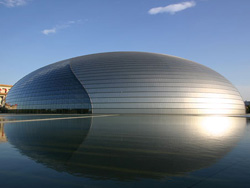
The Beijing Olympics saw the Chinese capital endowed with some striking examples of contemporary architecture, of which the most impressive were undoubtedly the Olympic Stadium - aka the "Bird's Nest" - and the adjacent Aquatics Centre, known as the "Water Cube". Visit the Olympic Green in the north of Beijing to see these amazing buildings - part of the Water Cube is now an indoor water park.
Book Hotel Accommodation in Beijing Here
Book Hotels in Beijing - Booking.com
Find Hotels in Beijing - Agoda
Search Hotels in China - Booking.com
Recommended Hotels in Shanghai China - Agoda
Budget Hotels in Beijing - Booking.com
Best Hotels in Sanlitun - Booking.com
Book Luxury Hotels in Beijing
Beijing Palace Museum Ticket (The Forbidden City)
Mutianyu Great Wall Ticket & Cable Car
Books on Beijing & China