Culture Connection: Beijing's Capital Museum & Millennium Monument bridge old and new
Daniel Allen
Capital Museum
Beijing is a city well-endowed with museums, from the obscurely miniature to the massive and internationally renowned. Although many cultural treasures have been looted or destroyed over the turbulent years of Chinese history, many important discoveries in the last two decades have added greatly to the pieces on display across the city.
Beijing's Capital Museum, which changed buildings in 2006, has now emerged from obscurity to become a leading Chinese cultural institution, attracting visitors with its easy accessibility and frequently changing temporary exhibitions. The dramatic rise in public attention and attendance is symbolic of China's growth as a cultural centre, and an eagerness to serve, rather than dictate, public taste.
The decision to award this year's Olympics to Beijing was a major factor in the Capital Museum's relocation and modernization. Back in 2001 the museum was granted a prime site on the western side of Chang'an Avenue, Beijing's principal east-west thoroughfare and the headquarters of many ministries and state corporations. By May 2006, the Capital Museum, now housed in an impressive structure, formally opened to the public.


Based on a joint French-Chinese design, the new Capital Museum building integrates both ancient and modern construction elements. The highlight of the impressive exterior is the elliptical exhibition hall, which protrudes through the roof and is meant to symbolize the unearthing of buried artifacts. The entrance is framed by an expansive, hi-tech steel canopy and a glass wall that showcase the museum's attractive, contemporary architecture.
After visitors pass through the Grand Hall they can wander through seven permanent exhibitions of antiquities located in the spiral hall, or view the three themed exhibitions housed in a rectangular block on the building's western side. Beyond the public spaces, the building also houses an area for administrative use and scientific research. Collections of ancient stone, bronze, porcelain, calligraphy, paintings and sculptures contrast nicely with the museum's informative, multilingual LCD screens, high-tech multimedia hall, state-of-the-art digital theater, and displays of contemporary art from China and overseas.
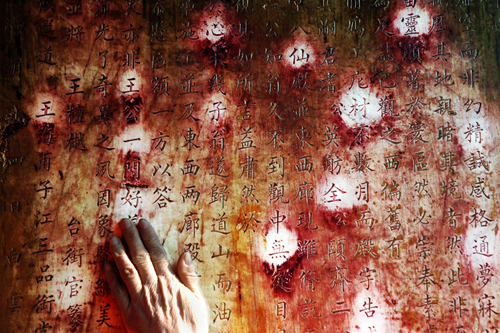
Entrance to the Capital Museum costs RMB 30 (US$4) for adults, and half for children. Museum staff are generally very helpful and friendly, and most speak at least some English - English language brochures are also available. A personal digital assistant (PDA) guiding system is recommended, providing visitors with an invaluable, one-to-one service inside the galleries. There is also a free cloak desk and well-stocked museum shop. Depending on your stamina and cultural appetite, a visit to the museum for most people generally lasts between 2 and 4 hours.
Further Info
Nearestsubway: Muxidi (Line 1 - red)
Closed on Mondays
Website: www.capitalmuseum.org.cn
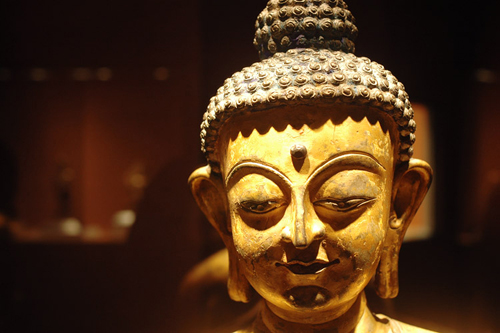

Millennium Monument
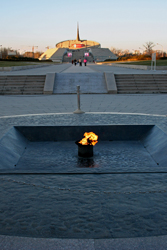
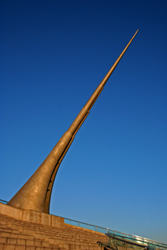
Resembling an outsized sundial pointing directly south to Beijing West train station, this huge concrete edifice was built to embody Beijing's triumphant 21st century aspirations in stone. Compared to the light and airy design of the Capital Museum it is rather cumbersome, more in keeping with Beijing's former Soviet-style buildings than the city's new wave of architecture. Still, it is worth a visit to see the artwork on display inside.
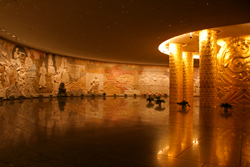
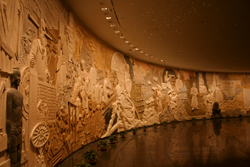
The Century Art Museum is situated on the first floor of the main structure, and consists of the Gallery of Eastern and Western Art, and the circular Century Mural Hall. The latter, which is 38 meters in diameter, is decorated on the interior with a huge mural depicting the evolution of Chinese civilization. The Gallery of Eastern and Western Art consists of two circular halls, one on each side of the Century Mural Hall, and often features high-profile exhibitions of artwork from China and overseas.
Approaching the Monument from the south is the Plaza of Holy Fire, one meter below ground and 960 square meters in area, designed to represent China's territory of 9,600,000 square kilometers. The constantly burning "Holy Fire of China" is located in the centre of the Plaza - apparently it originated at the site of Peking man at Zhoukoudian, Beijing, and is fed on natural gas. Two miniature canals run down either side of the Plaza, designed to represent China's two great rivers - the Yellow River and the Yangtze.
Further Info
Nearest subway: Jinshi Bowuguan (Military Museum) (Line 1 - red)
Tickets: 30 RMB (US$4)
Visit time: 2-4 hours
The museum is 1 km north of the White Cloud (Baiyun) Taoist temple.
Book Hotel Accommodation in Beijing, China
Book Hotels in Beijing - Booking.com
Find Hotels in Beijing - Agoda
Search Hotels in China - Booking.com
Recommended Hotels in Shanghai China - Agoda
Budget Hotels in Beijing - Booking.com
Best Hotels in Sanlitun - Booking.com
Book Luxury Hotels in Beijing
Beijing Palace Museum Ticket (The Forbidden City)
Mutianyu Great Wall Ticket & Cable Car