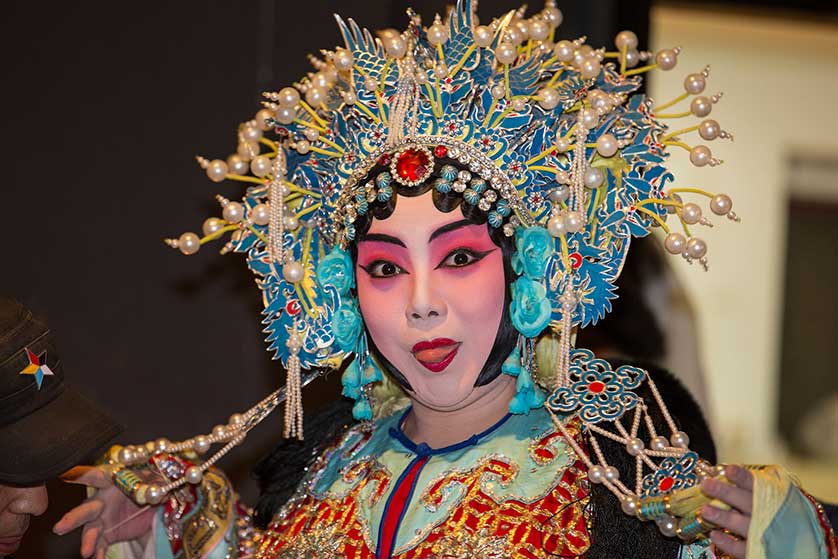
Chinese Culture: Beijing Opera in the 21st Century
Brave New Face: The evolving world of Peking Opera
Watching an authentic Peking Opera is an opportunity few people get to enjoy. It is an iconic art from that most people know by name, but have never seen.
Peking Opera is more than just music and singing; it combines drama, dancing, martial arts and acrobatics, making it one of the most multi-faceted theatrical art forms in the world.
In 2010 Peking Opera was declared an Intangible Cultural Heritage of Humanity by UNESCO.


Peking Opera has a 200 year old history, really blossoming in the mid-nineteenth century. Its main melodies originate from the towns of Xipi and Erhuang in Anhui and Hubei province, and it is widely believed that the art form came into being after 1790, when four famous Anhui opera troupes visited Beijing.
Peking Opera underwent rapid development during the reign of Emperor Qianlong and the notorious Empress Dowager Cixi, gradually becoming popular with and accessible to the Chinese masses.
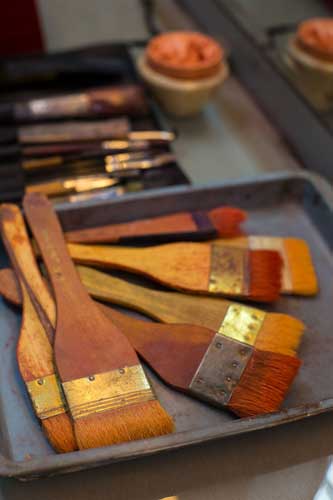
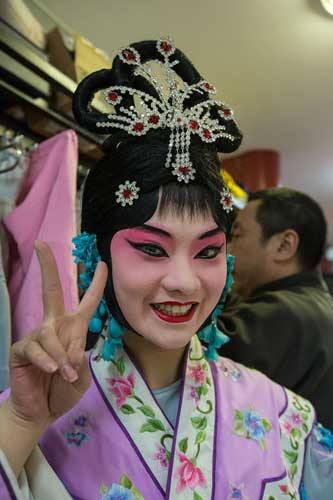
Beijing Opera Roles
There are four roles in Peking Opera: sheng (a male role, usually a leading one), dan (female roles), jing (painted-face roles) and chou (clown roles). These roles have the natural features of age and sex, as well as social status, and are artificially exaggerated by makeup, costume and gestures. All but the second portray a male or masculine character. Until recently, even that of the female characters were played by men.
Costumes are an integral part of the Peking Opera performance. In the early days, opera costumes were mainly made of wool or coarse cloth. Later, satin, crepe and silk were used, decorated with various meticulously embroidered patterns. The making of opera costumes is a special and unique stagecraft.

Beijing Opera Makeup & Music
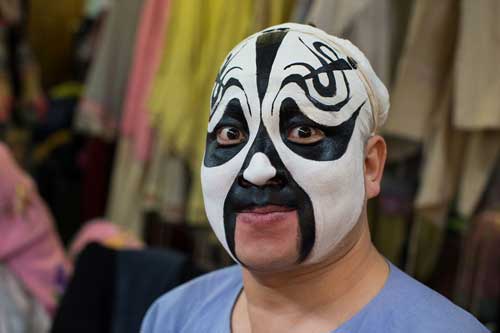
Beijing Opera's performers have two main methods of makeup: masks and facial painting. The frequent on-stage change of masks, without the audience noticing, is a special technique, known as face changing.
The Peking Opera band mainly consists of an orchestra and percussion band. The former frequently accompanies peaceful scenes while the latter provides the right atmosphere for battle scenes. The commonly used percussion instruments include castanets, drums, bells and cymbals. One person usually plays the castanets and drum simultaneously, which conduct the entire band. The orchestral instruments include the erhu, huqin, yueqin, sheng (reed pipe), pipa (lute) and other instruments. The band usually sits on the left hand side of the stage.
In days gone by Peking Opera was performed mostly on stages in the open air, teahouses or temple courtyards. The most famous stage was Deheyuan, built inside Beijing's Summer Palace in the late nineteenth century for Empress Dowager Cixi. Today the best wooden opera theatres in Beijing are the recently restored Zhengyici Theatre, Huguang Guild Hall and Lao She Teahouse.
Peking Opera is almost synonymous with Chinese culture, but the ancient art form has been put to the test by the encroachment of modernity. But in the second half of the twentieth century it has witnessed a steady decline in popularity, mainly due to a drop in performance quality, and a disconnect between modern life and the conventions of the performance.
In the past, audiences watched Peking Opera mainly for the singing. But a contemporary theatregoer expects not only to hear good arias, but also to enjoy a unique theatrical experience.
However, in the last few years there has been a resurgence of interest in Chinese traditional opera thanks to a growing level of audience sophistication.
All around China, traditional operas in local dialects have enjoyed a revival, fueled in part by a greater level of cultural soul-searching and also by increased domestic and international tourism.
Related Beijing Opera Articles
Read more on a Beijing Opera Theater
Beijing Opera Roles