Coffee Country: Biking Laos' Bolaven Plateau
Daniel Allen

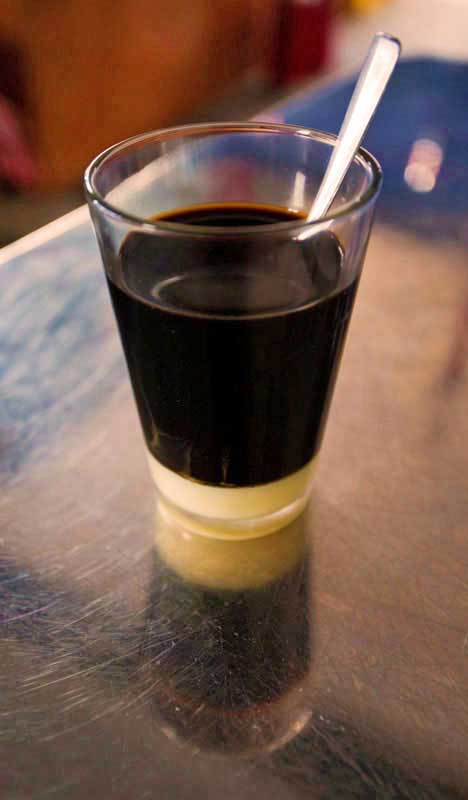
Dark and sweet, with the consistency of molasses, Lao coffee delivers a caffeine kick strong enough to energize the sleepiest of reluctant risers. Sitting in roadside cafe, I sip my first brew of the morning, as the salmon shades of a brightening sky promise fine weather ahead. Dressed in de rigueur singlets, shorts and sandals, many of Pakse's more industrious residents are already performing their daily chores in the cool of dawn.
Located on the edge of the Bolaven Plateau, Pakse is the gateway to Laotian coffee country. A deeply picturesque tableland in southern Laos close to the Thai, Cambodian and Vietnamese borders, the plateau produces 95% of Laos's coffee crop. Endowed with a temperate climate, regular rainfall and abundant nutrients, this elevated region is a coffee planter's utopia. Some specialists say this may just be the best place for growing coffee in the whole of south-east Asia.
"A pristine natural environment is essential for producing fine coffee," explained Koffie, a Dutchman and clear coffee fanatic who I'd met in Pakse the night before. "Growers generally don't need to use chemicals round here because the soil is just so good, which means most beans are actually organic. Farming has never been that intensive either, which is perfect for sustainable production."
Eager to explore the plateau first hand, I down my second coffee, grab a couple of warm baguettes for lunch, and make a beeline for Pakse's motorbike rental shop, which also functions as a supermarket, internet cafe and laundry. My passport is in the Laotian capital Vientiane for visa renewal, so I leave my laptop as collateral for a chic red moped and severely undersized helmet. As the daily rental fee is a mere US$7, I'm not inclined to complain.
Laotian Coffee
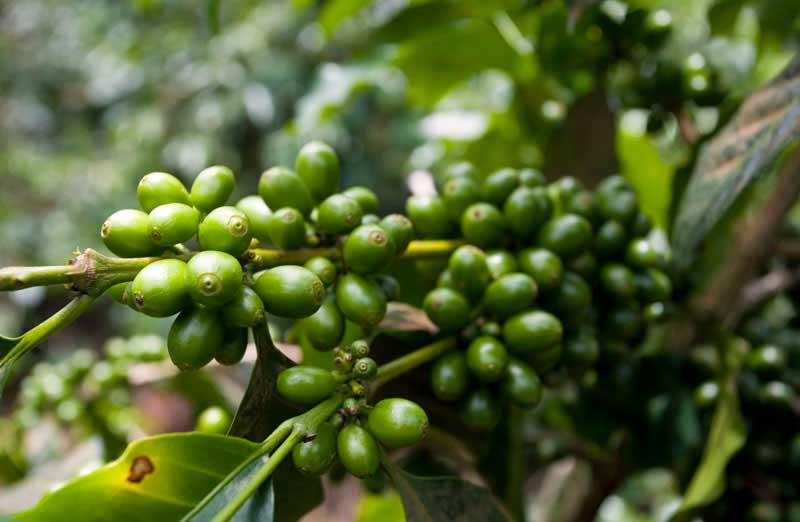
Outside the borders of Laos, Laotian coffee is a virtual unknown quantity. Compared to neighboring Vietnam, now the world's second largest coffee exporter after Brazil with annual production of over a million tonnes, the Laotian coffee industry is one tiny bean in a very large bag. Yet those who visit Laos today quickly come to appreciate what a growing number of coffee experts are discovering; coffee grown on the Bolaven Plateau can be good, sometimes very good.
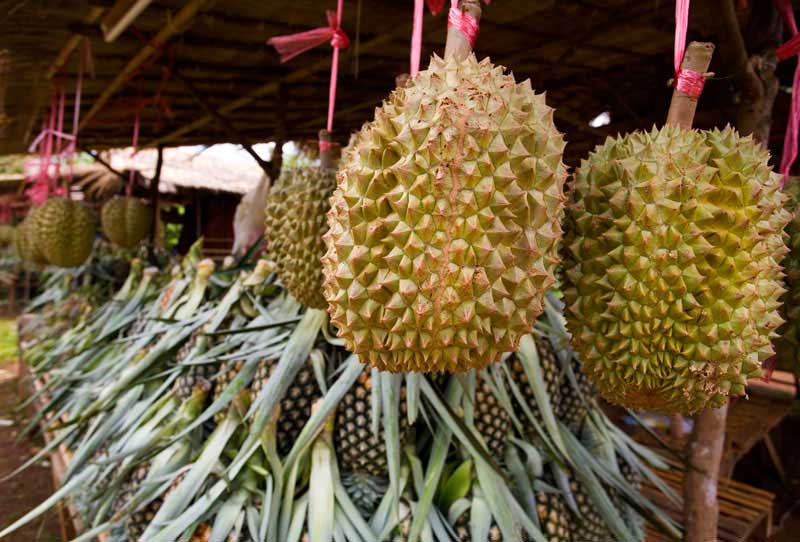
Negotiating my way through the Pakse traffic, which generally consists of one to four people on the same motorbike, I head out to the small town of Paksong on Route 23, known locally as the "Coffee Road". Stalls overloaded with huge durians and massive hands of ripe bananas line the road, interspersed with crumbling villas and plots containing a mix of waist-high Arabica bushes and taller, spindly Robusta plants.
The villas are a timely reminder of Laos's colonial past, with the history and fortunes of the Laotian coffee industry closely tied to geopolitics and war. The French, looking for a way to make this corner of their empire profitable, first introduced coffee to the Bolaven Plateau in the early twentieth century. Commercially successful harvests started in the 1930's, when the upper echelons of society would decamp to their Bolaven plantations every summer to escape the fierce heat of Vientiane.
The outbreak of the Second World War saw many Bolaven plantations deserted by their owners, and production was hit further in the 1950s when disease and frost combined to decimate remaining coffee bushes. Although farmers on the plateau switched from using Arabica bushes to more disease-resistant and easier-to-grow Robusta plants, any serious recovery was then prevented by ravages wrought during the Vietnam War.
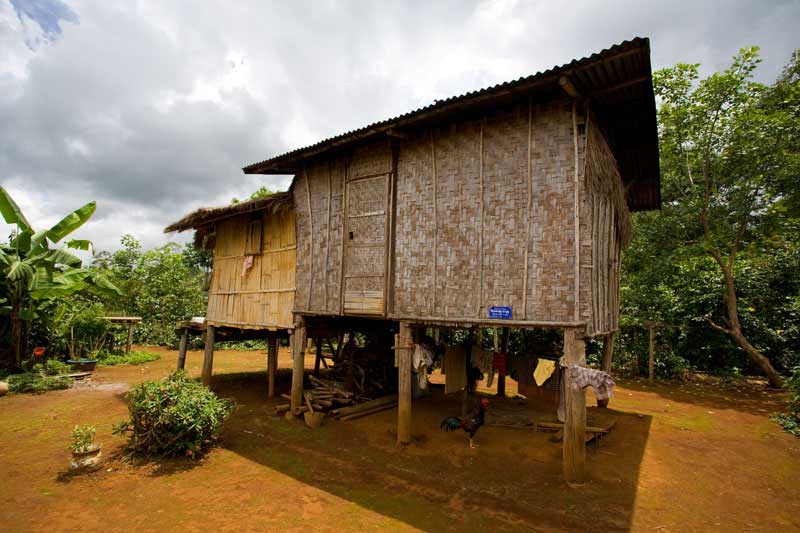
At the end of the Vietnam War many Laotian families relocated back to the Bolaven Plateau, and the mixed fortunes of the country's coffee industry began to rise again. For years various development agencies and the Laotian government have been working with farmers to introduce high-yield Arabica plants; the Laotian coffee harvest currently stands at around 25,000 tonnes a year, a quarter of which is Arabica.
Paksong
After a 45 minute ride from Pakse I pull in to Paksong. Although it lacks the grandeur of colonial times, the town has risen from the ashes of the Vietnam War to become the unofficial coffee capital of the Bolaven Plateau once more. Overloaded tractors pass along the main street, ferrying workers to and from plantations, while women in open shops weave colorful rugs on foot-powered looms. Cotton wool cumulus scud by overhead, the strong sun tempered by Paksong's higher elevation.
I've set up a meeting with Ariya Dengkayaphichith, general manager of the Jhai Coffee Farmers' Cooperative (JCFC). Waiting for Ariya to show up, I take a seat in a small roadside cafe observing local life over a refreshing glass of Lao coffee over ice. The cafe owner's young son peers around his mother's skirt to check me out, capering off with a squeal of excitement when I greet him with a badly pronounced "sabadee" (hello in Laotian).
Ariya pulls up in a battered jeep, apologizes for being late, and joins me for a coffee. I ask him what makes Bolaven coffee special. "This," he says, grabbing a handful of rich red soil from under our feet and letting it trickle slowly through his fingers. "Here on the plateau we're actually inside the bowl of a giant extinct volcano. This is the most fertile place for hundreds of miles."
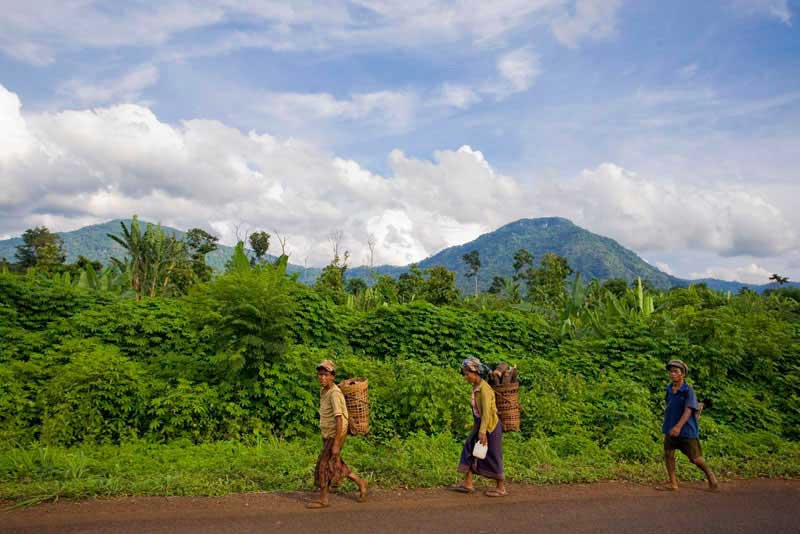
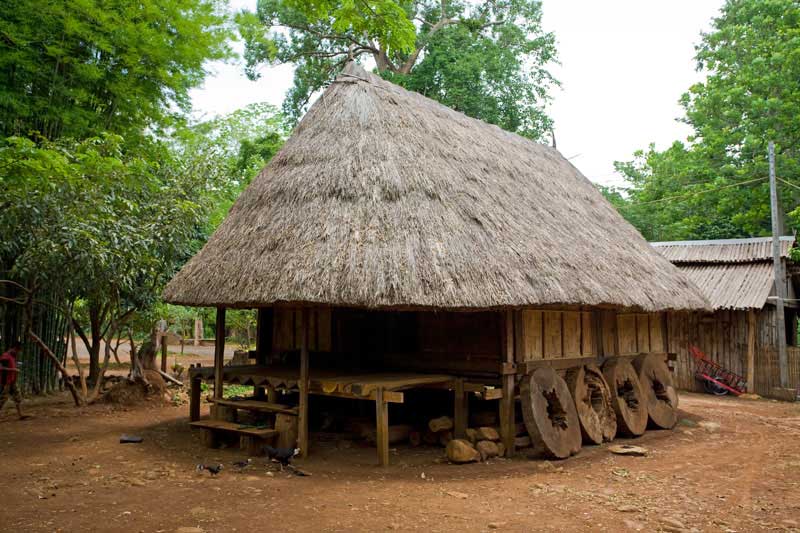
Ariya introduces me to Sommai, a shy young worker from the cooperative. Workers on Bolaven coffee plantations mostly come from the Laven tribe, one of many ethnic groups which live in the area. It is the Laven people, whose ancestors were part of the great Khmer empire that flourished from the ninth to the thirteenth centuries, who gave the Bolaven - which means "home of the Laven" in Lao - its name.
While the rising productivity of the Bolaven Plateau has made some people rich, most of the local population remain rooted in poverty. Widespread illiteracy and ignorance of the international coffee market have made some farmers an easy target for companies looking to turn a quick profit. Many farmers take out high interest loans with traders to get started, and are then unable to save any money to invest in the next coffee-growing season.
Founded in 2001, the JCFC has already gone a long way to helping Bolaven Plateau coffee farmers break the debt cycle and increase their income. "Our goal is to give farmers and their families a better life," says Ariya Dengkayaphichith. "We educate them about the coffee market and teach them how to manage their farms better. We're also working to raise the quality of coffee being produced here so that it has a good reputation."
The advent of mobile phones and internet connections, coupled with JCFC initiatives, means Bolaven farmers today are already way more market-savvy. "We sign contracts with our farmers after discussing world prices," explains Ariya. "Before 2000 they had no knowledge of world prices, only the trader's price. Now they can bargain harder with the traders, even during out-of-contract negotiations."
The JCFC now involves 550 households in 12 Bolaven villages, and revenues in 2008 stood at US$ 260,000, ten times more than in 2004. The vast majority of this money goes back to the farmers, who are able to invest in new homes, tractors and education for their children.
Moving on from our roadside cafe I follow Ariya's jeep down a deeply rutted track to the small JCFC processing plant. Here the beans from nearby plantations are sorted, graded, and placed in sacks ready for transportation. Today the plant is a hive of activity as a new load of unprocessed beans has just been delivered. Local villagers rake over mounds of beans, while others use stitching machines to seal 60 kg hessian sacks.
"Before the Jhai Coffee Farmers' Cooperative (JCFC) was established we had to sell our coffee beans to the Dao Heuang company," explains Sommai. "They bought up all the competition and then lowered the price for buying beans. We didn't want to sell to them, but if we didn't we couldn't eat or pay back our loans. JCFC's requirements for beans are a lot stricter, but the price is much fairer. I've almost doubled my income this year."
By the time I've shot some photos, shared an impromptu lunch of baguettes, laap (a spicy mixture of marinated meat, vegetables and herbs) and a bottle of ice cold Beer Lao, it's already mid afternoon. Bidding farewell to Ariya and his hardworking team, I head off back down the track to Route 23, keen to sample a few more Bolaven sights before the sun goes down.
Waterfalls
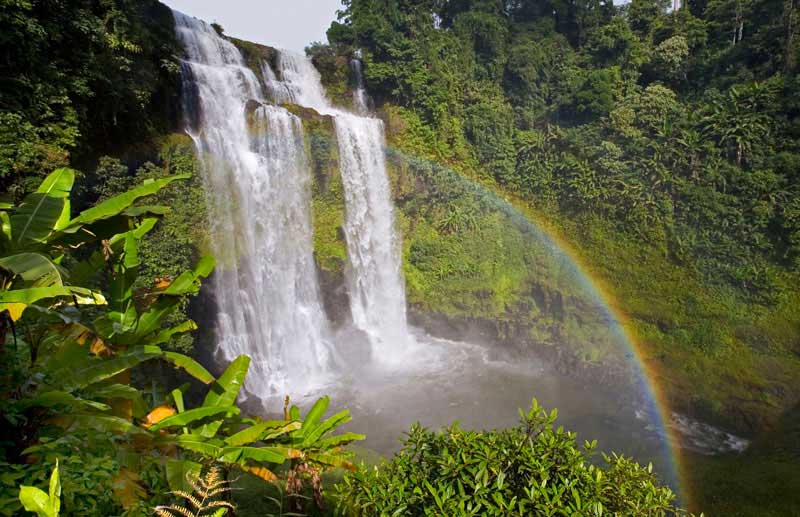
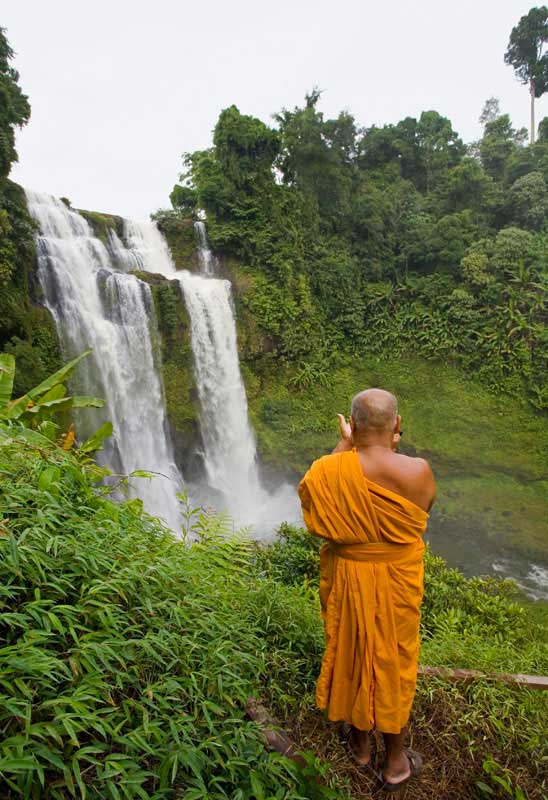
Apart from coffee, the area around Paksong is well known for its numerous waterfalls, which fall over the edge of the Bolaven Plateau in spectacular, thundering cascades. Along (or just off) Route 23, the three most accessible waterfalls are Tad Fan, Tad Yuang and Tad Pasuam, which is also known as the Phaxuam Cliff.
I motor slowly back to Pakse, pulling off the road to check out each of these well-signposted natural marvels. Dropping 200 meters into a jungle-clad gorge, Tad Fane is particularly impressive, although Tad Yuang and Tad Pasuam make up for more modest drops by being far more accessible affairs. Tad Pasuam has a traditional Laven village where I watch an old woman weaving technicolor rugs, her walnut brown face a mask of concentration until she flashes me a heartwarming smile.
Aside from coffee, the indigenous tribes of the Bolaven are benefiting from a raft of other initiatives. With its majestic waterfalls and colorful ethnic culture, the plateau is now seeing a rise in international visitors, and local ecotourism companies such as Green Discovery Laos give a portion of their proceeds back to local communities. Various "eco-lodges" have sprung up, most of which employ local people and pay them a decent salary.
Returning to Pakse just before sunset, I return the bike and grab my laptop. Claiming my favorite cafe table, I wind down with a final iced Lao coffee of the day, relishing its bittersweet taste as I mull over the day's activities. A beautiful place inhabited by a warm, friendly people, the Bolaven Plateau has won me over on the very first day.
As the JCFC and other philanthropic organizations continue to expand their influence, the future of the Bolaven Plateau and its inhabitants thankfully looks brighter than it has for a long time. While development brings its own dangers, at least the Laven and other tribes on the plateau are now learning to enjoy the fruits of their labors. As Laotian bean exports grow, so are the world's coffee drinkers.
HOW TO GET THERE
The nearest major town (and airport) to the Bolaven Plateau is Pakse. Bangkok Airways run flights to Bangkok, while Lao airlines fly to Phnom Penh, Siem Reap, Vientiane and Luang Prabang. There is also an overnight luxury bus service connecting Vientiane and Pakse, and direct buses to Thailand, Vietnam and Cambodia.
TAKE THE TOUR
To reach the Bolaven Plateau from Pakse either take an organized tour with a Pakse-based travel agent (such as Green Discovery Laos), or rent a motorbike in Pakse (US$7 to 10 per day). Main roads are good, and to really explore the numerous waterfalls and villages mobility is essential. Maps of the area are available in most of Pakse's guesthouses and hotels - depending on their itinerary many people choose to overnight in guesthouses in the plateau's larger villages, towns and major scenic spots (such as the waterfalls).
FIND OUT MORE
For more information about Paksong and its environs see www.paksong.info Dutchman Koffie runs an excellent coffee-roasting workshop (see site for more details).
Green Discovery Laos, Pakse
Tel: (+856) 31 252 908
www.greendiscoverylaos.com
View more images by Daniel Allen

Book Hotel Accommodation in Laos Here
Book Hotels in Luang Prabang - Booking.com
Hotels in Vientiane Laos - Agoda
Find Hotels in Luang Prabang - Agoda
Budget Hotels in Laos - Booking.com