Journey into the Soul of the Kowloon Walled City with Pastor Albert Ng 九龍寨城
Christopher KL Lau
The Kowloon Walled City gained both fame and notoriety throughout the twentieth century.
Although it no longer exists, the legend and history still remain both at the Kowloon Walled City Park as well as in the memories and oral histories of former residents who have long left the Walled City, yet to whom, it remains an indelible part of their upbringing and lives.
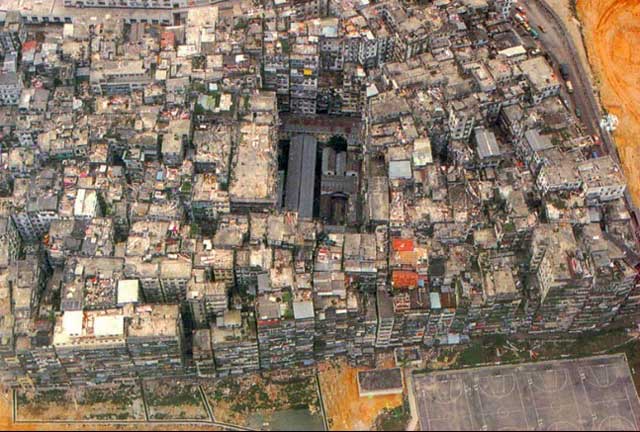
History
The origins of the "Walled City" can be traced back to the 16th century when the Song Dynasty set up an outpost to further develop the trade of salt along the coastline. Consecutive dynasties saw the area of the Walled City used in different ways due to its strategic geographical and political importance.
When Hong Kong Island was ceded to the British in 1841, the area was a fort with a Chinese military garrison and its defences were further boosted given the change in political status.
The birth of the Kowloon Walled City came about in 1898 when the New Territories was also ceded to the British for ninety nine years though this treaty did not include the garrison fort which was still under the control of the Qing Dynasty though eventually some officials left, some remained along with civilians.
Thus, the fort slowly evolved into a community, a "City within a City" which in turn become increasingly populated. Yet also the place had its own set of 'rules' within a confined area which become more lawless as the decades progressed and was also a place which had its own sense of community and spirit.
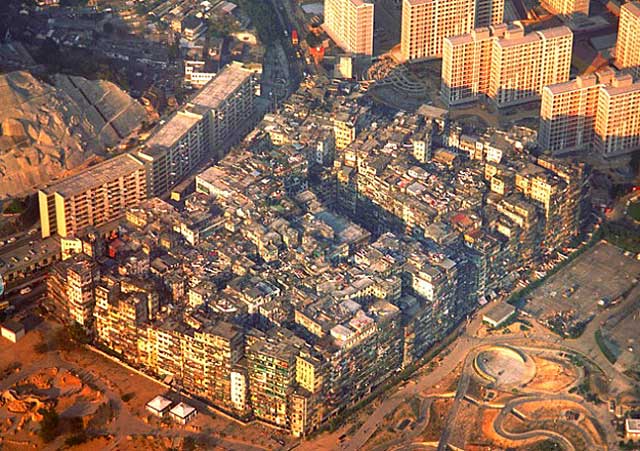
The Walled City was a conundrum for many as it was "Chinese" territory which both the British and the then Hong Kong and Chinese governments did not really want to deal with in an official administrative capacity.
Thus, the 'Walled City' would come to be left to its own devices and it became a place of curiosity, awe, intrigue and legend.
For people who came to call the Walled City home, life in the Kowloon Walled City no doubt moulded and defined all its residents for better or for worse and those who grew up there and look back to life there, the memories will persist.

Pastor Albert Ng
One such former resident is Pastor Albert Ng (of the Island ECC church) who spent the formative years of his childhood growing up in the Walled City.
Pastor Albert first moved to Hong Kong from China in the mid- to late Seventies and until he left the Walled City to undertake undergraduate studies at the University of Hong Kong in 1988, he lived and breathed the the place. His experience of the people and communities inside still live with him to this day.
In an exclusive interview, Pastor Albert Ng, looked back on his experiences and memories, both positive and negative, of growing up in the Kowloon Walled City, how he viewed life inside and even though he left over thirty years ago, how it stays with him and made him who he is and shaped his perspective on life and made him a empathic and compassionate person.


Pastor Albert Ng first gave his perspective on the history of the Kowloon Walled city and how it evolved through time to the bustling series of intertwined buildings which at its peaked housed over 33,000 people on a very small strip of land.
"In a very general way, there was a historical route which eventually created the Kowloon Walled City. During the Qing dynasty, there was a war between China and Britain and a lot of other foreign nations and in one particular treaty, I think in 1842, the Opium Wars. Through a series of treaties, Hong Kong Island was ceded to the British and at a later time, the Kowloon Peninsula was also ceded to the British and the 'boundary' was what we called now, 'Boundary Street' and part of Boundary Street was also ceded to the British as well."
"At a later date, north of Boundary street and south of the Shenzhen River, was also ceded to the British empire but the problem was that the Qing dynasty wanted something inside the Kowloon Peninsula and when Hong Kong Island was ceded to the British, there was a military garrison in Kowloon and that was the original site of the Kowloon Walled City. So throughout this time, the Qing dynasty said 'Yes, we have ceded the land to you but we want to keep a garrison' so there was just a very small fort."

As mentioned, the geopolitical situation of the Kowloon Walled City was complex, complicated and an issue that no government seemed to really want to deal with.
Pastor Ng gave further insight into this unique historical situation which seems to have never occurred before or been repeated anywhere in the world.
"Geographically, this fort was in the middle of Kowloon while politically, it belonged to the Qing dynasty. It became eventually an area of no control.
"The British did not have any interest in administering it while the Hong Kong government did not have any interest in nor legal rights to it.
"The Chinese government thought it was too far away and an insignificant piece of land with the attitude, 'Why do we want to care at all?' Thus, this created a special little place in the middle of Kowloon.
"The Walled City became known as a lawless place due to the lack of official laws to govern the area and Hong Kong police had no official capacity inside the Walled City.
"Thus, it became a magnet for criminals and illegal activity as anything and everything could occur inside and there were no legal repercussions; thus the area became infamous for drugs and prostitution and petty crime.

"The Kowloon Walled City was virtually lawless and if you go back to the fifties and sixties, there used to be a Banyan tree at Temple Street in Jordan and chartered buses taking people from Temple Street all the way to the Kowloon Walled City.
"The aim was to go there to eat, gamble and for prostitution. Businesses in the Walled City would do everything possible to attract you there so people would gamble so they could take your money and to sell visitors drugs - so gambling and drugs where very important industries inside the Walled City.
"The Walled City was a law unto itself and gained a negative reputation in mainstream society.
"The Hong Kong police did not have jurisdiction inside so they were not allowed to go in. If you committed a crime outside the Walled City, as soon as you ran into the Walled City then you were safe so this is why it was probably the darkest place in Hong Kong at that time.
"As the decades progressed, a greater sense of community evolved and outside organizations began to make inroads into the Walled City and slowly, services like electricity were introduced in their most basic form.

"In the early days, it was probably an ungovernable place but as more people moved in, it becomes a more stable environment and the government started to provide some social services inside. So we actually had some electricity inside so we had to pay for electricity.
"The electricity company would have a wire in and we would have a meter and we would pay every month. There was no water but the government had about seven public water stations so we could get some water from there and the Hong Kong government would also send in people to pick up the trash. It was in the seventies and eighties, that police gradually went in."
"There was no running water, so to have a shower, you had to use a bucket but it was not fresh water but they dug into the ground and had underground water but the supply was half an hour per week and there were times when there was no water for months."
The Walled City had many residents who often banded together to help each other out and for them, life was what it was; people worked, children went to school and the Walled City was home and an address to them and was no different to any other address in Hong Kong.
Pastor Albert Ng said that the prevailing sense of community of his childhood was probably better and had a greater sense of warmth than most modern day communities in Hong Kong these days.
"I would say that community there was probably better than any modern complex right now. I lived on the eighth floor and there was no elevator. The top floor was the thirteenth floor and there was no water and no elevator.
"When my mother needed to go to the market, she would leave me and my sisters at home and she would ask the mother on the seventh floor to keep an eye on us and vice versa so we helped to keep an eye on each other's kids."
For the children who grew up there, the Walled City no doubt meant a sense of freedom though also a sense of intimidation though like all children, Pastor Albert said they made the best of the situation and made the best of what they had to play with and enjoy themselves to the best of their ability.
"We loved the roof of the Walled City. There was no playground and there was limited space inside for children so this is why the roof top was the only place to play and this is where we would play 'hide and seek' and do whatever we wanted.

"Two things that I really enjoyed was that we flew kites, for example, it was next to Kai Tak airport but we flew kites anyway and the airport was so close that we could see people inside the planes and they waved at us so that was fun."
The children adapted as best they could and even developed an early form of "Parkour" as they jumped from building to building at a perilous height. The roof was not obstacle free and was a mix of washing lines as well as television and radio antennae.
"We really liked jumping from building to building, there was a gap of maybe two to three feet and we did know how to calculate the lengths that we could jump and it was pretty scary and if we fell then you would die and from what I know, I don't think anyone died. The roof top was a place that kids would play and if you had a lot of laundry and if you needed some sunlight, then you would go to the roof top."
"I played ping-pong with my friends and we made a table so if the ball dropped we had to run from the eight floor all the way to the third floor and get the ball back."
As the buildings which made up the walled city were so tightly packed together, the interior of the Kowloon Walled City was warm and oppressive especially during the long, baking hot summers. Such stuffy conditions meant that many people became seriously ill and this included Pastor Albert Ng.
"Some people would go up in the evening to the rooftop when it was cooler, just to get some fresh air as inside Kowloon Walled City it could be very very hot and there was no air circulation. It was oppressive and it used to smell a lot.
"I used to live in a one bedroom flat and it used to be about 200 square feet and the bedroom was for my mother and for my younger sister. The wall was always wet and mouldy and it used to smell really, really bad and water kept seeping into our flat through that wall so we kept asking the question, 'What kind of water was this?' It was probably sewage and eventually I got Tuberculosis (TB) due to this; I got Tuberculosis twice due to living in the Walled City."
"The first time I got Tuberculosis was in Form four and every week, I had to go to a clinic three times and they would give me twenty-one pills and I think most of them were antibiotics and I had to go to Kowloon Hospital Chest clinic and just swallow the twenty one pills in-front of the nurse as I was not allowed to take them away and this lasted for six months! Twenty one pills in one go three times a week for six months. This really affected my health!"
Inside the Walled City, amongst the roughly 350 different buildings cramped together, there was a primary school though many students elected to go to schools in the surrounding neighborhoods.
"I did think the Walled City was not my only world as my school and church was outside and it was not anything special but of course if I went to friends' places, I wanted to live in their place as their place was nicer!"
"There were a lot of churches inside and they were providing services like kindergartens and primary schools and an old folk's home provided by the churches."
"School was mostly outside the Kowloon Walled City, there was a primary school which was mostly inside and I don't think it was well operated so most of my friends and I went to school in places like Kowloon City. So I went to the Sun Ho Kwong area for school. My school mates did not really react when they knew I lived in the Kowloon Walled City, it was almost like nothing as the Walled City was just another part of Kowloon. Those who lived near the Kowloon Walled City saw it as normal whereas those who lived further away saw it as a 'no go zone' which people should avoid."
The interior of the Walled City was like any bustling district and there were even many doctors and dentists who used to practice inside and many people were eager to use their services as they were professional and a lot cheaper than the ones outside the Walled City.
"Doctors and dentists inside the Walled City were pretty good and Kowloon Walled City dentists were pretty well known; these were dentists who were trained in Mainland China and practising dentists in China but the only place in Hong Kong they could practice was inside the Kowloon Walled City. Thus, many people who were from outside the Walled City, used to come for dentists as it was a lot cheaper than outside and they did good work."

"Food was brought from both inside and outside, there were a lot of "Mum and Pop" shops inside the Walled City. My mother's family had a store which sold rice, oil and necessities and the Kowloon City wet market was a fifteen minute walk away so we always went outside to do grocery shopping."
With over 33,000 people inside the district, there were all types of people rubbing shoulders on a day to day basis and often new arrivals would help each other out via different types of neighbourhood associations.
"I would say there were gangs and we saw then walking around. There were also neighbourhood associations and there were also associations of people who came from different parts of China but there was no single group of people who could make a call for the whole place. During the seventies and eighties, there were more and more Hong Kong government services inside, as we lived there, we felt that we were a normal part of Hong Kong society."
For many, the Walled City was just a daily part of Hong Kong life and an integral part of the city and there was not much outside interest from the rest of the world and it was only when the Hong Kong government decided to demolish the Walled City that an influx of overseas media began to flood in to record the final days of this truly unique set of buildings.
A decision to tear down the Walled City was announced on 14 January 1987 and it signalled the end and a subsequent huge surge interest in the Walled City.
"It was not until the late eighties and early nineties that once the government announced they were going to demolish the Walled City that you saw journalists and photographers come in to take photos and there was a flood of interest and they did not have to pay and they just came in and there was no gate."
For residents who had to move out, a compensation package was agreed and the government ended up paying out HK$2.76 billion with $380,000 being set aside for each of the individual flats. Some were happy to take the payment and be relocated while others fought to the bitter end.
The last residents left and demolition began in 1993 and was completed in 1994; the Walled City was no more and its former residents all moved to begin new lives outside those walls.
For Pastor Albert Ng, he has bitter sweet memories of the place and though he has moved on and travelled the world and now has his own family, his experiences remain with him and he often 'dreamt' of the city long after he left.
"It was a personal thing as I grew up there and my formative years were spent there and after the Walled City was demolished, I kept dreaming of the city and I dreamt of myself returning home to the Walled City in my dream and this lasted for ten years. In my dream, I saw myself walking from outside the Walled City and walking the roads I knew and the first and second door and I remember seeing my neighbors. For me, it was a personal thing, I hated the Kowloon Walled City but somehow it was my home."
"I know some people hated the fact that they had to leave as their whole life was there and their living conditions were better than us and living there had advantages as we had good friends around and community but for me, I could not wait to leave."
Pastor Albert Ng reminisced about leaving the Walled City for university and how he still went home on the weekends to the Walled City.
"I was thrilled to leave the Kowloon Walled City and I left before my family and I left as I went to Hong Kong University in 1988 and due to the living conditions in the Walled City, one of the student dormitories accepted me to live there so I left in 1988 but I went home every weekend so it was still my home."
People often take the concept of running water for granted and for Pastor Albert and his family, it was a luxury and a blessing to finally have a steady supply.
"Every single day, we would have to go the public water stations so we could drink and shower. Due to that, washing machines were useless so my mother had to use her hands to do the washing so the day we moved to our new flat after leaving the Walled City, and we had running water I almost cried. This was not something we could take for granted and the first time my mom saw the washing machine, I felt like I was finally doing something for my mother and the day we left was a celebration for us."
Life inside the Walled City could be tough and Pastor Albert was open to sharing some of his more forgettable memories.
"I have lots of memories I would rather not remember, my father started taking heroin inside the Walled City and he got addicted for over 30 years until he passed away. There was a street called "Gwong Ming gwa" (Bright Light Street) and this was probably the brightest street in the city and also a street to steer clear of. The reason why it was called "Bright" street as there were lots of drug dens and people used candles to light up the tables so there were a lot of light and thus the name."
"We used to walk inside the city and we saw people selling drugs and everyone minded their own business and the thinking was "We don't bother you so you don't bother us."
The famed Christian missionary, Jackie Pullinger, worked tirelessly inside the Walled City with her Christian missionaries to assist those inside and a young Pastor Albert Ng knew of her influence and existence all those decades ago.
"I knew there was a foreign woman helping the drug addicts and prostitutes and I did not meet her until seven years ago and she was my hero and till this day she still had a ministry inside Hong Kong in Shatin. I knew of her at the time. There were one or two times, I went to see where her ministry was."
Pastor Albert Ng went onto talk about the legacy of the Kowloon Walled City and how the city had left an indelible mark on the social and cultural landscape of Hong Kong.
He also remarked how he hoped that the Hong Kong government would do more to preserve the memory of the Walled City beyond simply having the Kowloon Walled City Park.
"The Kowloon Walled City had a unique geographical and political situation and I can't think of another place on earth in a similar situation. The Walled City was situated in one place but its sovereignty belonged to another place and it was part of the history between China and the British and part of Hong Kong history especially Kowloon city. What I find sad is that the Hong Kong government seems to have no interest in this place at all."
Living inside the Kowloon Walled City forged his character and his view on life and Pastor Albert said that the sacrifice that his mother made to raise both him and his two sisters was astounding. It showed him how persistent, strong and resilient she was in the face of true adversity. In his youth, he may have not had much though he knew the strength of love and community.
"My experience in the Walled City had two effects on me and the first was that it made me forever appreciate my mother as my father was a sailor so she had to live in such a terrible place to look after me and my two younger sisters and she had to work part time.
Once, our home got broken into and we lost everything and we did not have much but we lost everything so one thing that is important to me is how much suffering my mother had. My sisters are still in Hong Kong."
Life has moved on for Pastor Albert and yet, like everyone, he has sometimes struggled to escape his past though he is now at peace with it and where he came from.
"It affects my psyche and how I look at myself as I grew up there and by God's grace, I went to the University of Hong Kong and I got my engineering degree and at that time, it was a huge achievement. Later I went overseas and I got two master's degrees and one doctorate but when I look at my history, I still have a sense of inferiority and I know it is illogical and unreasonable and I should not feel like this and no one ever looks down on me but but feels like 'I came from that place and it was only my luck that I was able to go to college, but I worked hard but my mind will say I am lucky, you should not have been granted that experience."
"It took me a while to change that feeling so every time I come across the young kids who come from underprivileged backgrounds, I have more compassion for them."
Pastor Albert Ng now seeks to assist and guide others who are struggling in life and maybe his time within the Walled City showed him the importance of community, to not judge and to help others less fortunate than himself at all times regardless of their background. The experience could have hardened his soul and outlook on life though it seems to have had the opposite effect.
The Walled City may seem like a distant dream to him though it will always be a part of him wherever he goes in life and his stories will be passed onto a new generation.
Thank you.

Further Information
For more on the Walled City, these are useful links:
City of Darkness by Greg Girard & Ian Lambot
www.youtube.com/watch?v=dj_8ucS3lMY City of Imagination: Kowloon Walled City 20 Years Later
www.youtube.com/watch?v=TmqlxjTSc8w Kowloon Walled City, Hong Kong. 1990
www.youtube.com/watch?v=mRLLlhyUlKI Photographic Video of Kowloon Walled City, the City of Darkness
Book Hotel Accommodation in Hong Kong China
Book Hotels in Hong Kong - Booking.com
Hotels in Hong Kong - Agoda
Find Hotels in Kowloon - Booking.com
Peninsula Hotel Hong Kong
Search Hotels in Macau - Booking.com
Venetian Macau Resort Hotel
Budget Hotels in Hong Kong - Booking.com