Qinghai Must Sees 青海
Daniel Allen
Dongguan Grand Mosque, Xining
Catering to Xining's half-million strong population of Hui Muslims, this is the largest mosque in Qinghai and one of the largest in the whole of China.
The mosque's exterior has been revamped fairly recently, and now resembles an Arabian-Nights-meets-Disneyland type affair, complete with flashing neon. But enter through the main gate, below the mosque's towering twin minarets, and visitors will discover a tranquil courtyard, within which lies the original mosque building - a more modest, Chinese-style structure dating all the way back to 1380.
Dongguan Mosque is open to visitors from Saturday to Thursday, although Friday is also a fascinating time to visit. Friday lunchtime prayers regularly draw a crowd of 50,000 worshippers, who spill out onto the nearby streets. Arrive just after midday to see the streets around the mosque grind to a halt as an army of men in spotless white robes and taqiyahs pull out their payer mats and turn to Mecca.


Ta'er Monastery, near Xining
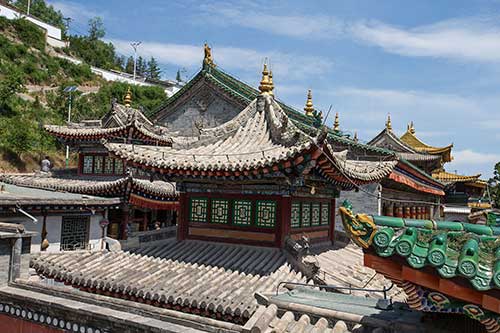
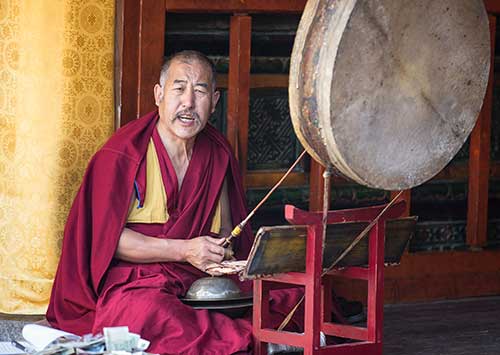
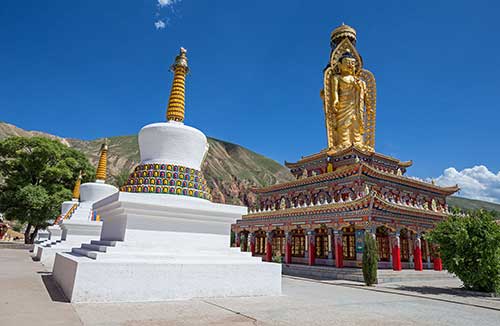
This sprawling monastery complex, a half-hour drive south of Xining, is an important religious centre for the Yellow Hat Sect of Buddhists. It boast numerous buildings in various architectural styles, from ornate Buddhist halls and pagodas to more simple colleges and residences (hundreds of monks live here).
Known as Kumbum Monastery in Tibetan, Ta'er Monastery attracts crowds of devout pilgrims from across China. As they prostrate themselves before whitewashed stupas and golden Buddhas, the weatherworn features, colourful clothing and hand-held prayer wheels of these faithful masses make for a truly photogenic spectacle.
Ta'er was founded in 1577 in memory of Tsong Khapa, the monk who established the Yellow Hat Sect of Tibetan Buddhism. Tenzin Gyatso, the fourteenth and current Dalai Lama (1935-present), actually spent 18 months here before assuming the role of Dalai Lama. He was born in the small village of Taktser, around 40 miles from the monastery.
Highlight: Nine temples are open to visitors at Ta'er. Look out for the amazingly lifelike sculptures of humans, animals and landscapes carved from yak butter at the Yak Butter Scripture Temple (Suyouhua Guan).
Tibetan Medicine and Culture Museum, Xining
This recently revamped and surprisingly fascinating institution is housed in a huge building close to Qinghai University, in the north of Xining. With eight major exhibition halls, covering subjects such as thangka (Tibetan tapestry) painting, natural medicine, astrology and astronomy, and calligraphy, the Tibetan Medicine and Culture Museum offers a fascinating insight into traditional Tibetan life and Tibetan history.
With over 20,000 items in the museum collection, there's more than enough to keep visitors occupied for at least a couple of hours. As well as the museum's never ending prize thangka (see highlight below), the Great Gyushi book is also on display. The largest Tibetan book in the world, it is 2 metres long, 1.2 metres wide, and tips the scales at over 1,300 kilograms. Not your average bedtime read.
Highlight: A magnificent, 618 metre-long Tibetan thangka which took 400 artists over four years to create. Depicting the whole of Tibetan history, this is the largest thangka in the world, weighing in at over 1,000 kilograms.
Dan Gar Ancient City, Huangyuan County
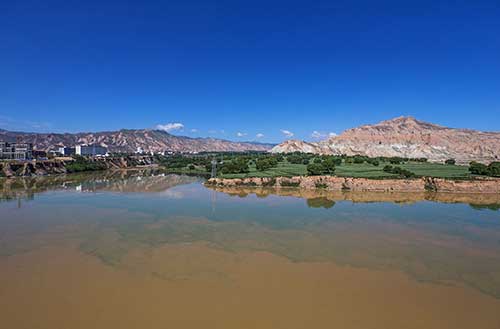
Situated 25 miles from Xining on the north bank of the Yellow River, at the border of the Loess and Qinghai-Tibetan Plateaus, this former economic, trade and cultural centre was founded 600 years ago during the Ming Dynasty. Occupying a strategic position on both the Ancient Tea Horse Road and the southern Silk Road, Dan Gar was a hotbed of commerce during its heyday, as businessmen from Europe and America came here to run banks and trade with the local Chinese.
Today Dan Gar remains a melting pot of minority cultures. Many of the city's historic buildings have been rebuilt or restored; visitors can wander its restored Ming and Qing-era streets, explore its temples, courtyards and pavilions, and purchase beautiful local handicrafts such as lanterns and leather embroidery.
Highlight: The interior of Chenghuang Temple has some impressive wall murals.
Sanjiangyuan National Nature Reserve (SNNR), southern Qinghai
Encompassing a vast area of the Qinghai-Tibetan Plateau, the SNNR (or Three-River Headwaters National Nature Reserve) was established in 2000 as the highest natural wetland in China. Containing the headwaters of the Yellow, Yangtze and Mekong Rivers, it is bigger than Wales and England combined (nearly 60,000 square miles), and is the second largest nature reserve in the world. There are now plans to turn most of the reserve into a national park, with stricter levels of environmental protection. Around 200,000 Tibetans also live within the reserve boundaries.
With numerous rivers, lakes and marshes, as well as snow-capped mountains and glaciers, the SNNR is home to some of China's rarest species. Until now more than 80 kinds of birds and 20 kinds of mammals have been recorded, including the elusive snow leopard and the endangered Tibetan antelope, as well as wild yak and blue sheep.
Highlight: Around 300 miles southwest from Xining, Maduo County is the gateway to the SNNR for many visitors. Maduo means "source of the Yellow River" in Tibetan, with the area boasting thousands of beautiful alpine lakes.
Huzhu Tu Ethnic Park, Huzhu County
An hour's drive north of Xining, Huzhu Tu Autonomous County makes a perfect day trip for those based in the Qinghai capital. As the only area of China predominantly inhabited by the Tu people, it's a great place to learn more about this interesting Chinese ethnic group, which today numbers around 200,000.
The largely Buddhist Tu people have their own spoken language, although there is no written alphabet (Chinese and Tibetan alphabets are in common use). The Tu call themselves "Mongguer" (Mongolians) or "chahan Mongguer" (white Mongolians), symbolizing the close relations that existed between the ancient Tu and Mongolian peoples (legend has it that the ancestors of the Tu were Mongolian soldiers).
Visitors to the park can witness the homes, clothing and everyday life of the Tu, and enjoy examples of local cuisine. The colourful minority is renowned for its singing and dancing, with regular performances also put on for guests.
Highlight: Beishan National Forest Park is also located in the Huzhu area, and is worth exploring for its waterfalls and strange rock formations.
Longyangxia Scenic Region, Hainan Prefecture
Located in Hainan Tibetan Autonomous Prefecture, around 90 miles from Xining, Longyang Gorge (Longyang Xia) is a 25 mile-long, 40 metre-wide rift in the earth, through which the mighty Yellow River is funneled. It is across this dramatic chasm that the Longyangxia Dam has been thrown, a massive concrete edifice 180 metres high (the highest dam in Asia), thereby creating a huge, 150 square mile-reservoir.
Visitors to Longyangxia can witness the (now somewhat tamed but nevertheless spectacular) Yellow River thundering through the gorge from several viewing platforms, as it continues its 2100 mile-journey to the sea in China's coastal Shandong Province, as well as the dam and local hydropower station.
Highlight: A new "eco-resort" was opened at Longyangxia last year. Take a boat out on the Longyangxia reservoir to enjoy the local scenery.
Regong Art, Tongren County
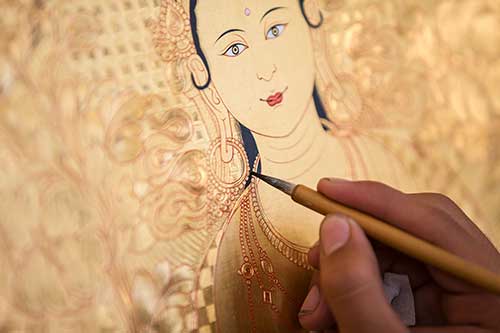
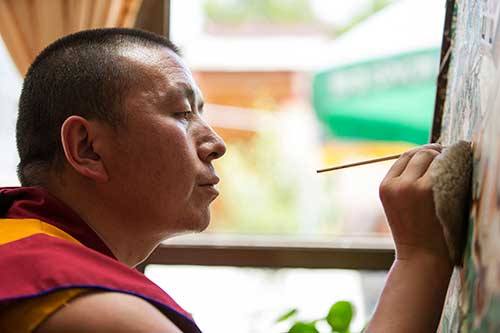
Known to Tibetans as Rebgong, the monastic town of Tongren (and the surrounding area) are renowned in China as the "home of Tibetan culture and art". Located around 110 miles from Xining, Tongren this is an excellent place to learn more about Tibetan art and see Tibetan artists of all ages - especially thangka painters - at study and work. The numerous galleries here display intricate thangka masterpieces by the town's community of eminently artistic monks.
Regong art, the specialization of the Tongren area, dates back hundreds of years, and was added to the UNESCO Intangible Cultural Heritage List in 2009. An iconic folk art, it mostly involves the painting and sculpting of Buddhist figures and delicate thangkas, each of which can take months or even years to complete.
Highlight: A stone's throw from Tongren, Wutun Village is the most famous place for Regong art, with more than 100 Tibetan artist families of artists. The beautiful Wutun Monastery has a stunning collection of ancient thangkas.
Qinghai Essentials - Getting To Qinghai
- The Beijing-Lhasa train passes through Qinghai on the Qinghai–Tibet railway. The train to Xining departs from Beijing West Station.
- Xining Caojiabao Airport has connections with numerous Chinese cities including Beijing, Changsha, Chengdu, Dalian, Hangzhou, Hohhot, Hong Kong, Lhasa, Nanjing, Qingdao, Shanghai, Shenzhen, Urumqi, Xiamen, Xian and Wuhan as well as Bangkok.
- Qinghai Top 4 Attractions: Qinghai Lake, Chaka Salt Lake, Kanbula National Forest Park and the Qilian Mountains.
Qinghai Accommodation
Book hotels in Qinghai
The Sebel Xi Ning Hotel
Book Hotel Accommodation in Beijing China
Book Hotels in Beijing - Booking.com
Find Hotels in Beijing - Agoda
Search Hotels in China - Booking.com
Recommended Hotels in Shanghai China - Agoda
Budget Hotels in Beijing - Booking.com
Best Hotels in Sanlitun - Booking.com
Book Luxury Hotels in Beijing
Beijing Palace Museum Ticket (The Forbidden City)
Mutianyu Great Wall Ticket & Cable Car
Guide Books on Beijing & China