Sichuan Fairyland: Jiuzhaigou and Songpan offer some of China's most stunning scenery 九寨沟
Daniel Allen
High on the edge of the sprawling Tibetan plateau, northern Sichuan is a region begging to be explored. If you're hardy enough to withstand the seasonal temperatures and lofty elevation, and can avoid the crowds of the national holiday periods, the stunning alpine scenery and fascinating Tibetan and Qiang culture make for an exhilarating getaway.
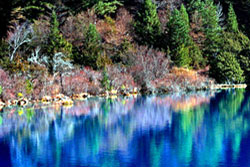
Just inside Sichuan's northern border, and jewel in the crown of China's national parks, Jiuzhaigou is the region's biggest attraction. Thankfully rescued from the deforestation and hydroelectric schemes ravaging nearby areas, the pristine Jiuzhaigou valley is breathtakingly beautiful all year round. Meltwater from snow clad peaks tumbles off heavily forested slopes, forming a series of clear aquamarine lakes and gushing cascades of dazzling natural splendor.
Jiuzhaigou takes its name from the nine Tibetan villages along its length, although few of them remain today - the main population centers are now Heye, Shuzheng and Zechawa. In 1997 the permanent population of the valley was about 1000, made up of about 130 Tibetan and Qiang families. Due to the protected nature of the park, the residents are forbidden from agricultural activities and rely on government subsidies and tourism.
For those who enjoy nature at its tranquil best, the best times to visit the park are in winter and late summer. Despite the occasional disturbance by tour groups in matching baseball caps led by flag-toting guides, the hordes of early summer and autumn's "golden time" are markedly and mercifully absent. Barring heavy snowfall, most trails remain open in the winter months, and there is enough vegetation to give the various pools and waterfalls an extremely picturesque backdrop.
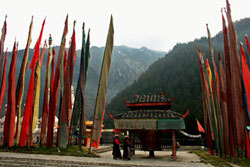

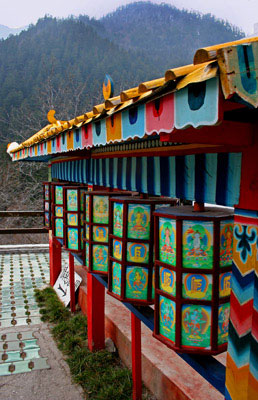
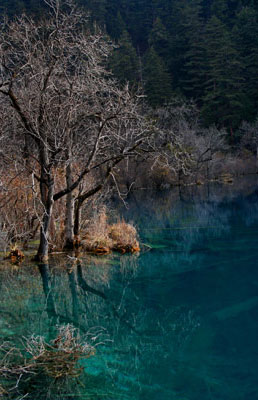
Jiuzhaigou National Park
While you may be told otherwise, it is certainly still possible to stay inside the park in the low season. After purchasing admission and transportation tickets at the entrance (see information at the end for prices), independent travelers should head up to the Shuzheng Village (Shùzhēng Zhài), one of several Tibetan villages dotted long the valley.

Negotiation with one of the villagers who approach all travelers deposited at the Shuzheng bus stop will undoubtedly result in the speedy procurement of accommodation. Don't expect five star luxury hotels, but the basic nature of the tourist facilities at Shuzheng is more than compensated for by the fantastic views, easy access to sights and trails, and the hospitable nature of the locals. Toilets are primitive, and the nights cold (even in summer), so be sure to take warm clothing and a plentiful supply of wet wipes. Meals of simple Tibetan food (yak meat and yak butter feature heavily on the menu) are available at minimal cost in the town's restaurants.
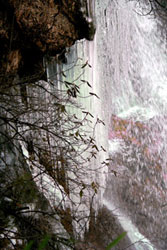
Although the whole of the Jiuzhaigou valley, which forks into two at its upper reaches, is worth exploring, those on a restrictive schedule should check out the lakes, falls and pools around Shuzheng Station, as well as the awe-inspiring, icicle-clad (in winter) cascades at Nuorilang and Pearl Shoal. The Five Color Lake, resplendent in its peacock feather hues, is also a must see, high up the valley at 3000 meters.
Songpan
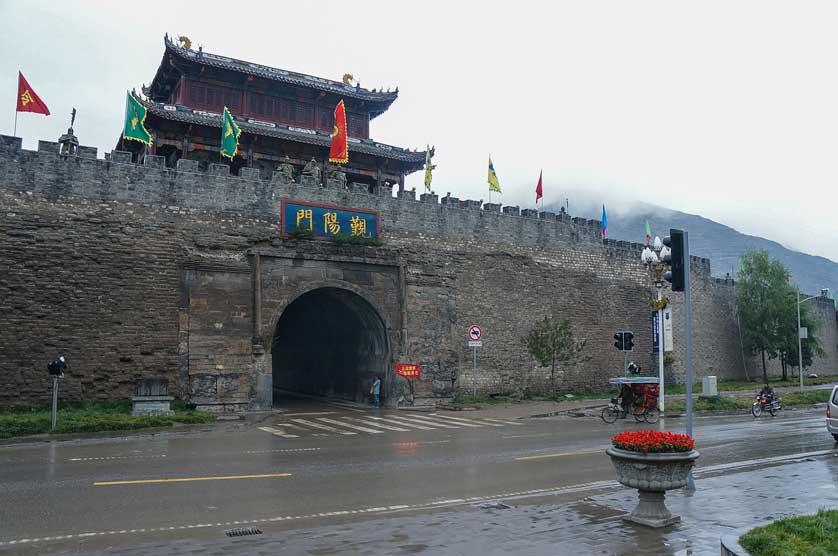
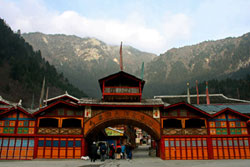
Only a 2-hour bus ride from Jiuzhaigou is the ancient walled city of Songpan. Primarily viewed as a base for horse trekking in the nearby mountains and grasslands, the bustling streets, well preserved stretch of city wall, complete with imposing gates, and fascinating mix of Tibetan and Muslim culture, provide enough interest to detain visitors for several days. Look out for some great hotpot and noodle restaurants along and off Zhong Jie, and be sure to sample the great range of sweet and savory breads on offer.

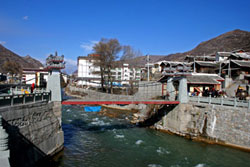
Although a lot of hotels seem to close down in Songpan during the winter season, it's possible to get some good deals at the ones that remain open. Check out the Huanglong International Hotel on the edge of town for discount rooms with heating, hot water and much needed electric blankets. If you're really in the mood to brave the cold, call in at Shun Jiang Horse Treks or Happy Trails near the northern bus station for trekking and camping opportunities.
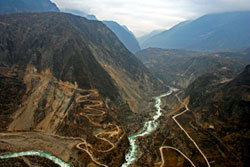
There are regular daily flights from Beijing to Chengdu's Shangliu airport (1000 - 1500 RMB), and short flights from Chengdu to Jiuzhai Huanglong Airport, near the park (less than 500 RMB). Those who prefer to keep their feet on the ground can take the trains from Beijing to Chengdu (26 hours, hard sleeper approximately 450 RMB), and then the bus from Chengdu to Jiuzhaigou, a tiring, yet ultimately spectacular 10-hour journey through high mountain scenery (100 RMB).
Jiuzhaigou & Songpan Essentials
- Best souvenirs: Tibetan silverware (10 - 200 RMB)
- Best food: (Tibetan) Yak meat kebab (2 RMB) - Jiuzhaigou
- (Western) Hamburger & Fries (25 RMB) - Grandma's Kitchen, Chengdu
- Park Admission (compulsory): 80 RMB (2 days)
- Park Transport (optional): 80 RMB (2 days, unlimited use)
- Accommodation
- Jiuzhaigou (Shuzheng Station) - approx. 60RMB/night, meals 15 RMB/night
- Songpan - 100 -150RMB/night (hotel)
- Chengdu - 100 - 150 RMB/night (hostel/hotel)
- Book hotels in Chengdu
- Book hotels in Sichuan


Book Hotel Accommodation in Sichuan
Book Hotels in Beijing - Booking.com
Find Hotels in Beijing - Agoda
Search Hotels in China - Booking.com
Recommended Hotels in Shanghai China - Agoda
Budget Hotels in Beijing - Booking.com
Best Hotels in Sanlitun - Booking.com
Book Luxury Hotels in Beijing
Beijing Palace Museum Ticket (The Forbidden City)
Mutianyu Great Wall Ticket & Cable Car