From the Dragon's Mouth: The naturally hot spring water of northern Chongqing's Beibei region rejuvenates body, mind and soul
Daniel Allen
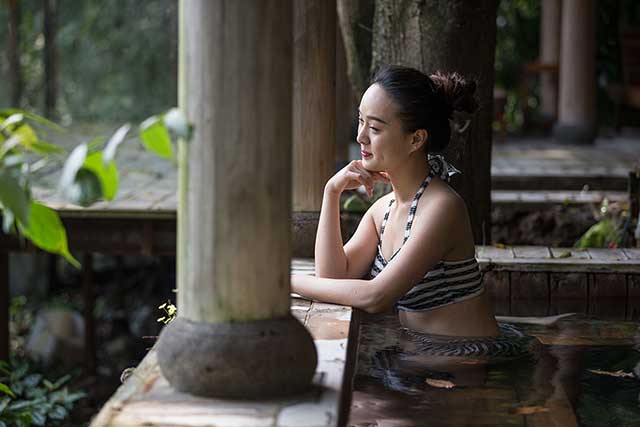

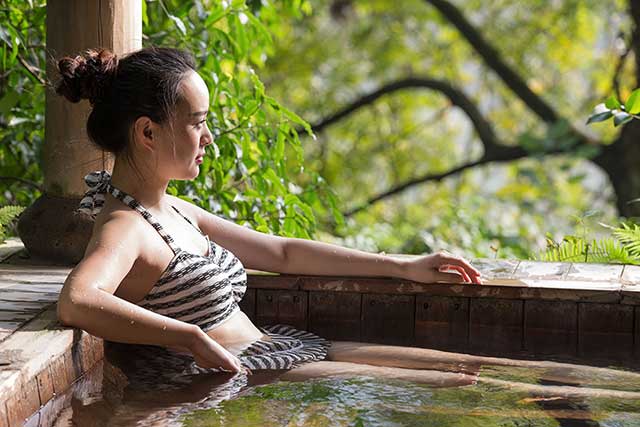
With the sun dipping behind the verdant crest of Jinyun Mountain, candles and lanterns at the Bolian Resort & Spa throw flickering reflections across verandahs and bamboo trees. Guests luxuriating in their own private hot spring tubs take in the day's last views over the Jialing River, as it surges past on its way to meet the mighty Yangtze. Here in Chongqing's Beibei district, a short drive from the city's bustling, soaring downtown, it's a vignette of hydrothermal hedonism.
Thanks to ample geothermal resources and a typically lush local landscape, Chongqing is one of the best places to embrace China's venerable hot spring culture. In 2012, FEMTEC - the World Federation of Hydrotherapy and Climatotherapy - held its annual conference in the city, awarding it the title "Global Capital of Hot Springs".
World rankings aside, Chongqing's plethora of hot spring facilities now offer visitors a unique range of health, beauty and spa treatments. To the north of the city, the balmy waters of Beibei were once exclusively enjoyed by emperors and Chinese nobility. Today, thankfully, anyone can soak, steam and pamper themselves here in style and seclusion.
A History of Hot Water
Many Chinese emperors had their own favourite bathing hangouts. The Huaqing hot spring, just outside the city of Xi'an, was the setting for a famous romantic liaison between the Emperor Xuanzong and his comely concubine Yang Guifei during the Tang Dynasty (618-907), while the hot springs of Xiaotangshan in Beijing regularly welcomed royals, aristocrats and even foreign dignitaries during the Ming and Qing Dynasties (1368-1912).
While Beibei's Northern Hot Spring Scenic Park is a relatively modern development, the area is reputed to be the birthplace of Chinese hydrothermal resort culture. Its 1,600-year hot spring history, which is closely entwined with the local Wenquan (Hot Spring) Temple, makes it even older than Japan's Arima Onsen, a venerable bathing facility built by Kobe monks in the eighth century.
With its wizened, ochre-leaved gingko trees, heady, incense-laden air and cohort of mustard-robed monks, today Wenquan Temple remains an oasis of calm and spiritual repose. Situated at the very heart of the Bolian Resort, it makes the perfect place to spend a mellow, meditative hour following spa treatment or laid back soaking.
Wang Ming, head monk of Wenquan, is proud to be associated with such a long-standing religious institution, and the temple's seminal role in Chongqing's hydrothermal history.
"Our temple, which was founded in 423 during the Song Dynasty, started hot spring culture in this city," he explains in heavily accented Mandarin. "It has witnessed huge changes and important events in its lifetime. In 1259, Möngke Khan, the fourth ruler of the Mongol Empire, actually died here after being hit by cannon fire. Things are a slightly more tranquil these days."
Republican Resort
The Northern Hot Spring Scenic Park also boasts a curious contemporary history. Beibei (literally "north rock" in Mandarin) District, where the park is located, takes its name from a giant boulder that used to sit in the middle of the Jialing River, above which the Bolian Resort is now perched. Thanks to the Three Gorges Dam and subsequent rise in water levels behind it, this geological landmark is now fully submerged.
The brainchild of progressive entrepreneur Lu Zuofu, Beibei started life as a new town during the days of the Republic of China (1912-1949). As part of the town's grand social experiment, Lu opened the hot spring park in 1927.
"This was the first public space in China where ordinary people could buy a ticket and enjoy hot spring facilities," says local historian Rachel Hu. "With guesthouses, a library and a museum, it soon drew large crowds, particularly during the Second Sino-Japanese War (1937-1945)."
Feeling the Heat
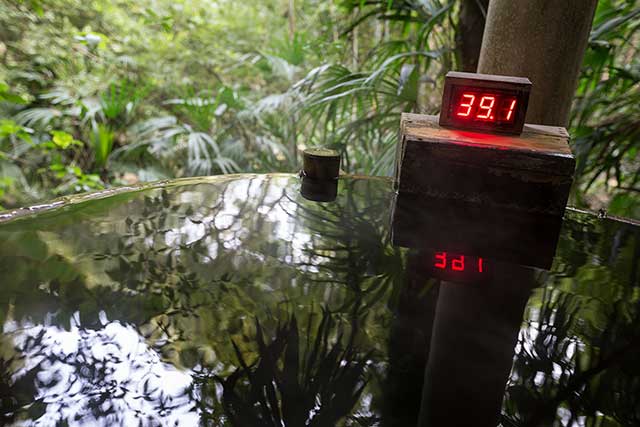
Historical diversions aside, today Beibei and its complement of hot spring resorts are all about health, relaxation and personal pampering. The area's ten springs generate over 7,000 tonnes of naturally heated water each day, which gushes from the ground at a temperature of 35 to 40˚C.
The alkaline outpourings of Beibei contain myriad trace elements (especially calcium sulphate), many with supposedly therapeutic properties - these warm waters have always been a magnet for those looking to help relieve a cornucopia of ailments. But for families and couples, they're also a great way to wind down and soak away your cares in an informal environment. Many a cross-cultural friendship has been struck up in the blissful confines of a Chongqing hot spring pool.
With its verdant greenery and moss-clad rocks, the Bolian Resort's extensive, hot spring compound feels more like a sub-tropical playground than a high-end resort. Bathers here are spoiled for choice, with 26 baths and pools of various temperatures and chemical compositions nestling amongst the lush foliage.
According to Shirley Jiang, each pool has its own unique function.
"The whirlpool and bubble springs stimulate the nerves," says the Chongqing native. "The fragrant spring, with its petals, rose and lavender oils, rejuvenates the skin. And with added fine white wine, the joy tsin spring is good for activating the blood."
Those travellers who forgot to pack their pumice may like to avail themselves of Bolian's fish pool, where schools of pint-sized garra rufa effect painless pedicures, while there's even an underground cave pool, large enough to suspend three or four subterranean bathers in a state of vaporous, aquatic bliss.
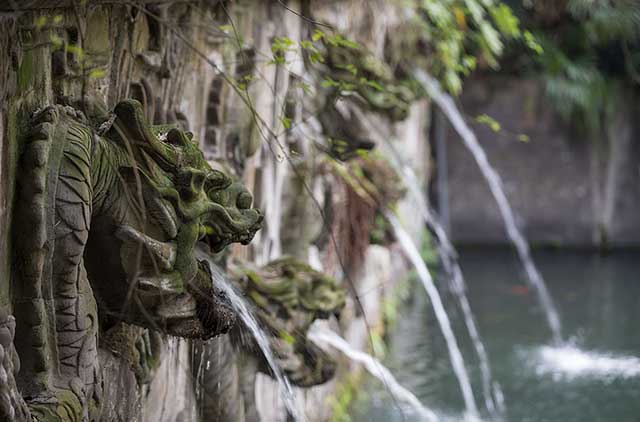
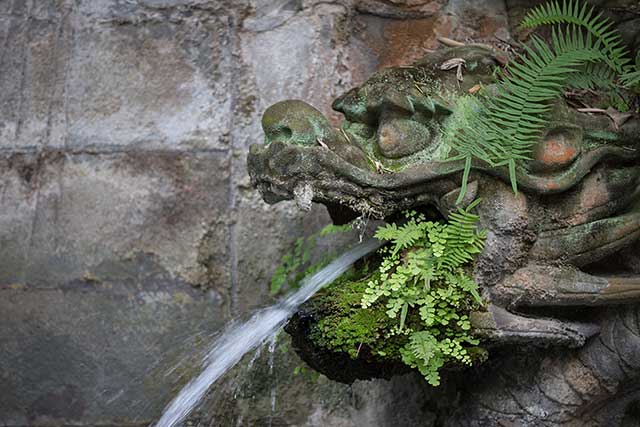
"The cave is hot, it's dark and it's super steamy," says Bolian's Jiang. "I always feel like I'm entering a dragon's belly when I go down there. But in a good way, if you know what I mean."
Contemporary Classics
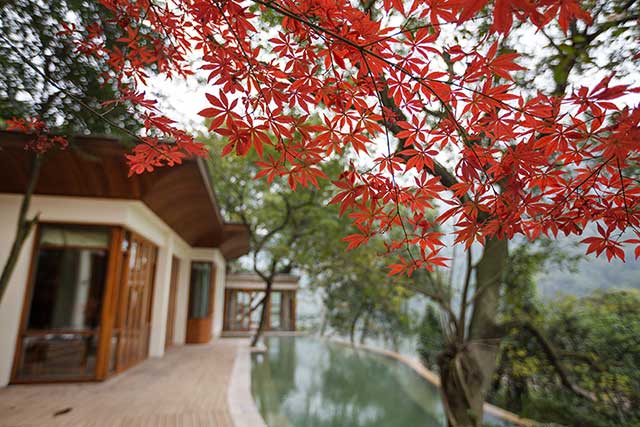
Surrounded by the gnarled trunks of ancient, crimson-leaved Chinese maples, the spa centre at the Bolian Resort offers bird's-eye views of the steep-sided Jialing River valley. But more than the memorable panoramas, it is the oriental-style pampering on offer here that seems to attract a never ending procession of guests.
In fact, the only thing likely to furrow the brow here is choosing which spa regime to indulge in. Inspired by the nearby Wenquan Temple, Bolian's "Sanctuary of the Soul" treatment involves facial aromatherapy, singing bowls, oil massages, a foot ritual with fresh rose petals, all finished off with a blessing ceremony to induce total relaxation.
Yet it's the spa's award-winning "Tea Moxibustion Herbal Punch Treatment" which seems to draw the ravest of reviews. As one of the classic treatments of traditional Chinese medicine, moxibustion therapy has a history of more than 2,000 years. At Bolian today it involves placing heated herbal compression packs directly onto the skin.
"The basic principle of moxibustion therapy is to place or press heated moxa (dried mugwort) or other herbal concoctions on the body's acupoints," explains Shirley Jiang. "This warms the meridians and promotes the flow of Qi and blood. It's great for general health and disease prevention."
For those apprehensive about language and cultural issues, both Bolian and the nearby Banyan Tree hot spring resort offer visitors the chance to immerse themselves in Chinese hot spring culture in a relaxed, multilingual environment. Getting into hot water in China never felt so good.
Spring Selection
Bolian Resort & Spa Chongqing
Enjoy a high-end hot spring experience at Bolian Resort, which offers guests a range of communal bathing pools, spa treatments and Chinese and international cuisine. Each of the 31 villas here faces the beautiful Jialing River valley and has its own spring-fed pool. The resort's hot spring compound is also open to the public, with an adult ticket (which includes refreshments and a light meal after bathing) costing around 300 RMB ($40).
Banyan Tree Chongqing Beibei
Nestled at the foot of Jinyun Mountain Natural Reserve, the Banyan Tree Chongqing Beibei is the Banyan Group's first luxury hot spring resort. With a wide range of accommodation available, suites and villas boast their own personal hot spring dipping pool fed by the healing waters of the North Hot Spring, or a private swimming pool. The spa offers the wellness benefits of a therapeutic hot spring facility, as well as Banyan's typical spa treatments.
Access
Air
Chongqing Jiangbei International Airport (CKG) has connections with major cities in China as well as flights to Osaka and Tokyo in Japan, Seoul (South Korea), Bali, Bangkok, Chiang Mai, Singapore, Phnom Penh, Siem Reap and Kuala Lumpur.
Rail
Chongqing North Railway Station has long-distance trains to Beijing, Chengdu and other major cities in China.
Accommodation in China
Book Hotels in Beijing - Booking.com
Find Hotels in Beijing - Agoda
Search Hotels in China - Booking.com
Recommended Hotels in Shanghai China - Agoda
Budget Hotels in Beijing - Booking.com
Best Hotels in Sanlitun - Booking.com
Book Luxury Hotels in Beijing
Beijing Palace Museum Ticket (The Forbidden City)
Mutianyu Great Wall Ticket & Cable Car