Steppe To It: Beijing to Ulaan Baatar by Train
Daniel Allen
Less than 30 hours by train from Beijing, the city of Ulaan Baatar is the gateway to the wide open grasslands, searing deserts and fascinating nomadic culture of Mongolia.
Traditionally one of the more obscure Asian holiday destinations, Mongolia is rightly becoming more of a regular on the tourist circuit these days, with vast swathes of pristine wilderness ripe for exploration.
Landlocked between Russia and China, Mongolia is huge (nearly three times the size of France), geographically diverse, and remote.
Mongolia is also the most sparsely populated country in the world - one million of the country's three million inhabitants live in Ulaan Baatar (UB).
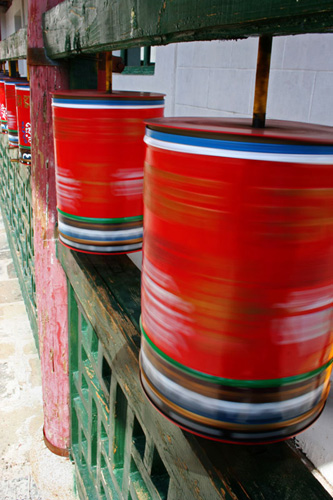
The predominant religion in Mongolia is Tibetan Buddhism, and most of the country's citizens are of the Mongol ethnicity, though Kazakhs, Tuvans, and other minorities also live in the country, especially in the west. About 20% of the population lives on less than US$1.25 per day.
Mongolian Culture
Despite a recent history of domination by Mongolia's giant neighbors, China and Russia, the culture and lifestyle of Mongolia's nomads has changed little for centuries. This can be largely attributed to the harsh climate and sparse population, allowing no better alternative, but also to the character of the people, who remain fiercely independent on a personal and national level.
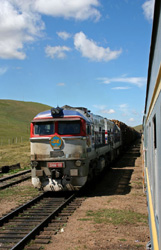
Trans Mongolian trains are rather like moving hotels. Compartments have beds, a table, and plenty of storage space. In each carriage there is a toilet and washroom, and a samovar dispensing hot water for tea and coffee. Attendants are constantly present to keep the train clean and orderly.
"Lux" compartments have two beds and a shared washroom / shower, and are really quite luxurious. "Coupe" or "hard class" have four bunks per compartment, all with clean sheets and blankets supplied. Some trains have an intermediate "soft class" with 4 softer beds.
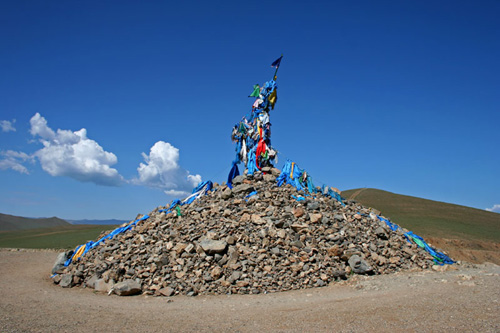
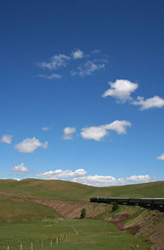
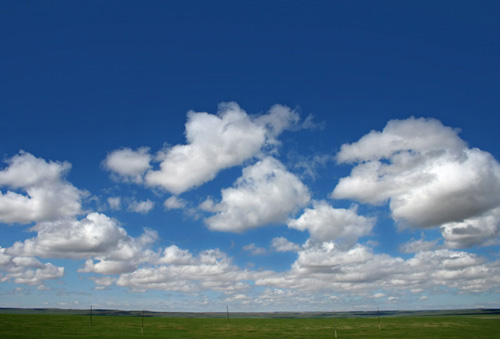
Taking the train is probably the best way to get to UB from Beijing, giving travelers the opportunity to witness the diverse landscape first hand, as well as to meet fellow rail enthusiasts. Views from the window are never boring; the landscape through north western China constantly changes from the mountainous peaks around Beijing, to fertile farm lands, to long sweeping grassy plains, to the endless dunes of the Gobi Desert.
At the China / Mongolia border there is a three to five hour stop while each carriage is hydraulically lifted and the bogeys changed. Mongolian rails, which are based on the Russian standard gauge, are wider than in China. During this time the toilets are locked, so those with a weak bladder should definitely make a trip to the WC before the train reaches the border.
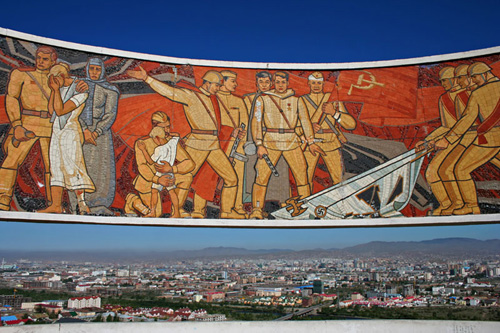
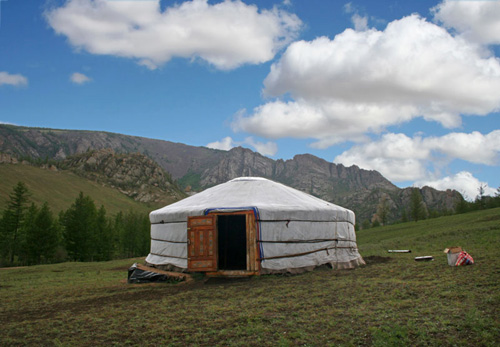
While Ulaan Baatar could never be called a refined city, there's plenty going on to keep visitors entertained. There are several interesting monasteries and museums, some great restaurants, and a buzzing nightlife scene fueled by Chinggis Beer, vodka and fermented horse milk. Plenty of hostels and travel companies can organize trips to the surrounding countryside - overnight stays in a Mongolian ger (round felt tent) are a particular highlight.
Naadam Festival
The best time to visit Ulaan Baatar is in early July when the Naadam Festival takes place. This the major Mongolian holiday, and a wonderful time to experience the culture and people of this amazing land. The festival has its roots in the nomadic wedding assemblies and hunting extravaganzas of the Mongol army. The opening ceremony features marches and music from soldiers, monks and athletes before the real fun begins.
In Ulaan Baatar's Naadam Stadium the three sporting passions of Mongolians, horse racing, wrestling and archery, are played out over two days. But if you don't want to watch sport all the time, there's plenty to see and do outside - food, music, crafts or just people watching.
Mongolians have a high regard for horses since, for centuries, they have relied on them for transport, sustenance and companionship. During Naadam races, up to 1,000 horses can be chosen to compete. The horse races are broken down into six categories based on the age of the horses. For example, two-year-old horses race for 16 kilometers and seven-year-olds for 30 kilometers. The race is conducted on the open grasslands with no set track or course. Children from the ages of 5 to 13 are chosen as jockeys since this guarantees that the race tests the horses skill and not the riders.
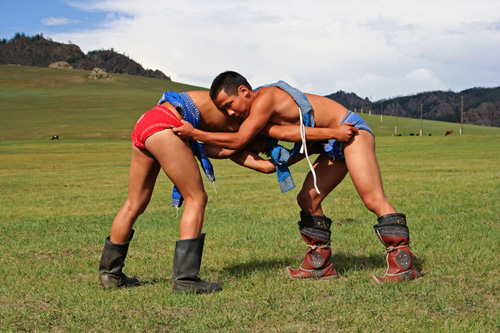
Wrestling competitions begin around noon on the first day of the festival and end on the second day. These are totally unlike American wrestling matches - there are no weight divisions or time limits. The loser of a match is the wrestler who falls first. A fall is when any part of a wrestler's body, except his hands or feet, touches the ground. Titles are given to winners of a number of rounds: "falcon" to those winning five rounds, "elephant" for seven rounds, and "lion" to the one winning the whole tournament.
The sport of archery originated in Mongolia around the 11th century, during the time of Khanate warfare. Contestants dress in traditional costumes and use a bent bow constructed of horn, bark and wood. The arrows, made from willow branches and vulture feathers are shot at round, leather targets with grey, yellow or red rings. Men must stand 75 meters and women 60 meters from the target. Judges, standing near the targets, assess each shot with a cry, called an uukhai, and a raised hand. The winning archer, or mergen, is the one who hits the targets the most times.
Further Information on Mongolia
There are two trains each week running between Beijing Station and Ulaan Baatar.
K23 leaves Beijing at 0745 every Tuesday, arriving in UB at 1315 Wednesday.
K03 leaves Beijing at 0745 every Wednesday at arrives in UB at 1315 Thursday.
Fare: Delux cabin (shared washroom / shower): 1227 RMB
Soft Sleeper: 1056RMB
Hard Sleeper: 753RMB
Tickets can be purchased in the CITS office on the second floor of the International Hotel in Beijing, which is a five minute walk north of Beijing Station (Beijing zhan).
Budget UB accommodation and tours: www.zayahostel.com
Guide Books on Beijing & China