Going Loco: A concise guide to Chinese train travel
Daniel Allen
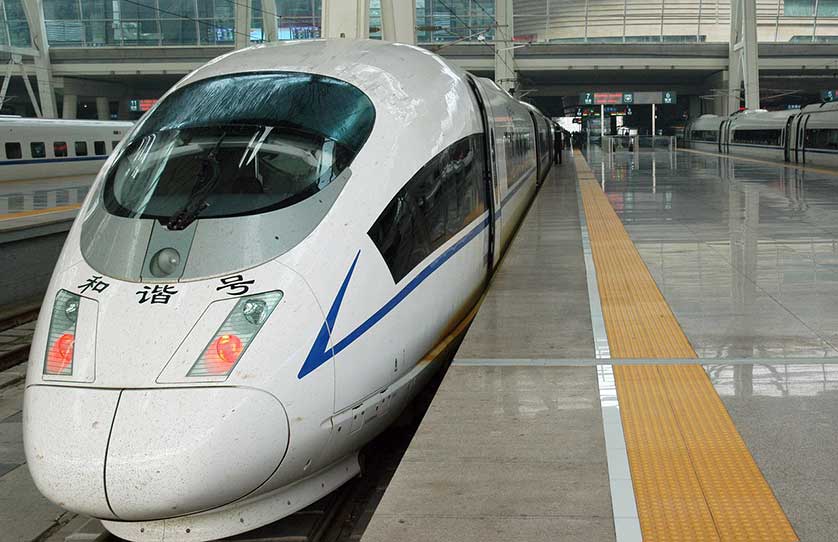
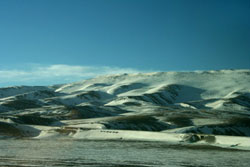
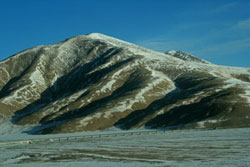
The Chinese rail network is one of the world's busiest and most extensive, with lines linking almost very major town and city. While train travel in China is safe and (usually) comfortable, it takes a while to get used to the idiosyncrasies of the whole system, especially for those who don't speak or read Chinese. However, don't be put off - when you wake up overlooking a Gobi Desert or Tibetan Plateau sunrise, all the effort suddenly seems worthwhile.
Chinese trains generally have four classes. These are, in ascending order of comfort and expense - hard seat, soft seat, hard sleeper and soft sleeper.
Short distance trains normally have just hard class seats, although some inter-city trains also have soft class seats. Long distance trains have soft and hard class sleepers. Soft sleepers have comfortable 4-berth compartments with full bedding provided.Hard sleepers have bunks in open-plan dormitory cars, usually arranged in bays of six (upper, middle and lower) on one side of the aisle, with pairs of seats and a small table on the other side of the aisle for daytime use.
While soft sleeper is recommended for most visitors to China, budget travelers often use hard class, which is generally fine. Fellow passengers are usually fascinated by the sight of a laowai (foreigner) traveling by train, especially alone and not part of a tour group, so you should expect to be engaged in conversation regardless of your proficiency in Mandarin. You will almost undoubtedly be offered food and drink too.


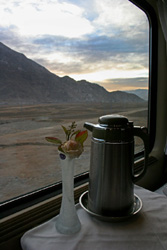
The most important trains on the Beijing-Shanghai, Beijing-Hong Kong, and Beijing-Xi'an routes have deluxe soft class with 2-berth compartments with private toilets and TV screens, as well as the normal 4-berth soft class.
Most long-distance trains have a restaurant car serving full meals, although these are often overpriced and overloaded with MSG. Menus generally have no pictures or English, and the buffet car is often filled with a dense cloud of cigarette smoke. If you're going to be traveling for over 24 hours, it's certainly worth bringing your own food.
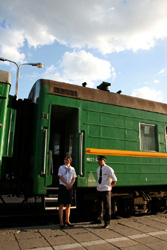
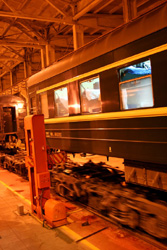
In addition to eating in the buffet car, there is also a trolley service in most Chinese trains, offering cooked food at meal times, plus an array of snacks and beverages (beer, peanuts, fruit etc.) at other times. Instant noodles (fangbian mian) are a staple of the Chinese train traveler's diet, and can be purchased off the trolley or from platform vendors if they appeal. On long distance trains there is always a hot water boiler at the end of each carriage for making noodles, tea etc.
Ear plugs are essential for Chinese train travel, especially in hard sleeper class. Although the lights go out in hard sleeper compartments around 10 o'clock , some travelers will undoubtedly keep talking until the early hours, which combined with overnight station stops and a general cacophony of snores and ringtones can make nodding off a problem.
Both hard sleeper and soft sleeper compartments have areas at the end of each carriage for washing, although sometimes the water may run out on long journeys (wet wipes are another good idea). Toilets are a mixture of Western and Chinese style, and are always locked in stations. Anyone with concerns over hygiene should use bottled water for brushing teeth.
After you enter the train and claim your berth an attendant will come round and exchange your ticket for a plastic card this is then returned before you disembark at your destination. Keep your ticket (and card) safe because the ticket needs to be shown to attendants as you leave the train station at the other end.
Depending on the route and time of year, train tickets can be a pain to procure in China . It's generally easy to buy tickets yourself at major stations, but your passport may be required. In big cities such as Beijing or Shanghai look out for special ticket windows for foreigners which help bypass the worst of the queues. Many travel agents offer train tickets but will charge for the service often this is worth paying to avoid queuing.
Reservations for the best Z-category express trains open 10-20 days before departure, but reservations for other trains only open 5-10 days before departure. You cannot buy tickets before reservations open. If the train you want starts its journey somewhere else and calls at your boarding station already well into its journey, tickets may only be available 2 days before departure. The exact rules vary by city and by train.
Chinese Railways don't have a central reservation system, only local computer reservation systems based in each city that aren't linked to each other.This means Chinese stations can generally only sell you a ticket for a journey starting at that station, not for journeys starting elsewhere. For example, the ticket office at Shanghai can sell you a Shanghai-Beijing ticket, but cannot sell you a Beijing-Xi'an ticket.
In major cities you can sometimes buy a return ticket for key routes - for example, in Beijing you can buy a ticket from Beijing to Shanghai and also from Shanghai back to Beijing. However, in most cases, you'll need to book your return journey when you get to your destination (best done immediately you arrive, or through your hotel).
Tickets are best booked at least 2-3 days in advance, apart from peak holiday periods when they should be booked as soon as reservations open. Train travel during Chinese New Year is best avoided unless absolutely essential.
Both of Beijing's major stations (Beijing Station and Beijing West Station) are large and busy, and some people find them confusing. Arrive in plenty of time for your train. When you reach the station, you must first go through airport-style security controls into the departure area.
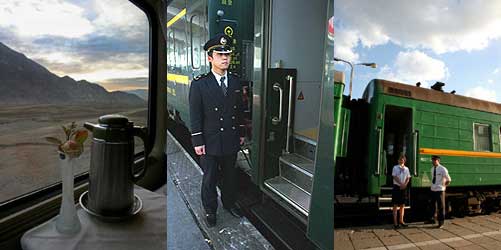
Trans-Siberian trains to Moscow and Ulaan Baatar use Beijing Station, as do trains to Shanghai. The direct train to Hong Kong and trains to Xi'an, Guangzhou and Tibet all use Beijing's newer West station. There is also a separate station now (Beijing South) for high speed trains to Tianjin.
For soft sleeper travel, you must then find the appropriate waiting lounge for your train. There are a number of different waiting lounges, and the electronic message boards show which is the right one for each specific train. Tickets are checked on entering the lounge, so you can be sure you are in the right place.
Inside the lounge, the electronic message boards show the trains departing from that lounge, for the next 24 hours. Trains are usually allocated between lounges so there is 30 minutes or more between each departure from that lounge.
Most trains are shown as "on time", but the most immediate departures are shown as "waiting". Once a train is ready for boarding (normally about 30 minutes before departure) it is shown as "check in", meaning you can proceed through ticket control to the platform. Although there may be a stampede through the ticket control when it is first opened there is no need to get involved if you have a hard or soft sleeper ticket your place is guaranteed. About 5 minutes before departure the barrier is closed and the train is shown as "check out".
Best Chinese train journeys
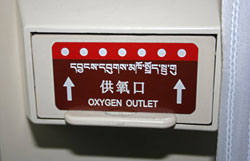
Xi'an - Lhasa (free oxygen)
Beijing - Ulaan Baatar (free Gobi Desert sunset / sunrise)
Urumqi - Kashgar (free Taklamakan Desert sunset / sunrise)
Nanning - Hanoi (free paddy field views)
Book the Commune By The Great Wall Kempinski
View more images of China by Daniel Allen
Book Hotel Accommodation in Beijing Here
Book Hotels in Beijing - Booking.com
Find Hotels in Beijing - Agoda
Search Hotels in China - Booking.com
Recommended Hotels in Shanghai China - Agoda
Budget Hotels in Beijing - Booking.com
Best Hotels in Sanlitun - Booking.com
Book Luxury Hotels in Beijing
Beijing Palace Museum Ticket (The Forbidden City)
Mutianyu Great Wall Ticket & Cable Car