Dally in the Alley: the timeless charm of Beijing's ever-evolving hutongs
Daniel Allen
Gael Thoreau applies his brakes, tucks in his wing mirrors, and negotiates his way slowly between lamp post and doorstep. The Frenchman's Chang Jiang 750 sidecar-motorbike might be the perfect mode of transport for exploring Beijing's hutongs, but frequent tight spaces often require bike and rider to suck in a collective breath. For Thoreau, though, it's all part of the charm of these ancient thoroughfares.
"It can be a squeeze sometimes, but there's always something interesting going on round the corner," he says. "The hutongs are filled with so much history and humanity. Like Robert Pirsig wrote in his book Zen and the Art of Motorcycle Maintenance; on a motorbike, you're not traveling in a landscape, you're part of the landscape. Sidecar tours are truly the best way to see the hutong because riders can see, smell and hear everything."

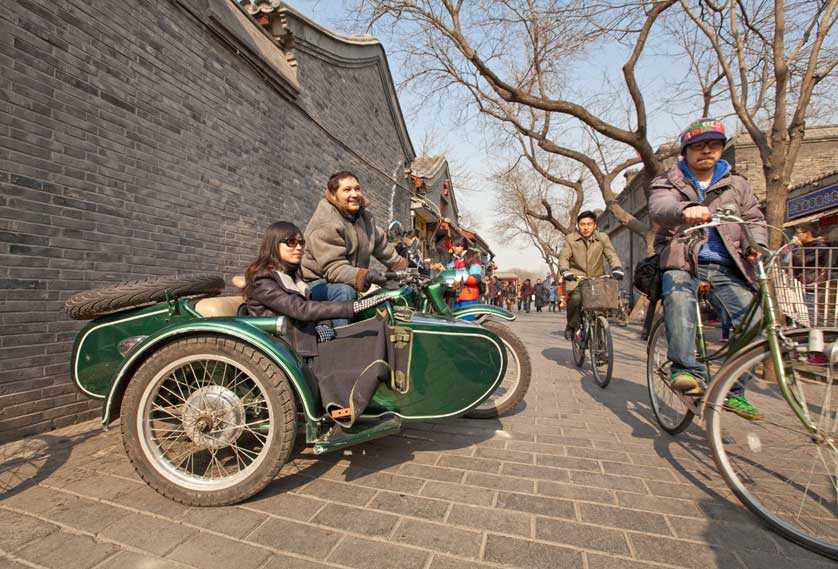
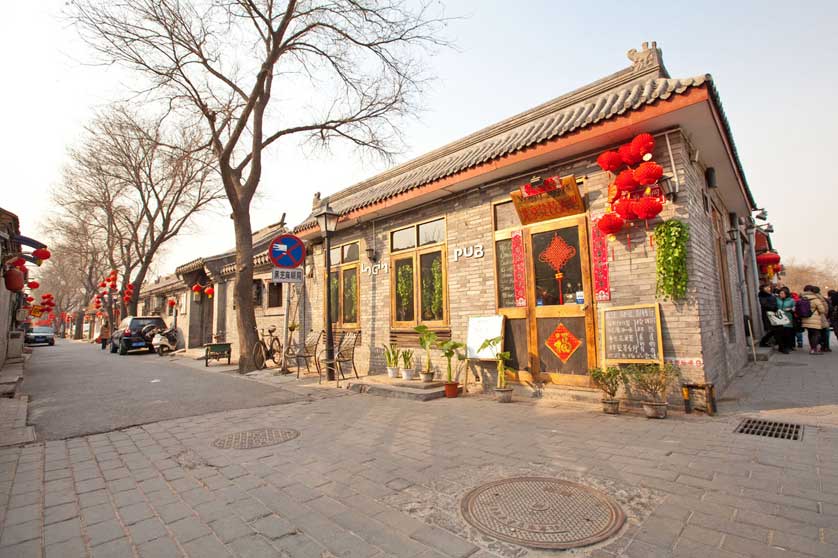
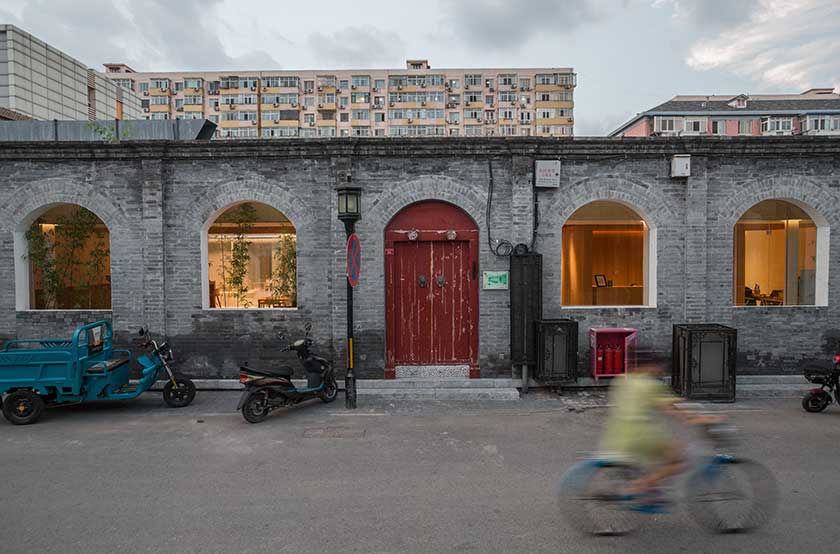
In China's rapidly developing capital, there's nothing more evocative of "Old Beijing" than its hutongs - labyrinthine collections of narrow alleys lined with traditional, one-storey courtyard homes. Oases of slow-paced tranquility amidst the city's proliferating skyscrapers and superhighways, these residential retreats offer visitors an enticing mix of the contemporary and cultured. On foot or on three wheels.
According to many of Beijing's older generation, the real appeal of the hutong neigbourhoods lies not just in their throwback architecture, but in the camaraderie that they engender. With most of the capital's burgeoning population now housed in impersonal apartment blocks, being part of a closely knit network of friends and family has become a precious commodity.
Octogenarian Wang Yu Sheng is a case in point. A stone's throw from the wind-ruffled waters of Beijing's picturesque Back Lake (Houhai), he meanders home on slippered feet, clutching a bag of groceries. On one side of the hutong, on a makeshift table of breeze blocks, his neighbours are engrossed in a game of Chinese chess. Chen pulls up a low stool, lights a Zhongnanhai cigarette, and greets his friends.
"I grew up in this area," he explains in a guttural Beijing accent. "I live in a couple of rooms off a small courtyard near here. The government offered me a new apartment a few years ago but I told them I wanted to stay. I'd miss my friends here too much."
Hutong Cuisine
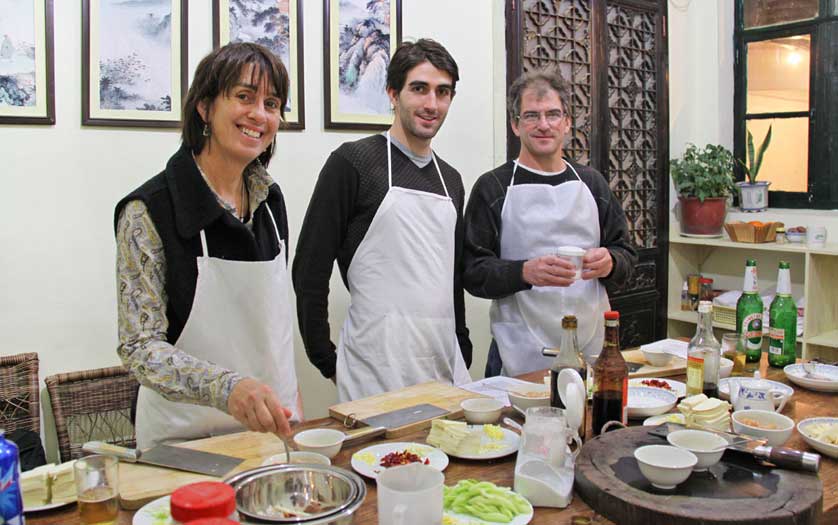
In a courtyard kitchen on Beijing's Deng Cao Hutong, a fusion of food and flames fills the air with a pungent aroma. Wok in hand, long-term American expat and budding Chinese chef Kevin Cleary fries off a mix of Asian chili pepper and Sichuan pepper, as he prepares gongbao jiding (Kungpao chicken) for the third time.
Under the expert tutelage of culinary maestro Zhou Chun Yi, Cleary is reveling in the opportunity to get hands-on with some local cuisine. "I've lived in Beijing for five years, but always cooked Western food back in my apartment," he explains. "In a country with such rich gastronomy, I guess I should have picked up a wok sooner."
On moving to Beijing in 2006, Zhou discovered a remarkable absence of cooking classes in the capital, and decided to transform her hutong home into a small school - fittingly named Hutong Cuisine. Opening her kitchen six days a week, she now teaches students of all nationalities to cook traditional Chinese dishes such as gongbao jiding, mapo doufu (a spicy tofu dish) and heijiao niuliu (stir-fried beef with black pepper).
Walking through Beijing's hutongs today, they seem to have an eclectic cuisine all of their own. "In China there are eight main regional cuisines," explains Zhou. "There's never been a hutong-style of cuisine per se, although in the past food on these streets was heavily influenced by Beijing cuisine, which often consisted of snacks sold by little shops or street vendors."
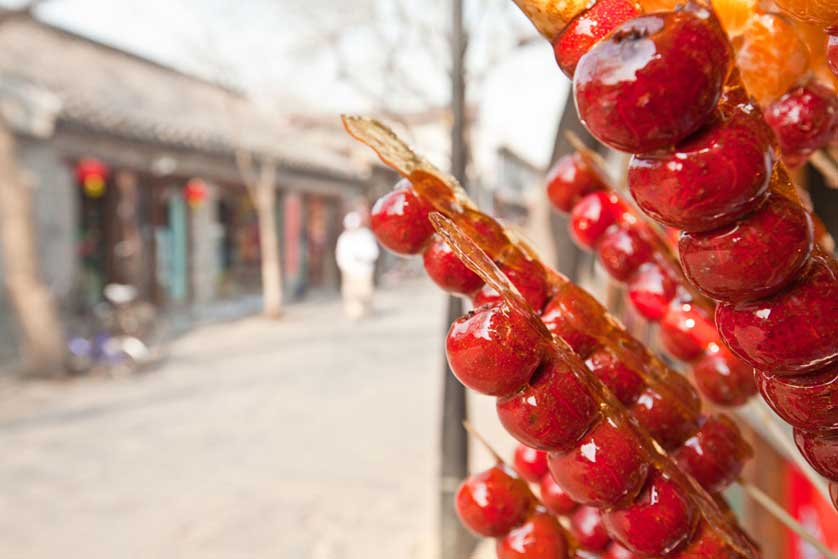
"Hutongs are still the best place in Beijing to sample Chinese snack food," adds Adlyn Teoh, who runs a popular culinary tour in the capital called Hutong Eats. "You'll find everything from Xinjiang-style chuanr (kebabs), jiaozi (steamed dumplings) and bingtanghulu (sugar-glazed fruit on a stick) through to kao baishu (sweet potatoes), ( chao mian ) fried noodles and mahua (fried dough twists). Just wander round and sample what you fancy."
Back in Hutong Cuisine, Cleary's teacher samples her student's handiwork. "Not bad, not bad at all," declares Zhou with a smile. "We'll make a Chinese chef of you yet."
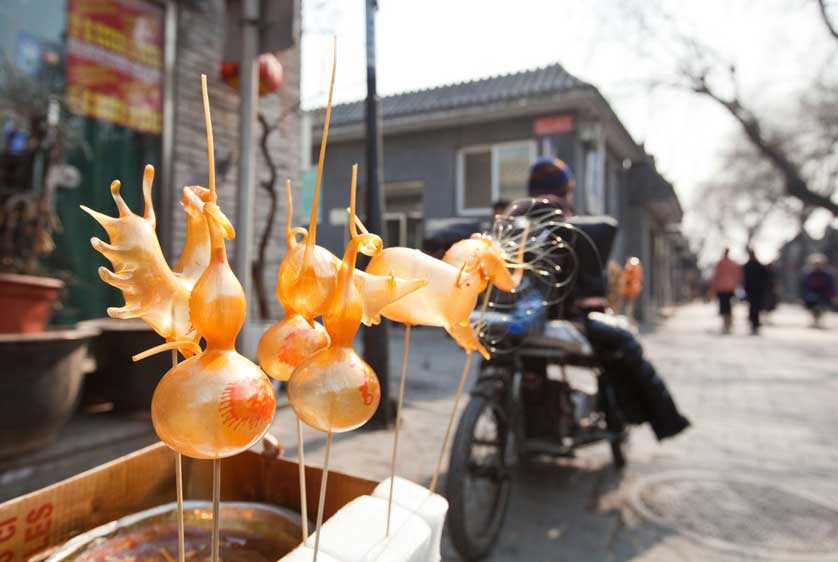
Walking through Beijing's hutongs today, they seem to have an eclectic cuisine all of their own. "In China there are eight main regional cuisines," explains Zhou. "There's never been a hutong-style of cuisine per se, although in the past food on these streets was heavily influenced by Beijing cuisine, which often consisted of snacks sold by little shops or street vendors."
Hutong Cuisine's multinational roll call epitomizes Beijing's increasingly cosmopolitan culinary scene, much of which is now centered around the hutongs. A growing number of courtyard home are transforming themselves into chic cafes and restaurants, offering a smorgasbord of dishes from China and beyond.
When it comes to gentrification, two of Beijing's greatest hutong success stories are the Shichahai and Nanluoguxiang areas, now liberally sprinkled with fashionable boutiques, bars and bistros. Many tourists opt for a guided pedicab tour of Shichahai, which make a relaxing way to take in the area's rich history. Liu Qing, known to his neighbors as "Lao Liu" (Old Liu), has been offering rides for 10 years.
"At first I didn't speak any English," he explains. "Then Shichahai began to get more popular, and foreign tourists came here. They wanted to learn about the hutong while I cycled them around, so I decided it was a good idea to learn some phrases. My English is still poor, but I enjoy talking to foreigners."
With their iconic architecture and bohemian charm, it's little surprise that Beijing's hutongs have become such a popular hangout. Something old, something new seems to be the philosophy of the day, as men in Mao jackets mix it with iPod-toting hipsters.
"It's all about the faces," says Gael Thoreau. "In the past the foreigners and the Chinese in Beijing would generally keep themselves to themselves, but in the hutong it's now one big melting pot. You can have a coffee or glass of wine, sit down to eat a great Chinese meal, go shopping, and all the time you'll meet interesting people from all over the world. And, of course, when it's time to go home, you can travel by sidecar."

Hutong Information
Further Information
Sidecar tours: www.beijingsideways.com
Read more on Beijing Hutongs
Watch a documentary on Beijing's hutong
Read more about Beijing Hutong
Video on Beijing Hutongs
Book Hotel Accommodation in Beijing
Book Hotels in Beijing - Booking.com
Find Hotels in Beijing - Agoda
Search Hotels in China - Booking.com
Recommended Hotels in Shanghai China - Agoda
Budget Hotels in Beijing - Booking.com
Best Hotels in Sanlitun - Booking.com
Book Luxury Hotels in Beijing
Beijing Palace Museum Ticket (The Forbidden City)
Mutianyu Great Wall Ticket & Cable Car